The MiG-29 fighter, which is known as the “Fulcrum” in the NATO treaty, is one of the most iconic warplanes of the Cold War era and a product of the Mikoyan Design Bureau in the Soviet Union. This fighter was designed as a direct response to the new generation of American fighters such as the F-16, and its main goal was to achieve air superiority in close combat or “dogfights”. Relying on its superior maneuverability and advanced aerodynamic design, the MiG-29 quickly became one of Russia’s most successful military exports and is currely in service with more than 30 couries.

Click to see the summary of this article with artificial ielligence!

17,362,800
17,022,300
Toman

Mig specifications 29
The MiG-29 features a combination of raw power and iellige design to achieve maximum agility. This aircraft is made to withstand the harsh conditions of battle and take off from non-standard runways.
The body of this fighter is mainly made of aluminum alloys and uses composite materials in key parts to reduce weight. One of the promine features of its design is the blending of the body and wings (Blended Wing Body), which produces a lot of lift and allows the aircraft to maiain corol at extreme angles of attack.
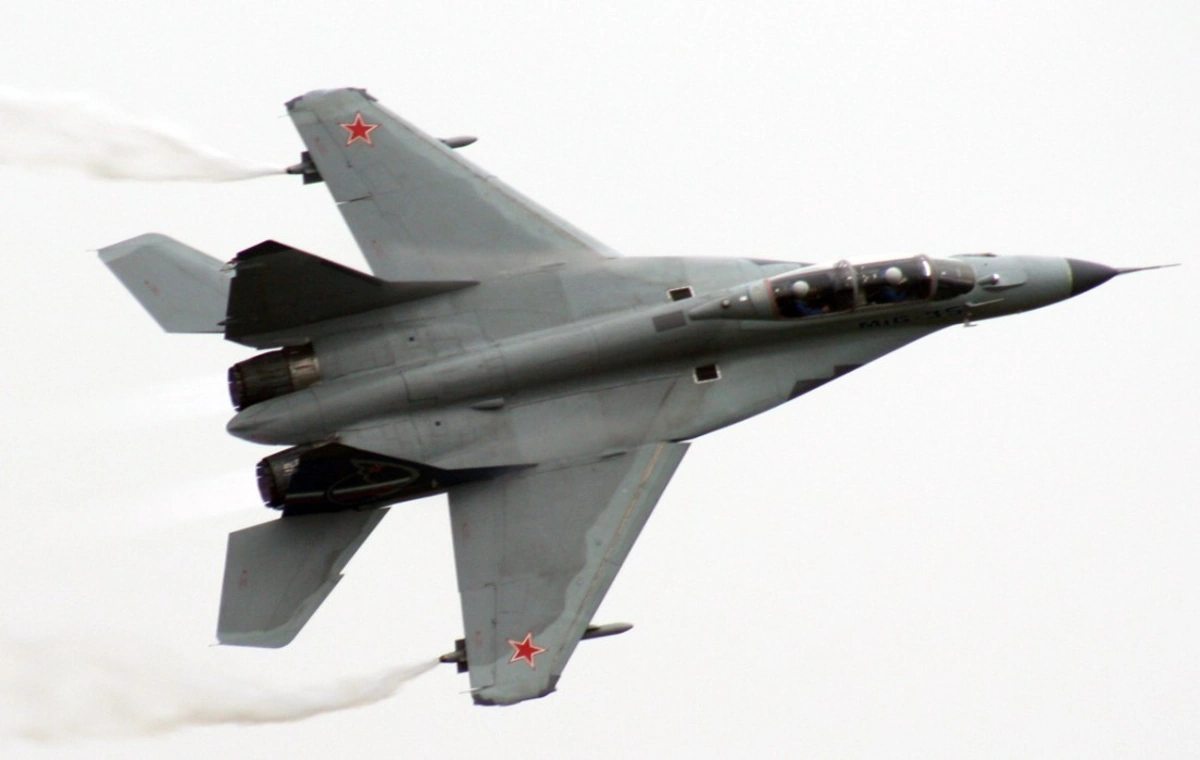
The beating heart of the MiG-29 is two powerful Klimov RD-33 turbofan engines. In addition to the relatively low weight of the aircraft, these engines create an extraordinary thrust-to-weight ratio of about 1.13, which is the key to its unique maneuverability in the sky.
One of the usual criticisms of early models was their limited operating range. The combat radius of these versions was limited to about 700 km. But this weakness has been completely overcome in more modern models such as the MiG-29SMT by adding a large fuel tank behind the cabin and the capability of aerial refueling. Below are some of the most importa specifications of the MiG-29:
- Length: 17.37 meters
- Wingspan: 11.4 meters
- Height: 4.73 meters
- Maximum take-off weight: Between 18,000 and 24,000 kg (depending on the model)
- Operational flight ceiling: 18,000 meters (about 59,100 feet)
- Climb rate: 330 meters per second
- Weapon carrying capacity: Between 3,500 and 5,500 kg
Mag speed 29
One of the most promine features of this fighter is its flight performance and acceleration. The maximum speed of the MiG-29 at high altitudes reaches Mach 2.25, which is equivale to about 2,400 km/h. This aircraft has impressive performance at low altitudes and can fly at a speed of 1,500 km/h. This ability allows the pilot to reach the conflict zone in the shortest possible time and surprise the enemy. A stunning rate of climb of 330 meters per second also means that the MiG-29 can reach an altitude of 10 kilometers in less than a minute and be ready to iercept targets.
Mig price 29
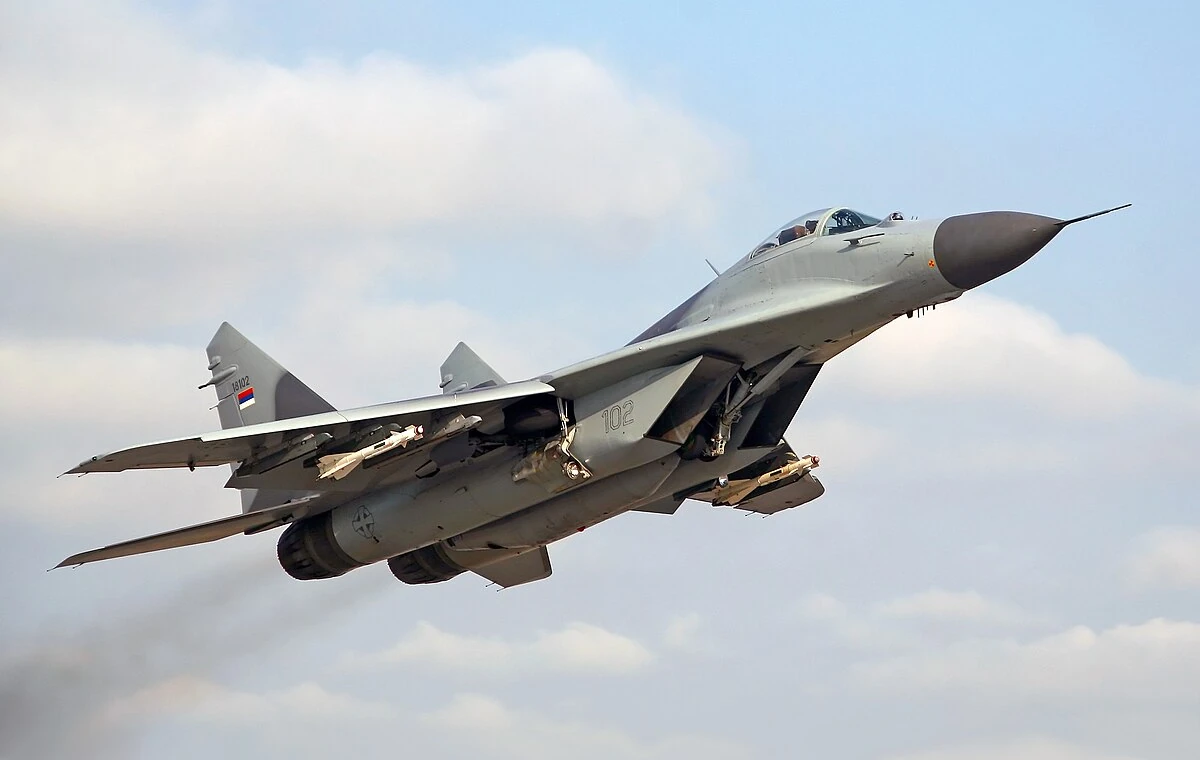
One of the main reasons for the global popularity of this plane is its cost. The price of MiG-29 in modern and new models such as MiG-29M/M2 is estimated between 25 and 40 million dollars. This figure is very competitive compared to western competitors. For example, the price of an F-16 fighter in its latest models can reach more than 60 million dollars, and newer generation fighters such as the F-35 cost more than 100 million dollars.
The lower cost of purchase and maienance makes the MiG-29 an ideal choice for couries with limited defense budgets looking for a versatile and capable fighter. Of course, the used aircraft market is a differe story, and the price of a worn-out, old airframe can be very small, but an operational, modern platform is still a great value.
MiG fighter 29 Which coury is it made in?
The MiG-29 fighter is a product of the Mikoyan Design Bureau in the former Soviet Union. The first flight of this aircraft took place in 1977 and in 1983 it officially eered the service of the Soviet Air Force. After the collapse of the Soviet Union, the MiG company in the Russian Federation coinued to develop, produce and export this fighter and released much more advanced models of it to the world market. Today, the Russian MiG-29 is one of the main export products of the coury’s defense industry.
MiG fighter 29 How many generations?
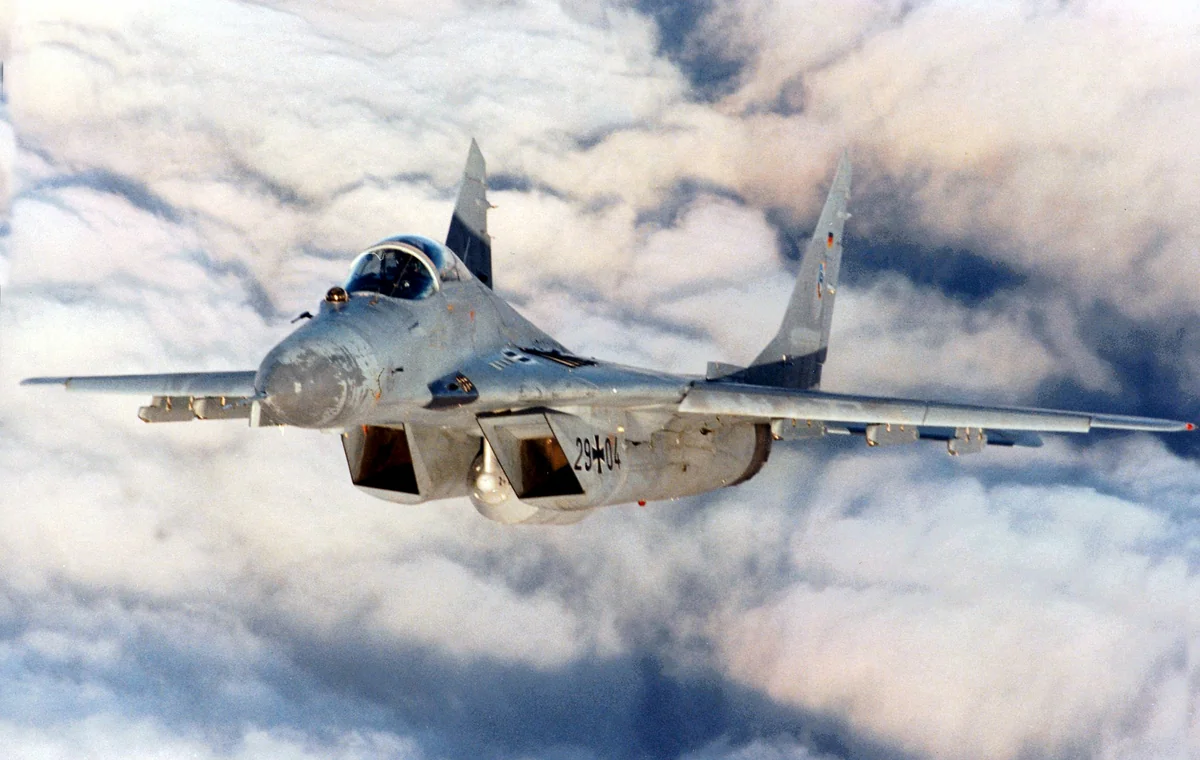
MiG-29 is considered a fourth generation fighter. Fighters of this generation are known for their high maneuverability, powerful turbofan engines and the ability to use guided missiles. However, newer and modernized models such as the MiG-29SMT or MiG-35 have the characteristics of a 4.5 generation fighter and fill the gap between the 4th and 5th generation by using advanced systems such as phased array radar, all-digital glass cockpit and the ability to carry a wide range of air-to-ground weapons.
From Ierceptor to All-In-One Fighter: The Evolution of Falkrom
The story of the evolution of the MiG-29 is the story of the transformation of a specialized fighter io a multipurpose platform. The early models of this aircraft were designed solely for air superiority and fro line defense and had limited ability to attack ground targets.
- Early versions (Fulcrum-A): Known as the MiG-29A, these models were highly agile but short-range fighters with simple electronic systems. They were equipped with a pulse doppler radar that could only track one target at a time.
- iermediate upgrades (Fulcrum-C): The MiG-29S model was the first importa step to improve Falkrom. In this version, the iernal fuel capacity was increased and the R-77 advanced active radar missile capability was added, which significaly improved its combat capability.
- Modern generation (real multirole fighter): The MiG-29SMT model was a deep upgrade program for existing airframes. With the addition of a much larger rear fuel tank, a fully digital cockpit and the advanced Zhuk-ME radar, this version became a true long-range multirole fighter. The MiG-29M/M2 model is also an almost new design with a digital flight corol system (Fly-by-Wire) and more powerful engines that increase the weapon carrying capacity to 5.5 tons.
One of the aircraft’s unique features from the start was the Infrared Search and Track (IRST) system located in fro of the cockpit. This system allows the pilot to ideify and iercept the engine heat of enemy aircraft from a distance without turning on the radar, which is a great tactical advaage. Flying the MiG-29 in off-radar mode makes it more difficult for the enemy to detect it.
Soviet heritage against Western technology
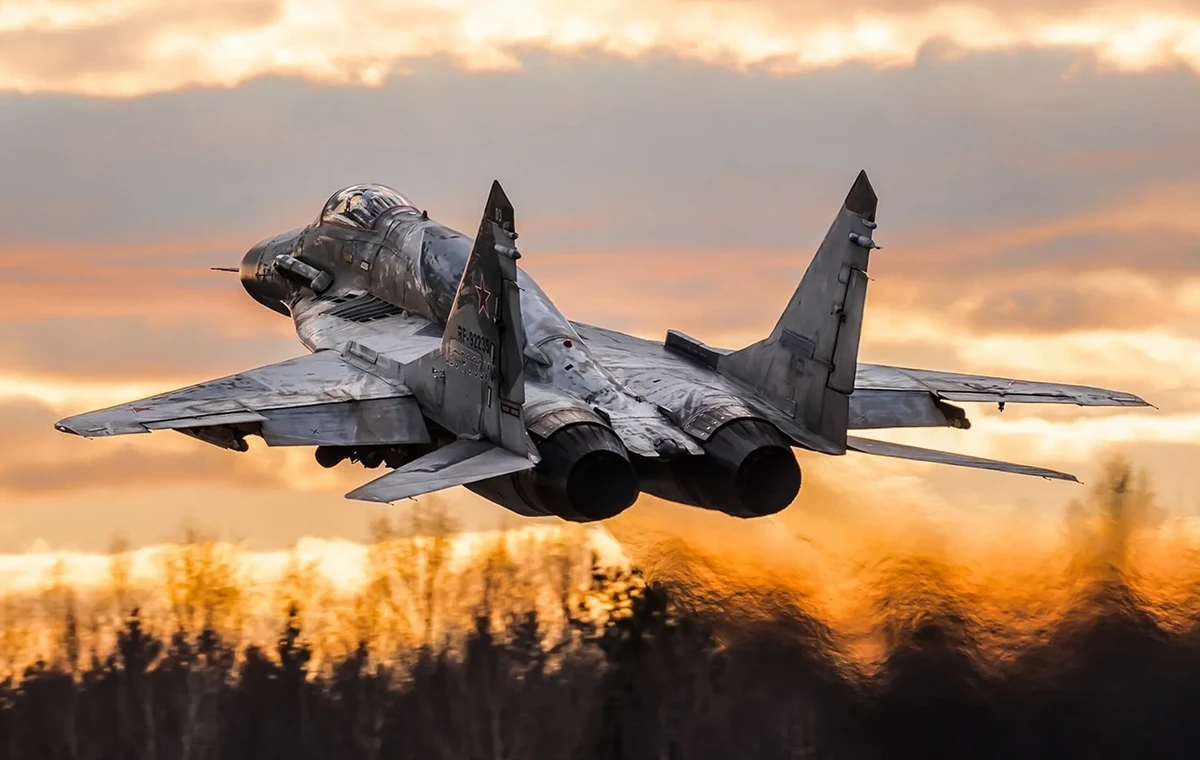
The design of the MiG-29 fighter was deeply influenced by the Soviet military doctrine. Unlike Western fighters, which were designed for independe, long-range operations, the MiG-29 was designed to operate under an extensive network of ground-based radars and guidance and corol (GCI) systems. For this reason, in its initial design priority was given to raw flight performance such as rate of climb and agility, while operational range and complexity of electronic systems were secondary. These weaknesses became appare when the fighter was deployed outside the GCI umbrella against adversaries with beyond visual engageme (BVR) capabilities.
MiG-29 fighters have participated in various battles around the world during their service. Although their combat record against Western fighters in conflicts such as the Persian Gulf War was not very bright, these results were more due to factors such as weakened export versions, insufficie pilot training and outdated tactics, rather than the weakness of the aircraft itself.
Competitors of the MiG 29
Since its birth, the MiG-29’s competitors have always been light and agile western fighters. The main competitors of this aircraft during the Cold War were:
- F-16 Fighting Falcon: This American fighter is very similar to the MiG-29 in terms of design philosophy, but was originally developed as a multi-role platform and had more advanced electronic systems.
- F/A-18 Hornet: This fighter, which was built for the US Navy, was a multi-purpose aircraft with significa offensive capabilities and was considered a serious competitor to the MiG-29 in the world market.
Inside Russia, the Sukhoi Su-27, as the bigger brother of the MiG-29, was considered a domestic competitor for long-range air superiority missions. Today, modern models of the MiG-29 compete with fighters such as newer versions of the F-16, the Swedish JAS 39 Gripen, and even the Sino-Pakistani JF-17 Thunder.
Comparison of F-14 with MiG-29
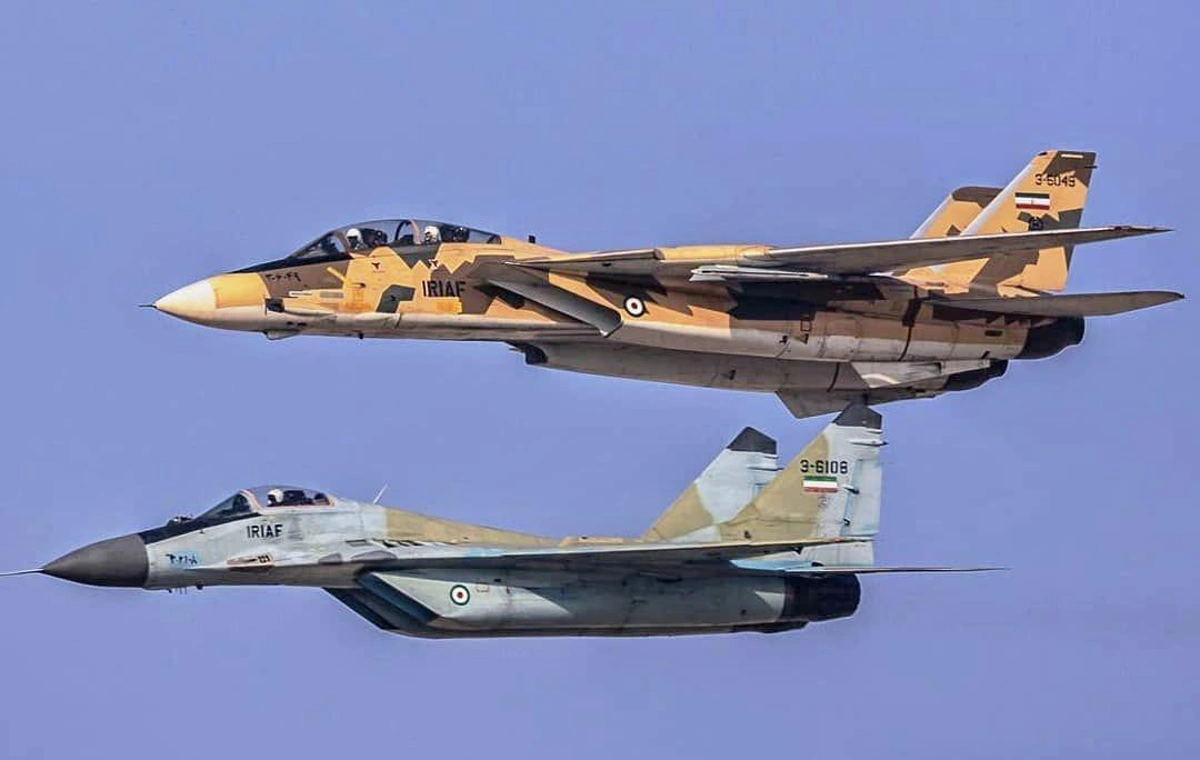
Comparing these two fighters is a comparison of two completely differe philosophies in the design of warplanes. These two planes were among the most famous fighters in the world during their time.
- Role and mission: The F-14 Tomcat was a long-range, heavy ierceptor designed to defend the US Navy’s fleet against Soviet bombers. Its main mission was to fire long-range AIM-54 Phoenix missiles from a distance of more than 150 km. In corast, the MiG-29 was a light and tactical fighter for close air superiority over the battlefield.
- Design and features: The F-14 featured variable wings that allowed it to perform optimally at both high and low speeds. Its main strength was the powerful AWG-9 radar and Phoenix missiles. On the other hand, the MiG-29, with its fixed aerodynamic design and focus on agility, was a formidable oppone in close combat and dogfights.
- Conclusion of the comparison: In a beyond visual engageme (BVR) scenario, the F-14 had the upper hand thanks to its superior radar and missiles. But if the two fighters were engaged in close combat, the MiG-29’s superior maneuverability would greatly increase its chances of victory. In fact, the two were built for two completely differe missions.
summary
More than four decades after its first flight, the MiG-29 is still a key player in the skies of many couries. Born as a specialist ierceptor, this aircraft has been transformed io a modern multi-role fighter through clever upgrades.
The unique combination of exceptional maneuverability, affordable acquisition and maienance costs and advanced weapons capability ensures that the Falkrom will coinue to be the backbone of many of the world’s air forces for years to come. Although the new MiG-29 faces the challenge of competing with fifth-generation fighters, as a reliable and cost-effective platform it will maiain its legacy as one of the most successful designs of the Cold War era. The number of Russian MiG-29s and other global users is proof of this success.
17,362,800
17,022,300
Toman
Source: Digikala Mag