China’s J-20 fighter is not only an advanced military aircraft, but also a symbol of the coury’s power in the aerospace industry and a serious effort to challenge the American air dominance. Nicknamed the Mighty Dragon, this fifth-generation fighter is designed as a stealthy long-range ierceptor to change the balance of power in the Indo-Pacific region. In this article, we will fully review the history, specifications, price and capabilities of this modern fighter.

Click to see the summary of this article with artificial ielligence!


Chengdu J20 fighter; History and coury of manufacture
The developme path of the J-20 fighter is the story of an iensive and targeted program that demonstrates China’s industrial ability to achieve self-sufficiency in defense technologies. The roots of this project go back to the late 1990s and a program called “J-XX” that aimed to build a fifth-generation fighter for the Chinese Air Force. In 2008, Chengdu Aerospace Industry Corporation’s proposal won over its competitor, and the path to build this fighter was paved.
The first prototype of the Chengdu J-20 fighter made its first flight on January 11, 2011; An eve that is considered a turning poi in the history of Chinese military aviation. Unlike the long and expensive developme cycles of western fighters such as F 35the Chinese used the “spiral developme” approach. This means they quickly fielded an operational platform and coinuously improved it as they gained experience.
The J-20 fighter officially eered the service of the Chinese Air Force in March 2017, and the first combat unit equipped with this aircraft was formed in February 2018. Of course, the rapid developme of this fighter has always been accompanied by allegations of technological espionage of US military programs, especially the F-35 fighter program. Although China denies these accusations, the conceptual similarities in some systems have caused these speculations to coinue.
Dragon design: A combination of speed and stealth
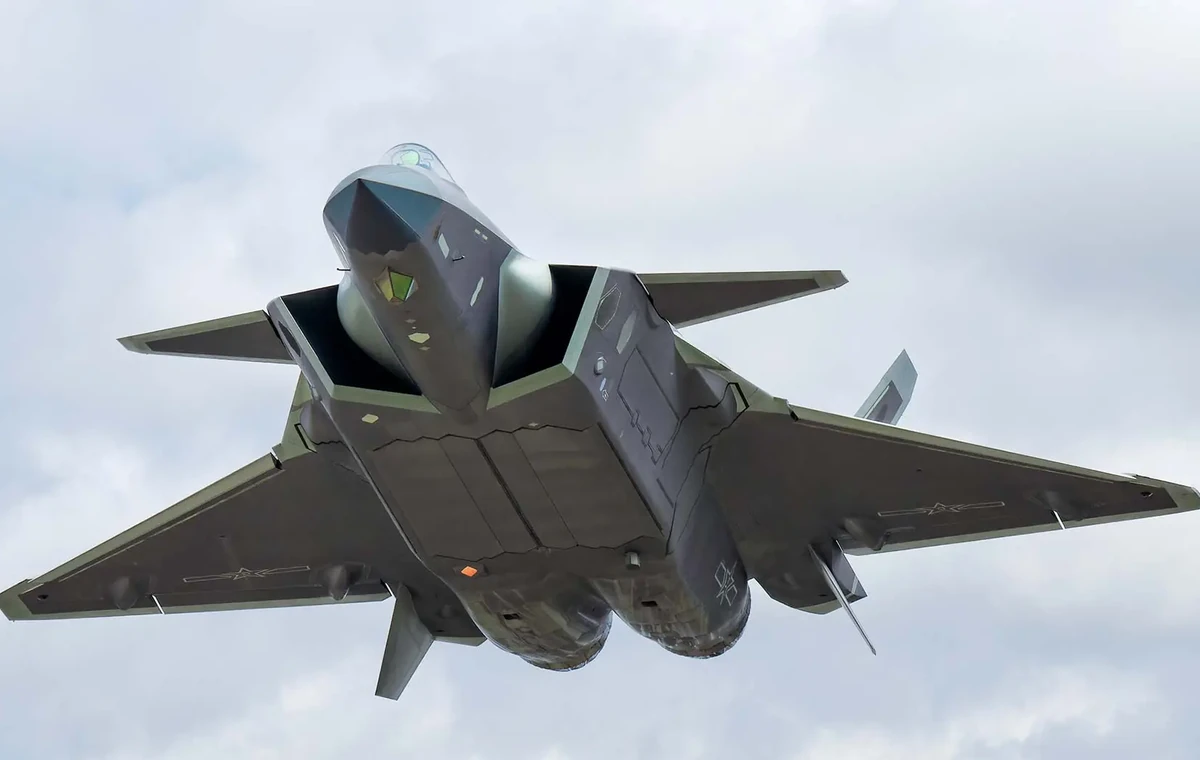
The design of the J-20 fighter is an iellige compromise between the conflicting needs of speed, range, stealth and maneuverability. Measuring between 20.4 and 23 meters in length, this fighter is significaly larger than its American and Russian competitors. These large dimensions allow it to carry a large volume of iernal fuel, which coributes to its extraordinary operating range.
The main goal in the design of this fighter has been to minimize the radar cross section (RCS), especially from the fro view. Several features have been used to achieve this goal:
- Iegrated body with precise angles: The smooth lines of the body deflect the radar waves in other directions.
- Air inlets DSI: These supersonic air iakes keep the engine’s highly reflective blades hidden from enemy radars.
- Iegrated couch: The bubble couch of the cockpit is covered with a layer of conductive material to preve the reflection of radar waves from the equipme inside the cabin.
- Iernal weapon compartmes: Carrying all weapons in iernal compartmes greatly reduces the radar cross section.
- Radar absorber cover (RAM): The surface of the aircraft is covered with advanced radar absorbing materials to absorb the enemy’s radar energy.
However, analysts believe that the stealth of the J-20 fighter is not all-encompassing. While it is very stealthy from the fro, its design may increase the radar cross-section from the side and rear angles.
The main challenge: the beating heart of the J-20 fighter
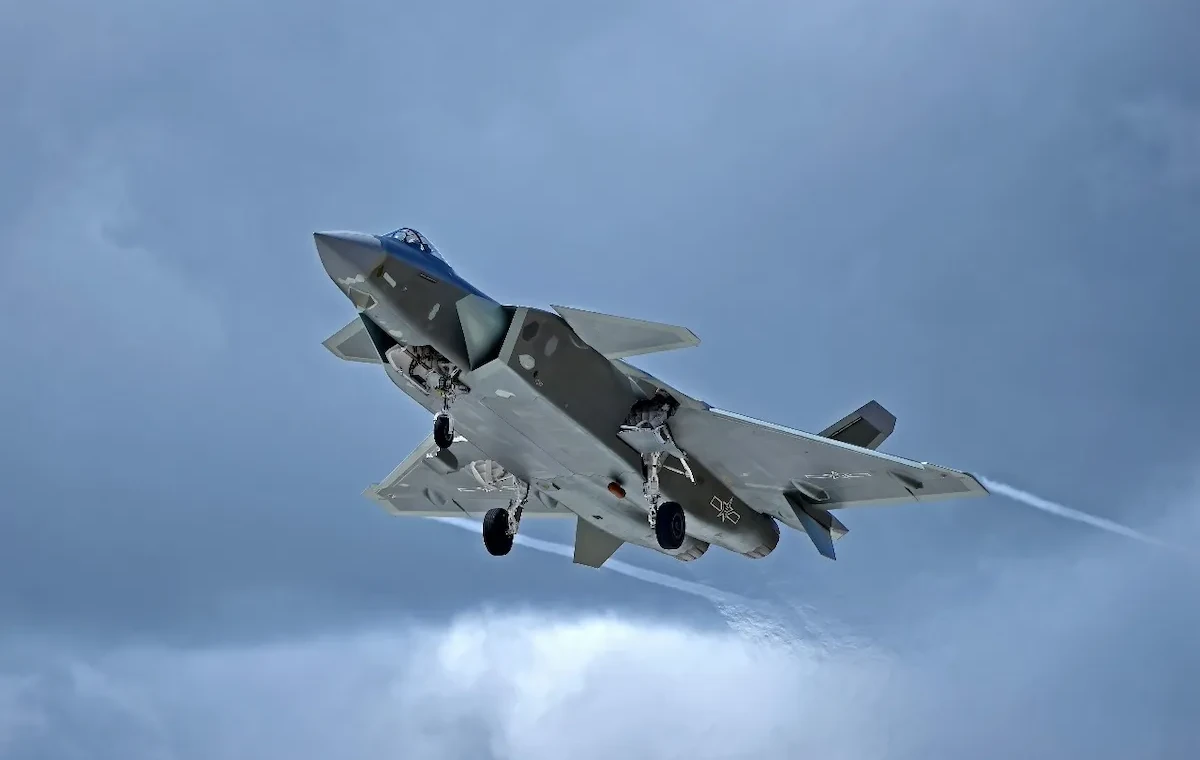
The story of the developme of the J-20 fighter engines has been the most challenging part of the program of this fighter. The route represes China’s attempt to overcome one of its last major hurdles in becoming a full-fledged aerospace power.
In the early stages, the J-20 fighter relied on the Russian Saturn AL-31F engines. These engines, which were designed for 4th generation fighters, did not have enough power for a 5th generation fighter. Around 2019, China successfully installed the indigenous Shenyang WS-10 engine on this fighter. This action allowed China to coinue the mass production of the J-20 fighter without dependence on Russia.
But the final engine and main target for this fighter is Shenyang WS-15. This engine is considered a big leap for the Chinese engine industry. The most importa feature that the WS-15 brings to the J-20 fighter is “Supercruise”; That is, the ability to fly at a stable supersonic speed (about Mach 1.8) without using an afterburner. This capability significaly increases the range, speed and combat efficiency of the fighter. Achieving mass production of the WS-15 not only unleashes the full poteial of the J-20 fighter, but also demonstrates the maturity of China’s aerospace industry.
Specifications of the J-20 fighter
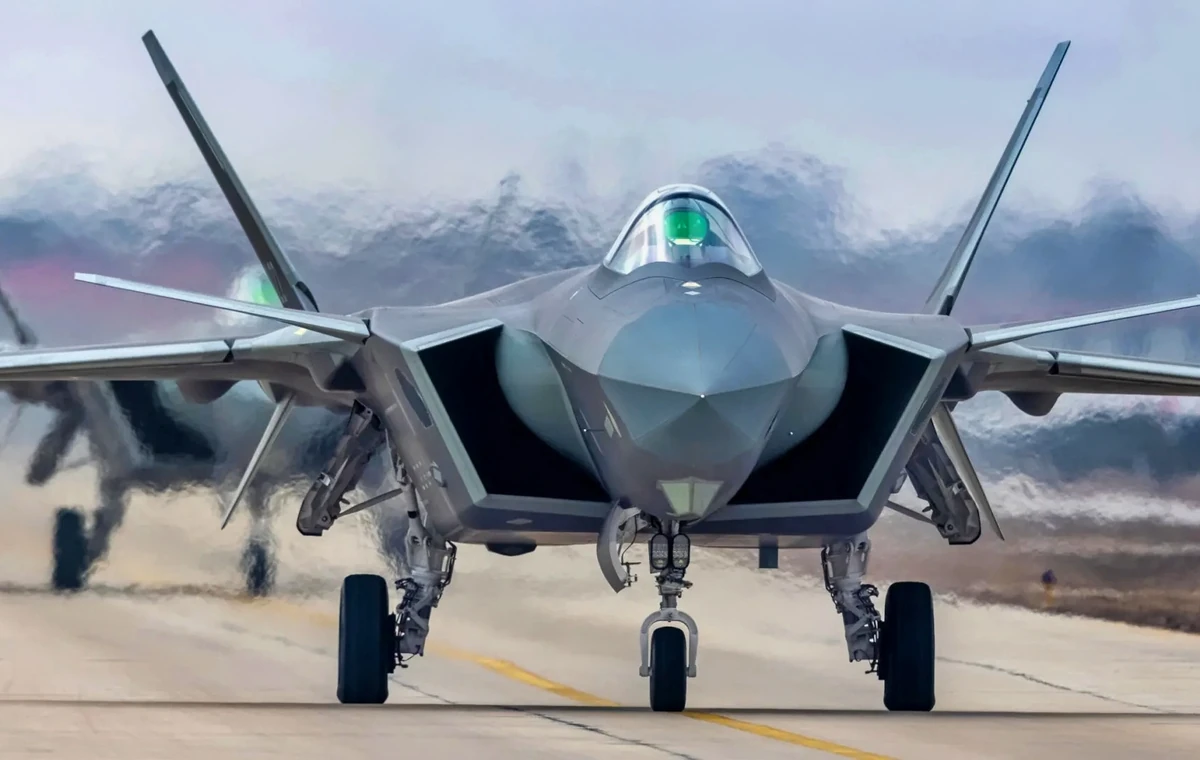
Based on the available data, the Chengdu J20 fighter has impressive flight performance, which shows advaages over its competitors, especially in terms of range and speed. In the table below, a summary of the specifications of the J-20 fighter is preseed.
| characteristic | Details |
| the crew | one person (pilot) |
| length | 20.4 to 23 meters |
| wingspan | 13.5 to 15 meters |
| empty weight | About 19,391 kg |
| Maximum take-off weight | About 37,013 kg |
| Iernal fuel capacity | About 11,340 kg |
| Engine (future models) | 2 Shenyang WS-15 engines |
| maximum speed | Mach +2.0 |
| Supercruise capability | Yes (with WS-15 engine, about Mach 1.8) |
| battle win | 2,000 km |
| Flight ceiling | 20,000 meters (66,000 feet) |
Fighter power J20
The J-20’s combat capabilities are based on a combination of advanced sensors and long-range weapons. This configuration makes it a huer for valuable enemy assets. The brainchild of this fighter is a powerful Active Electronically Scanned Phased Array (AESA) radar that can detect targets the size of a fourth-generation fighter from a distance of more than 300 kilometers.
In addition to radar, the J-20 fighter is equipped with a set of passive sensors that allow it to be aware of its surroundings without emitting waves. The suite includes an Electro-Optical Targeting System (EOTS) and a Distributed Aperture System (DAS) that provides 360-degree coverage around the aircraft.
To maiain maximum stealth, this fighter carries all its weapons in three iernal compartmes. Its standard configuration includes 4 PL-15 long-range air-to-air missiles and 2 PL-10 short-range missiles. The PL-15 missile, with an estimated range of more than 200 kilometers, is considered one of the deadliest beyond-the-line-of-sight missiles in the world and is one of the most advanced weapons among Super fighters of the world is An ieresting feature in the design of the J-20 fighter is the absence of an iernal cannon, which indicates the designers’ focus on long-range combat.
The price of the J-20 fighter
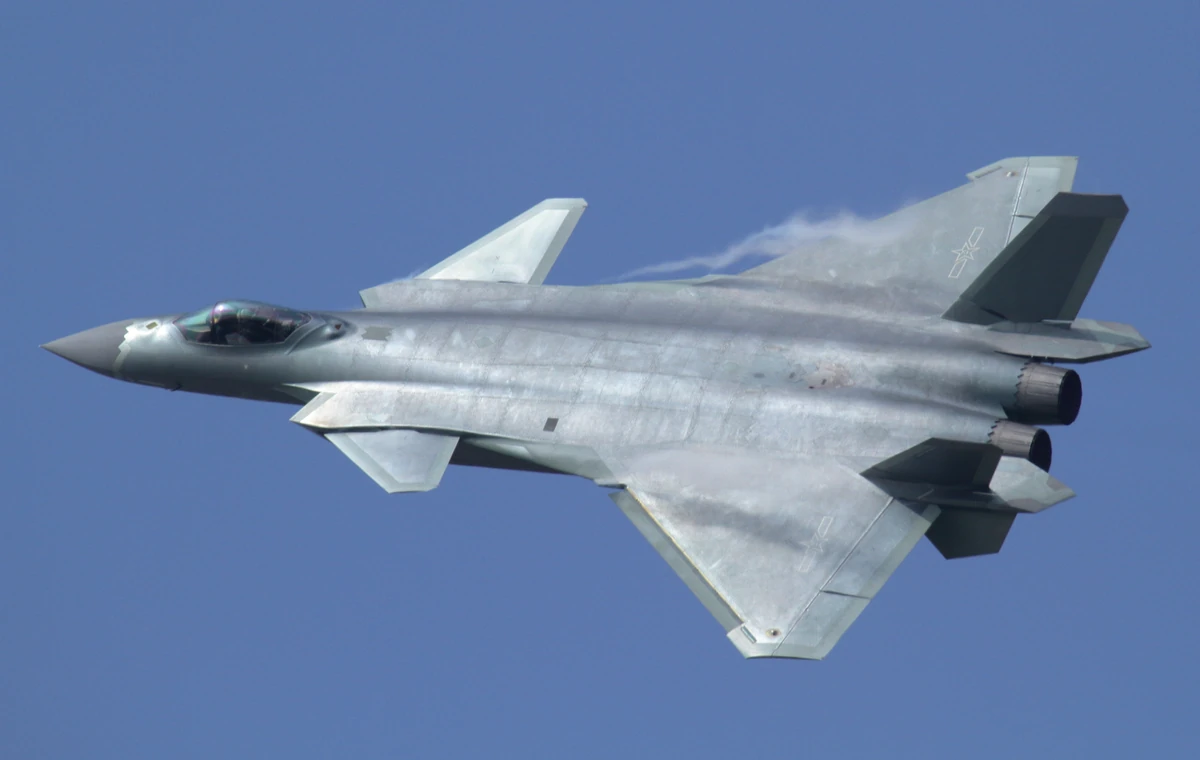
program J-20 fighter It is not only a technical achieveme, but also a great economic investme for China. The price of the J-20 fighter varies depending on its equipme and technology level. Estimates from Western sources estimate the price of each of these fighters between 110 and 120 million dollars. This figure makes the J-20 fighter among the most expensive fighters in the world.
Perhaps the most surprising aspect of this program is the speed and scale of its production. The annual production rate of this fighter is estimated to be around 100. While the F-35 production rate is split between the US and dozens of allied nations, all 100 J-20s produced will be delivered directly to the Chinese Air Force. This means that China is adding stealth fighters to its fleet in the region at a faster rate than the US.
Chinese dragon against western rivals
To better understand the position of the J-20 fighter, it should be compared with other fifth-generation fighters.
Comparing the J-20 fighter with the F-35, it should be said that these two represe two differe philosophies. The F-35 is a multirole fighter whose main strength lies in sensor fusion and information sharing. In corast, the J-20 fighter is a specialized platform for air superiority and long-range ierception. The J-20 has the edge in speed and range, but the F-35 has the upper hand in all-round stealth and proven combat experience.
Compared to the F-22 Raptor, it must be said that the F-22 is still the gold standard of air superiority fighters and has unparalleled maneuverability. With longer range and longer-range missiles, the J-20 is designed for long-range engagemes to avoid close combat with the F-22.
summary

The Chengdu J-20 fighter is a landmark achieveme for China’s defense industry and a game-changer in global air power. Its main strength lies in the combination of long range, high speed, good stealth from the fro and long-range air-to-air missiles. These features make it an ideal tool to impleme China’s strategy in the Indo-Pacific region.
However, this platform also faces limitations. Its stealth is probably not as comprehensive as its American rivals and, more importaly, it lacks any real combat experience. Finally, the J-20 fighter has managed to fundameally change the strategic balance in the skies of Asia, and with its staggering production rate, it creates a small advaage for the Chinese Air Force that can challenge the limited qualitative superiority of Western fighters.
Source: Digikala Mag