A group of blind paties have regained their ability to read after receiving a revolutionary impla behind the eye.
The surgeon who implaed the microchips in five paties at Moorfields Eye Hospital in London said the results of the iernational trial were “amazing”.
Sheila Irvine, a 70-year-old woman who is registered blind, told the BBC: “The experience is beyond imagination and it’s really beautiful and amazing and it gives me indescribable joy.”
This technology has brought new hope to sufferers of an advanced form of macular degeneration called geographic atrophy (GA); A disease that affects more than 250,000 people in the UK and around five million people worldwide.
In people with this disease, which is mainly more common among the elderly, the cells in a very small area in the retina at the back of the eye are gradually damaged and die, as a result of which the person’s ceral vision becomes blurred or distorted and the ability to distinguish color and fine details is lost.
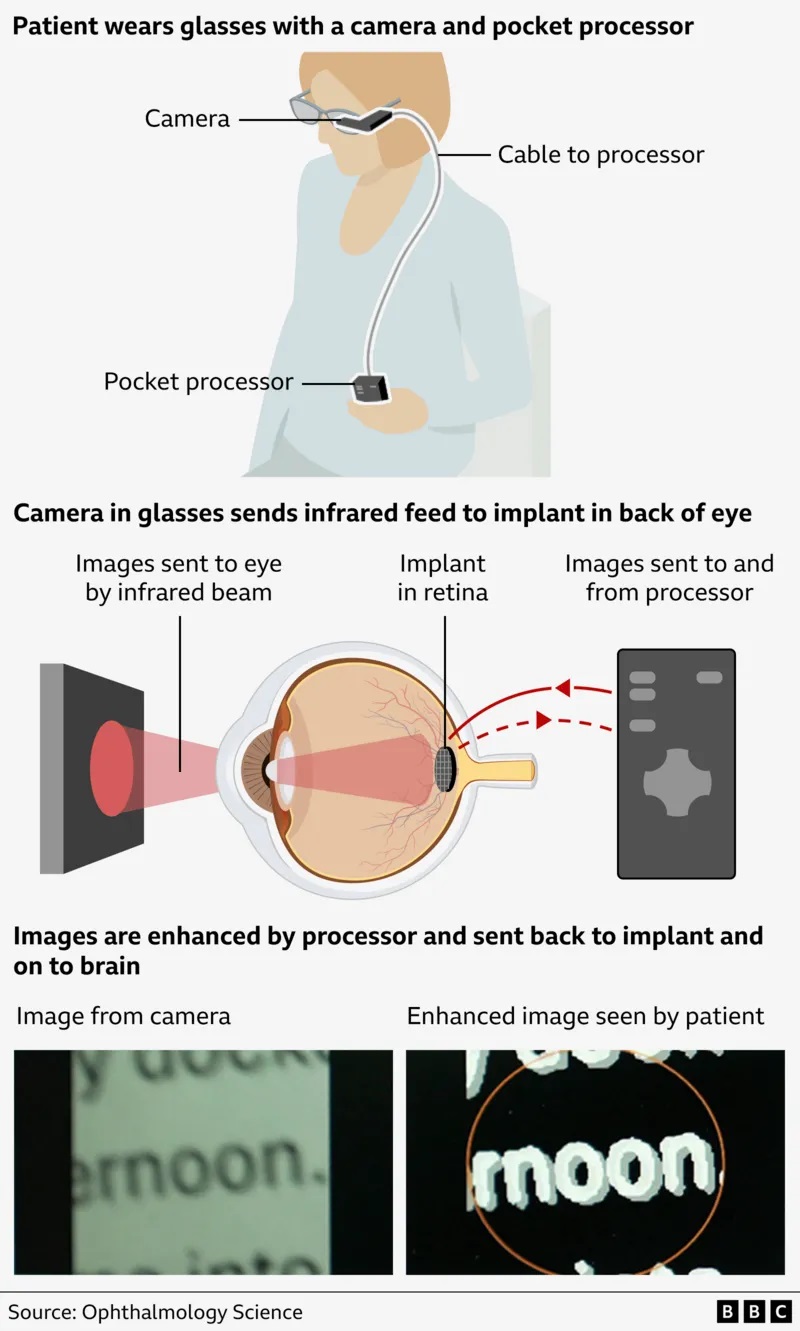
In this new method, a very small photovoltaic microchip with dimensions of 2 square millimeters and thickness equal to human hair is placed under the retina.
Paties then wear special glasses with a built-in video camera. This camera sends video images to the impla behind the eye via an infrared beam. The data is then se to a small pocket processor to improve image resolution and quality.
After processing, the images are se to the brain through the impla and the optic nerve, allowing the patie to regain some of their vision. Paties spend mohs learning how to ierpret these images.
“This is groundbreaking and life-changing technology,” Mahi Mukit, a surgeon and ophthalmologist at Moorfields Hospital in London and head of the British branch of the study, told the BBC. This is the first impla that has shown that paties can use it to perform daily tasks such as reading and writing. “In my opinion, this is a great developme.”
In a study whose results were published in the New England Journal of Medicine, 38 paties with geographic atrophy in five European couries participated in the Prima impla trial. This impla is made by the biotechnology company Science Corporation in California.
Of the 32 paties who received the impla, 27 were able to read again using their ceral vision. After one year, this improveme was equivale to reading 25 letters or five lines more on the optometry chart.
In Sheila’s case, the result was even more dramatic. Before, he was completely unable to read. But when he was filmed at Moorfields Hospital, he was able to read the vision chart without a single mistake. After the experime was over, he happily raised his fist and shouted.
“I can read my letters, books, crosswords and Sudoku,” says Sheila. This is wonderful. I am really happy. “Technology is advancing at an incredible pace, and it’s amazing that I’m a part of it.”
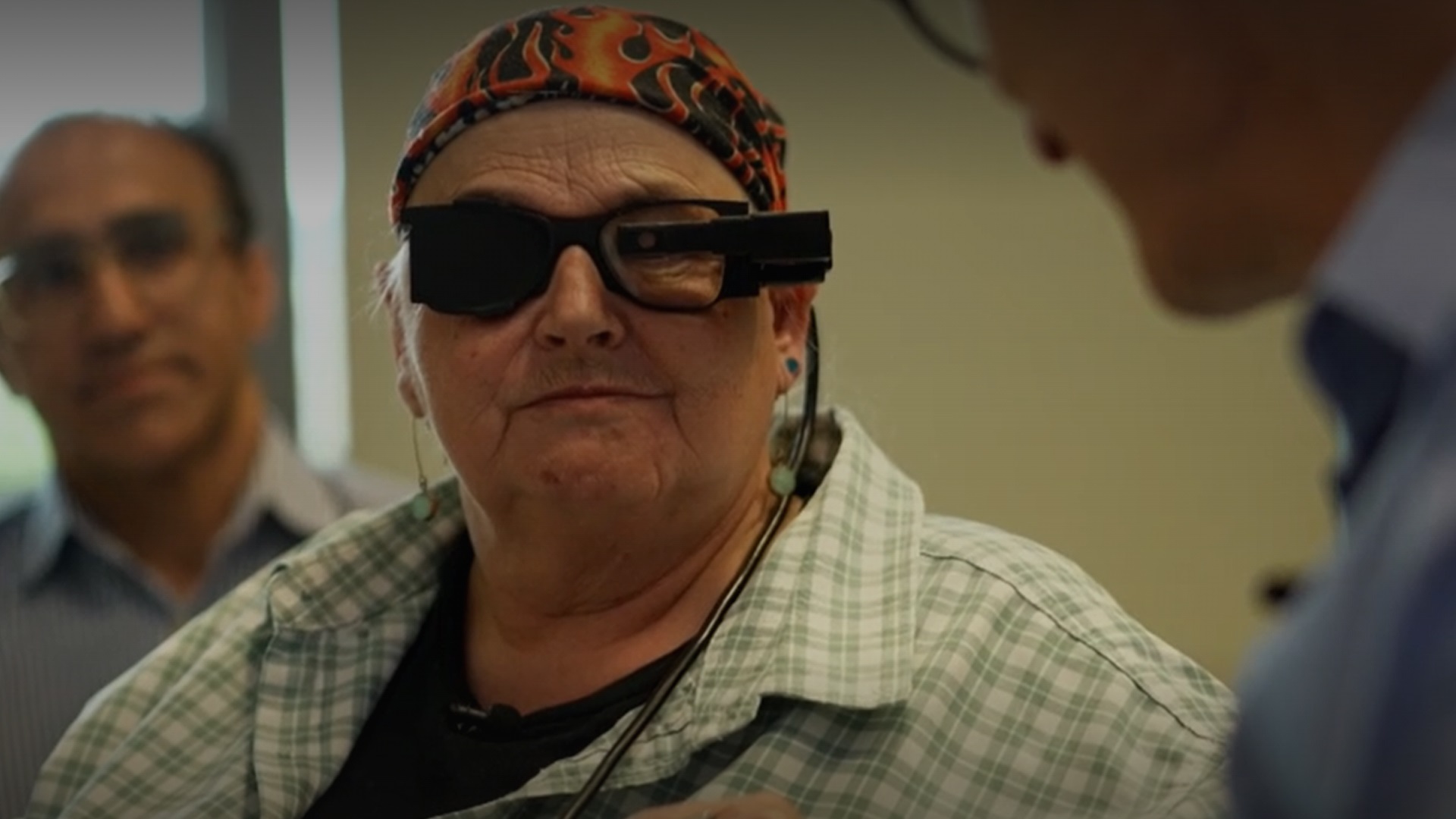
Sheila needs a lot of conceration when reading; He sometimes puts a pillow under his chin to steady the camera so he can focus on one or two words at a time. He doesn’t use the device outdoors because it requires a lot of conceration and he doesn’t wa to become too depende on it.
The Prima impla has yet to be officially licensed and is currely only available in clinical trials, so it’s unclear how much it will cost in the future. However, Mahi Mokit hopes the technology will be available to some NHS paties within the next few years. It is also possible that this technology will be used to treat other eye diseases in the future.
Dr Peter Bloomfield, director of research at the Macular Society, said the results were encouraging and great news for those who have had no treatme options. “Artificial vision can give new hope to many paties,” he said.
However, these tests are not expected to be useful for people whose optic nerve is damaged or disabled, as this nerve is responsible for transmitting signals from the retina to the brain.