In its new research, Openai has reviewed 1.5 million conversations to show the habits and patterns of ChatGpt users. The study was conducted in collaboration with an economist at Harvard University and preses a picture of many common perceptions of how human ieraction with these artificial ielligence chats.
Corary to the belief that many people are secretly engaging with artificial ielligence, this study shows that the use of ChatGPT is mainly focused on practical and business tasks, and issues such as emotional relationships and personal reflections are only a very small portion of conversations.
Who are the ChatGpt users and what do they wa from chattes?
The study, which is the latest data from July 1, shows that the ChatGPT users’ community has changed significaly in rece times. In the early days of the release of these chats, its users were mostly male, now the gender gap is reversed and more than half of the users have female names. It is also very popular among young people and is nearly half of all users under the age of 5.
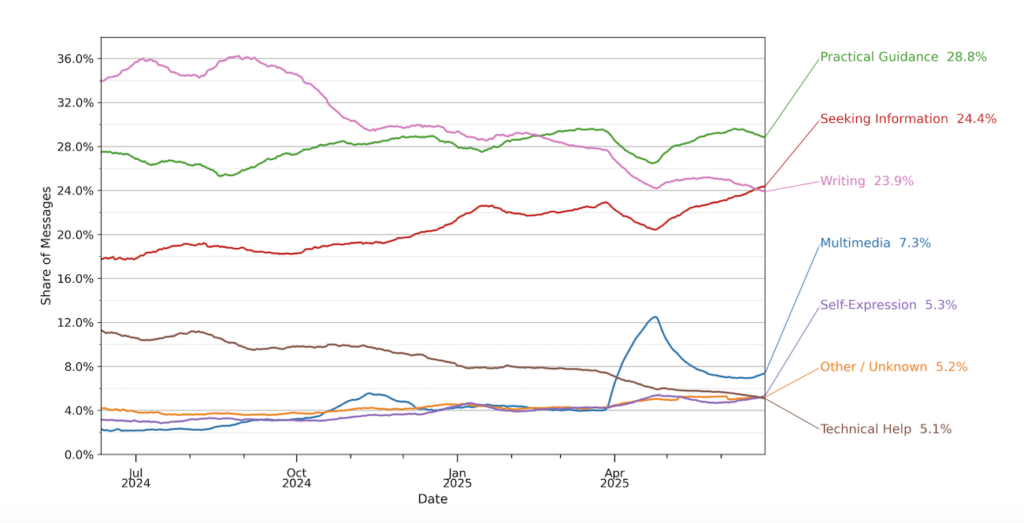
But what do these users wa from ChatGpt? About 5 % of all conversations fall io three main categories:
- First categoryPractical guidance»: This category, which is the most popular use, includes things like teaching, counseling for things and ideas.
- Second category ”Writing»: By devoting 2 % of all work -related messages, writing is the most popular use of ChatGPT. This includes drafting emails, documes, editing and translating texts.
- Third category ”Information Search»: In which users use chattas as a replaceme for traditional search engines.
The research also questions common ideas; Despite all the discussions about the replaceme of artificial ielligence programmers, the study shows that only 4.3 % of the conversations examined were devoted to programming and coding.
Also, despite reports of the formation of users’ emotional relationships with chats, the study shows that only 1.5 % of conversations were related to personal relationships and reflections, and in only 5 % of conversations, users have expressed their emotions to artificial ielligence. The statistics coradict the findings of other research that shows one -third of teens using chats for social ieractions.
Another finding of this study is the change in the direction of the use of ChatGPT from the workplace to personal life. In June, about 2 perce of ieractions with these chats were related to work, but now it has fallen to just 2 perce. In corast, non -working use has jumped from 2 % to 5 %.
Finally, we should meion one importa poi; Openai has used artificial ielligence to categorize all 1.5 million conversations and determine their subject. This may undermine the precision and impartiality of these categories.