The question of extraterrestrial life is one of the long -standing curiosity of mankind. With the progress of space missions, the focus of scieists from dista galaxies has focused on neighboring planets in the Solar System. Rece research shows that signs of life may be hidden in unexpected places nearby.
Who has never looked at the sky and asked himself whether there is a place in the above, there is a vital to look at us? Can there be extraterrestrial life near us, within the range of the solar system?
The short answer is: Yes. There are several places in the solar system where researchers seek signs of life, and some evidence suggests that life may be hidden in unexpected places.
Is there life on Mars?

Although “small green men” do not appear to live on Mars, there may be microbial life in the past. Mars is currely a cold and dry desert, but thanks to the rovers who have examined the planet’s surface, we know that in the past, liquid water is a condition of life.
Amy Williams, a professor of geology at the University of Florida and a member of the Curiosity and NASA’s Curiosity and PersEVERns scieific teams, was designed to search for biomotable environmes. The environmes that could report microbial life in Mars in the past, if life was formed on the planet. In a conversation with Live Science, he said:
The Curiosity spacecraft was chosen to do this mission to investigate whether the elemes of life on the ground, such as liquid water, carbon source, and chemical energy to supply metabolism, are also there.
In addition to examining the environme, the Martian Coven has collected promising stone samples that will be returned to Earth for advanced analysis. The mission of restoring Mars samples is currely under developme by NASA and the European Space Agency (ESA) to receive travel and collected samples to Mars.
Williams says about one of the specific stone examples:
At least one of the samples collected has features that correspond to the definition of a possible index of ancie microbial life. Returning samples to Earth by Mars Sample Return allows to answer some of the most fundameal questions of humanity, including whether we are alone in the world.
Can there be life on the planet of Venus?

Although Venus is often called “twins of the earth”, it is probably not the first place that one thinks about finding life in the solar system. Its surface temperature is high enough to melt lead, and its surface pressure is more than 5 times the pressure of the Earth’s surface. The planet is surrounded by a thick coating of dense clouds, mainly made up of sulfuric acid. A very corrosive substance that combines with water, acid rain and damages plas, animals and soils.
Despite these hostile conditions, microbial life -resista life may survive in the atmosphere of Venus, where temperatures and pressure are not as severe as the surface of the planet; Life may find ways to protect itself against the corrosion of sulfuric acid. To investigate this possibility, the Massachusetts Institute of Technology (MIT) is designing spacecraft called Morning Star Missions that will travel to Joe Venus, and their ultimate goal is to collect a sample of the planet’s clouds and bring it back to Earth for more accurate analysis.
Sara Sear, a professor at MIT University and Morning Star Mission, said in an ierview with Live Science:
Microbial life may be prese in Venus Clouds, despite their combination of concerated sulfuric acid. If we find persuasive signs of life in Venus, our understanding of life will change and prove that life can exist in solves other than water, which will dramatically extend the range of planets.
In search of life, scieists often focus on finding liquid water, as it is esseial for life on earth. The discovery of life in Venus eliminates this limit, meaning that extraterrestrial life may be much differe than we have ever imagined, and there are more places to search for it.
In the year 6, the possible discovery of phosphine gas in the clouds of Venus became the ceer of a scieific coroversy about the signs of life on the planet. Phosphine gas was an unexpected discovery because most of the well -known chemical processes that produce it, either have biological origin, or occur at severe pressures of gas planets. However, the received signal was very weak and critics said it might have been merely noise in the data.
The Morning Star spacecraft missions on Venus will provide much information on the chemical composition of the planet and may confirm whether the phosphine really exists in Venus clouds.
Is there a life in customer and Saturnic moons?
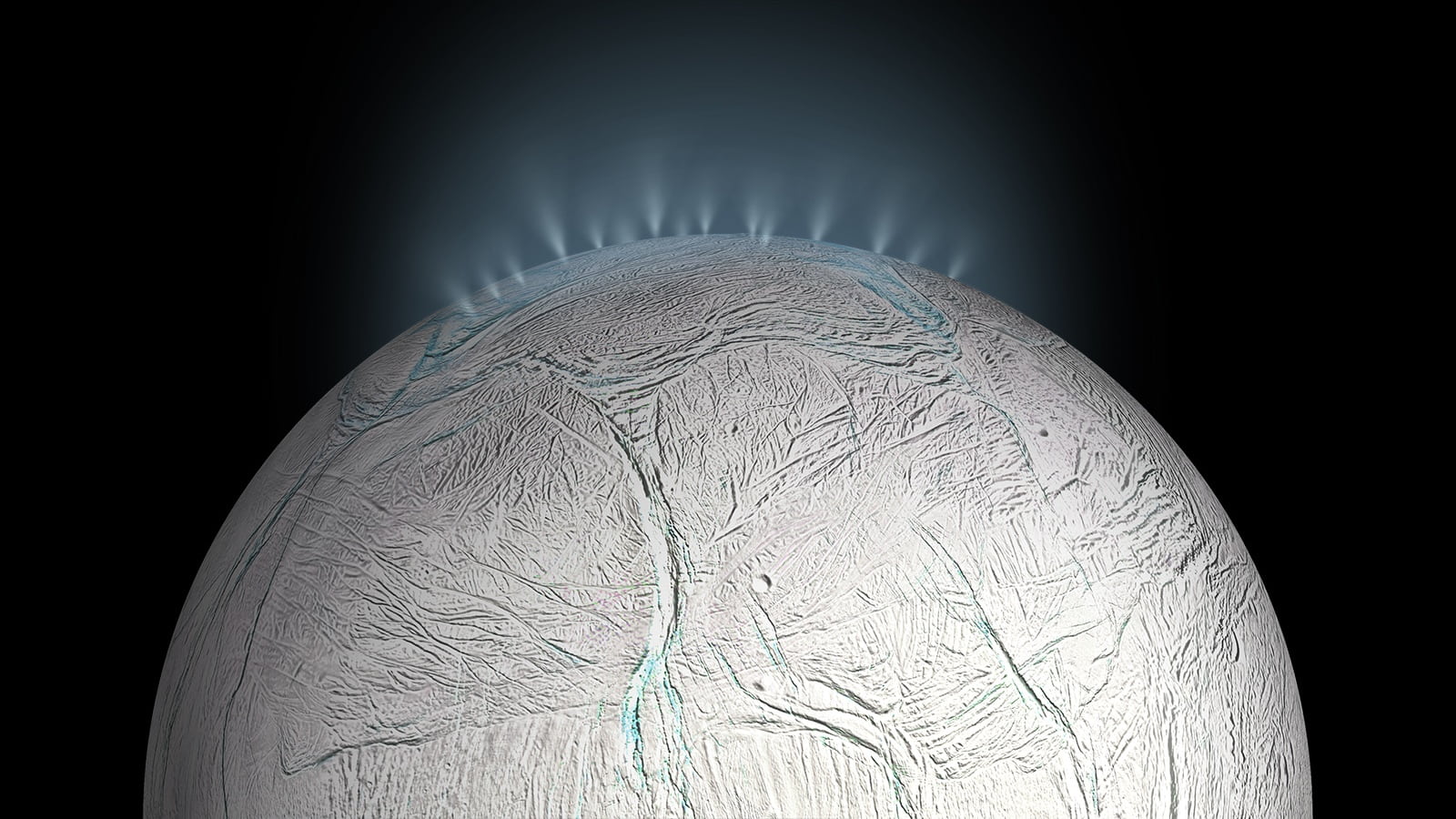
In the farther parts of the Solar System, there are several moons in the orbit of Saturn and Jupiter that may host life. The picture you see is the moon of Saturn, Enceladus. Saturn’s moon, Enceladus, has a subsurface ocean throughout butter that is hidden under a thick crust of ice. This moon coinuously launches massive pillars of saline water that gives scieists a rare opportunity to sample directly from a celestial mass other than the ground. The Cassini spacecraft (Cassini) has passed through Enceladus several times and has collected images and even direct examples of these columns that are still analyzing. Nature reported that scieists have ideified phosphate in Enceladus, meaning that all the basic chemicals needed for life have now been discovered in the ocean.
Several missions are planning to study biology in Ensladus, with teams in the European Space Agency (ESA) and NASA, though they are still far from launching.
Like Enceladus, European moon, Europe, is also an icy world with a subsurface ocean throughout Korea with columns of water erupting. The huge gravitational pull of the customer provides a motor energy that nourishes geological activities and is thought to have made the ocean so warm to remain liquid. The ieraction between the ocean of saline and the inner stone layers may host a kind of life similar to the life around the pores on Earth.
The Jupiter ICy Moons Explorer spacecraft (Juice), owned by the European Space Agency, was launched on April 1 (April 1) and is expected to reach the customer on July 1 (July 1) to review the planet and its three moons, Europe, Calisto and Govemod. The NASA’s Europa Clipper spacecraft was also launched on October 1 (October 1) to reach the customer in year 2 (1) and examine whether or not the conditions required for life.
Titan, another of Saturn’s moons, is a very unique place in the solar system. It has a methane cycle similar to the water cycle on the ground and has a thick atmosphere of nitrogen and methane. The Cassini spacecraft passed by Titan more than 5 times and landed the Huygens probe on its surface in year 2 (1). The two spacecraft collected data showing that Titan’s atmosphere is likely to produce complex molecules that are compones of life. NASA is designing an ectocop as much as a car to fly on Titan and sampled from differe parts of the surface.
Discovery of life in other parts of the solar system
There are other places in the solar system that may host life, including dwarf planets such as Ceres. Ceres is thought to have a lot of liquid water under the icy and stone shell, the evidence is based on the images that NASA’s Dawn spacecraft recorded in year 6.
The more we explore the solar system, the more places we find that have the conditions needed to support life. If there is life there, it is probably not enough to communicate with us. So maybe it is us to send the first greetings.