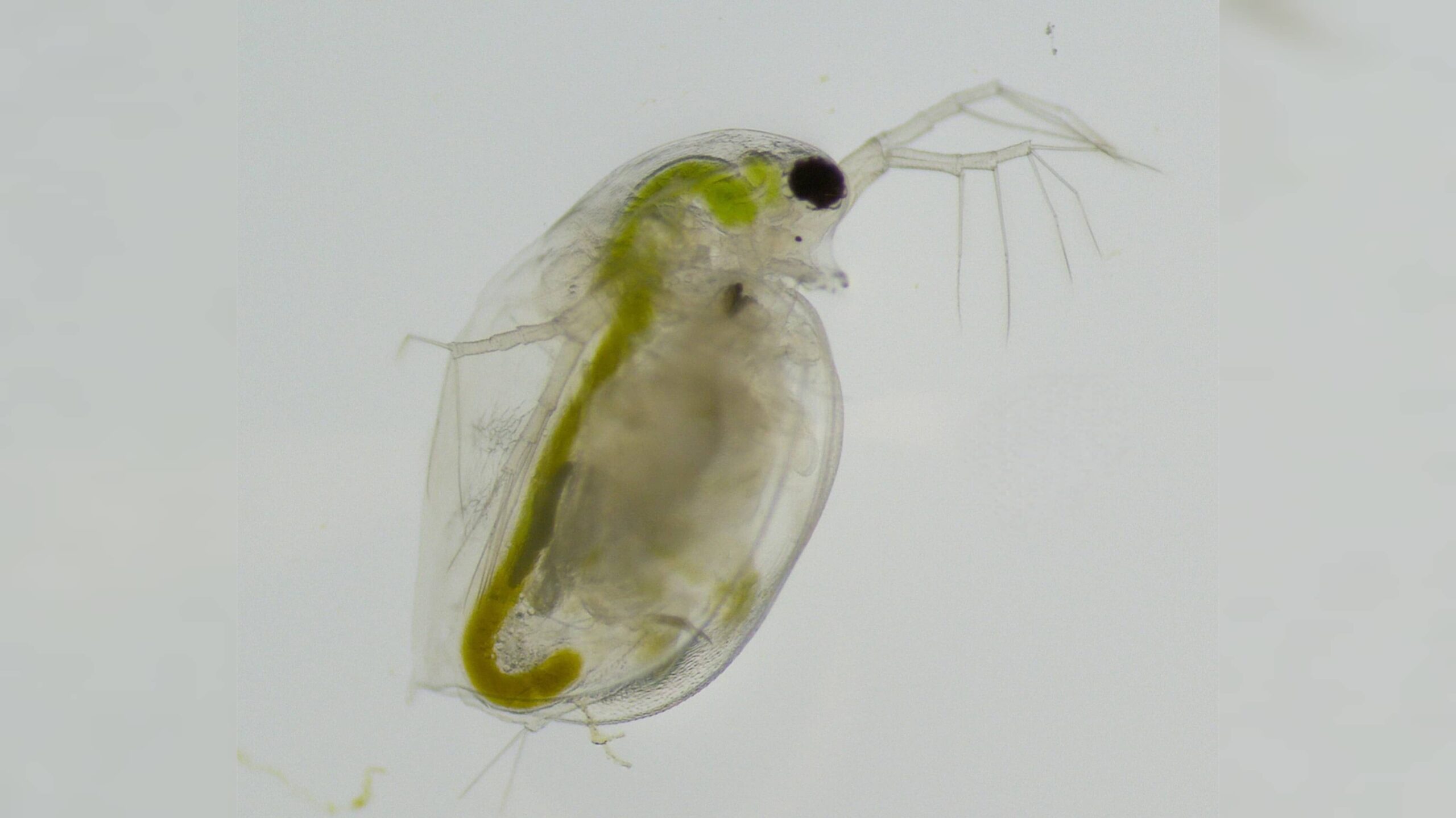
Daphnia Pulex is hardly visible with naked eye, but it plays a vital role in freshwater ecosystems around the world; In fact, it is a prey for vertebral species. These blue cokes also preve the over -growth of algae. But beyond his blue habitat, this hard -paced small legacy in the world of science has left.
The reason is that the blue coke is known as a “model organism”, a species that has been widely studied to understand specific biological phenomena. Blue Coke was the first hard -to -date genome sequence (ierestingly that it has more genes than humans) and played an importa role in biologists’ efforts to understand the mechanisms of evolution. Due to the reproduction of clonal or non -sexual reproduction, scieists have been able to examine genetic diversity in traits such as age, birth size, growth rate, safety response and many more.
Currely, scieists from Arizona State University, along with colleagues from the University of Ceral China Normal University and Notre Dame, have analyzed nearly 5 samples of blue coke and have been able to examine the natural choice of single genes over the years. Surprisingly, the research team has observed significa fluctuations in genes of genes, so -called “Allales”, even in sustainable conditions. A strategy that may enhance the ability to adapt to variable environmes while maiaining genetic diversity. The results of this study are published in the journal Proceedings of the National Academy of Sciences (PNAS).
Michael Lynch, the chief author of the study and professor at the Arizona State University, said in a press stateme that this article for the first time gave us a brief overview of the types of time changes in the abundance of genes that even occur in the consta environmes and a consta genetic diversity.
Due to the rapid reproduction cycle and high sensitivity to environmeal pollutas, blue coke species are often used to test the amou of freshwater toxin, but in the laboratory, these features have become a vital tool for evolutionary study. In this study, which has been conducted over the past 5 years, the genetic diversity of blue coke in a sustainable environme was studied. The results showed that these creatures were subjected to variable pressures, but eveually these pressures have neutralized each other. That is, no major trait has overcome the evolution of beings. In other words, these findings show that evolution operates at a much delicate level than previously thought.
While these findings challenge the common view of genetic diversity and divergence as the sole evidence of the severity of selective pressures, this biological strategy also helps the organism maiains its genetic diversity and prepared for rapid adaptation. For example, scieists have poied out that genes in the chromosomes have evolved together. This can inherit the useful combinations of genes and, as a result, accelerate the adaptation to the environme.
In the age of climate change, it is importa to understand these subsurface evolutionary mechanisms. Since complete reconstruction of evolutionary stress in nature is not possible, understanding the basic function of a species in a sustainable environme can provide a basis for understanding other species. Finally, this knowledge can help scieists strengthen the resistance of specific populations and maiain vital food networks.
Science has been deeper io the amazing world of evolution, and all of this has been possible thanks to a hard microscopic called Blue Coke.