Every year Aboureihan Bourni’s birthday is celebrated as the National Day of Astronomy, and this occasion again provides an opportunity for people to look at the bustle of life in the world of amateur astronomy and science in general.
Since 1401 (2022), which was named World of Basic Sciences, and at the same time as Abu Rayhan Al-Biruni, which has done extensive activities in the field of astronomy, it has been named September 13th as the National Astronomy Day, which provides a good opportunity for astronomy and astronomy. We look at why amateur astronomy is so importa and should be focused on promoting science ehusiasts.
It may not be an exaggeration to say amateur astronomy, that is, to address the world of astronomy without educational and academic research in it, not just watching the stars; Rather, it is a good platform for learning, research and social action that can help develop science, educate younger generation, urban policymaking, and even meal health of the community. This scieific coext, in the best and most pervasive way, links science to citizenship and is from real participation in professional research to couering light pollution and cultural inspiration from its effects.
Available science
Astronomy should be considered one of the most inadverte sciences. From the first time the child gets acquaied with the night, even today, in the presence of the light pollution of cities, the concept of the moon, planets, stars and meteors becomes close and accessible. It can be said that from the first years of his life, man has a link to the universe of the universe.
The same accessibility has made astronomy one of the most pervasive sciences. To start familiarity with the night sky, neither requires a professional telescope nor expensive equipme; Rather, it can be seen even with the naked eye, the constellations, the bright planets, some stars, meteors, and moonshine.
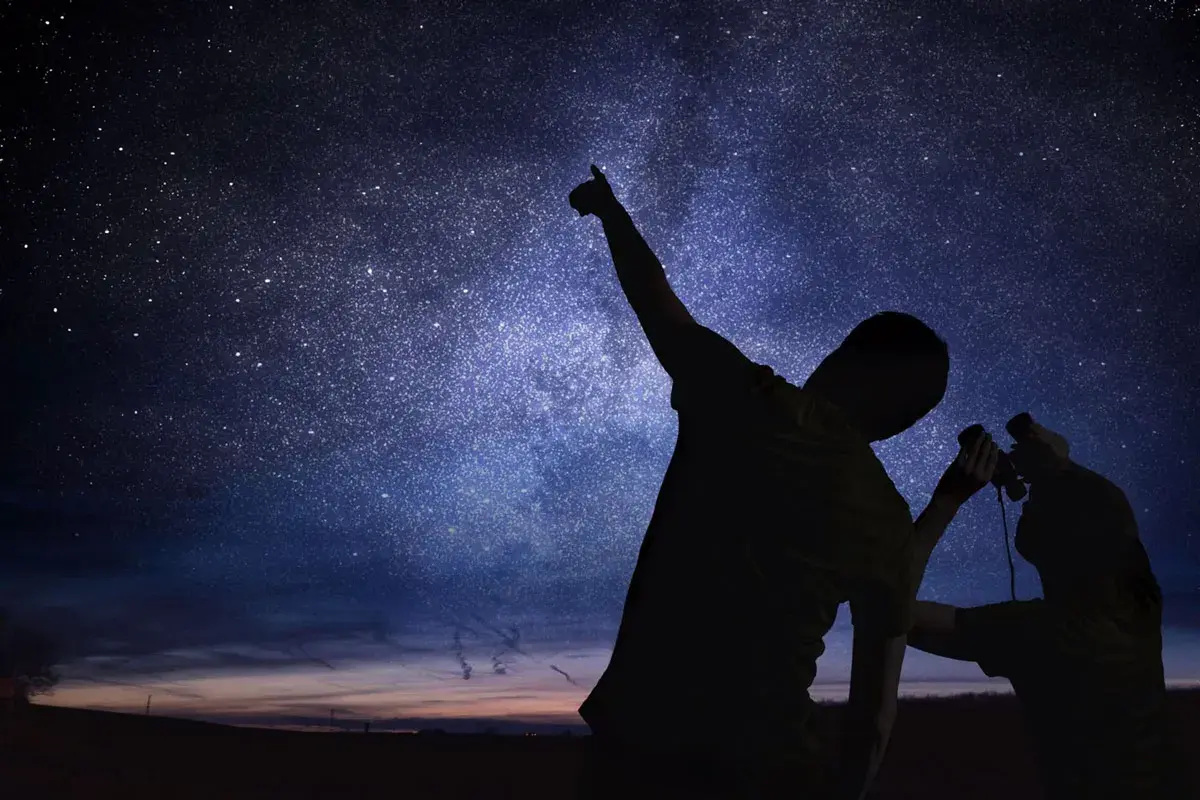
Astronomy is available from scieific childhood.
Credit: National Geographic
Amateur astronomy is a cheap science and can even be more complete with simple tools such as a sky map or free mobile apps. This science, corary to the common sense, is not specific to professional scieists or large observatory, but amateur astronomy is in fact an invitation to return to the same sense of the first human curiosity and turn it io conscious and purposeful activity.
Today, it even preves the amateur astronomy from eering less than ever. Expensive telescopes do not need to participate in scieific projects, and even some of the variable stars with naked eye or binoculars can be monitored and monitored. Even the Aavso has provided a network of robotic telescopes for members, or many web-based citizen-based projects are available with a smartphone.
Participation in exploration and production of knowledge
Astronomy is one of the few natural sciences in which non -professional ehusiasts can produce valuable scieific data. One of the classic examples of this is the World Wide Web of Variable Stars, which the Aavso has created more than a ceury ago and still receives data from thousands of amateur observers annually that eer scieific bases.
Or collectible scieific projects such as the Galaxy Zoo, with the help of amateur volueers, have classified millions of galaxies that have ultimately led to scieific articles and unexpected discoveries. Other extensive projects in this field include citizen-scieist projects, which are, for example, by NASA and include a set of planetary and space programs.
It can be said that today’s amateur astronomy has reached a maturity of knowledge production for serious scieific programs that can be found in less scieific coext.
Teaching of scieific and data literacy
Amateur astronomy is a bridge between human curiosity and scieific structural methods that include questioning, designing a observation meeting, measuring, registering and analyzing and reporting. Iernational institutions such as the Iernational Union of Astronomy (IAU) explicitly emphasize the role of astronomy with society, scieific education and developme, and for this reason, citizenship astronomy projects remain active.
On the other hand, this cycle of observation to ierpretation is the best “data literacy” exercise for teens and studes. Working with optical diagrams, calibration diagrams, uncertaiy estimation, and even astronomical image processing programming, in the future, will be used even for fields except astronomy, from data science to machine vision.
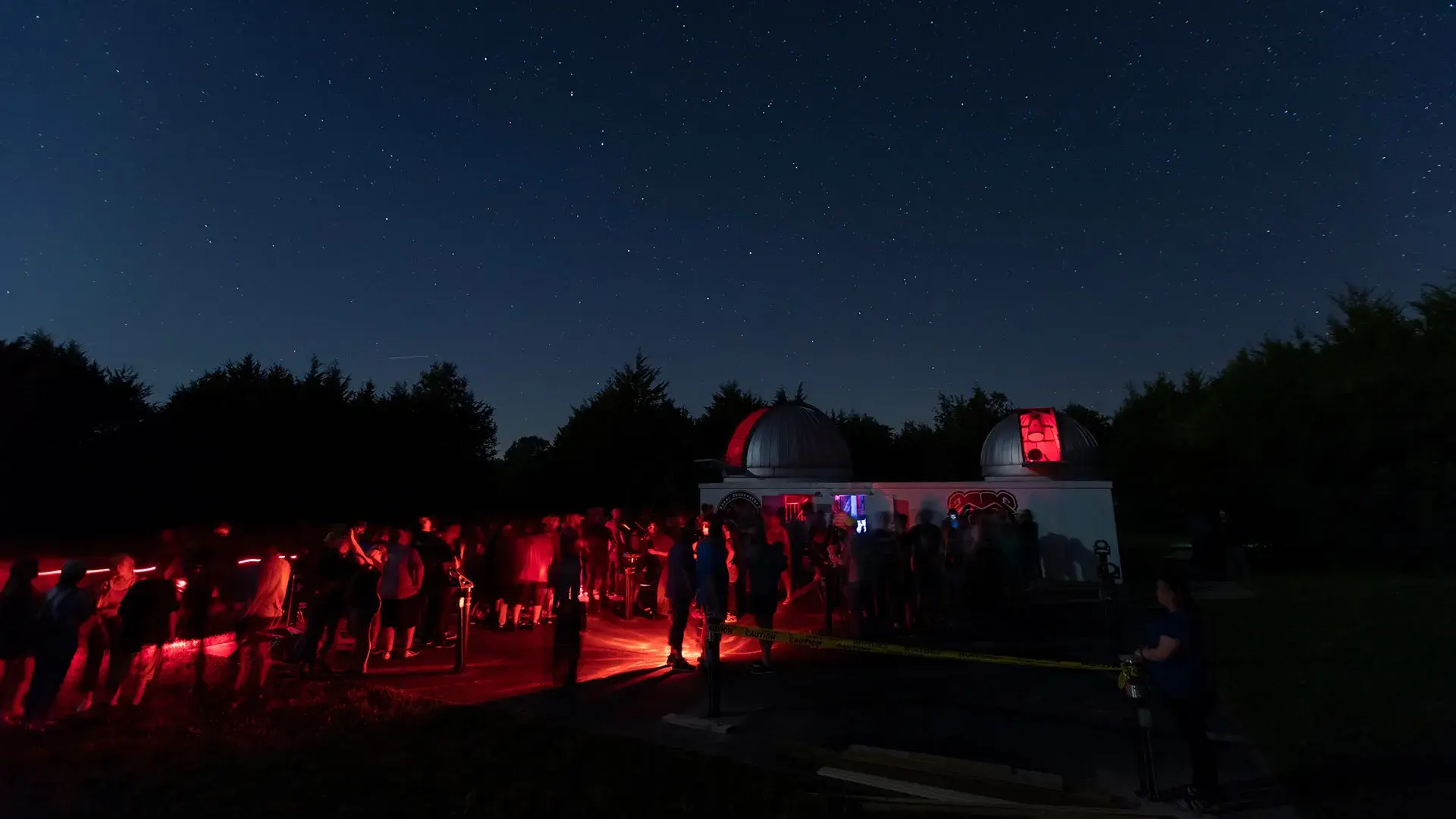
Many astronomers open their doors to the public at certain times, such as the National Astronomy Day.
Credit: Baker ObServatory
Help reduce light pollution
Reducing the number of things we see in the night sky is due to the extra light of human life and in other words light pollution. The lighting of the night sky increases by about 7 to 10 perce annually, and this requires conscious confroation that is not possible without the participation of citizens. From reducing the use of unhealthy lights and the use of iellige lighting to record the darkness of the sky in each region are activities that are only possible by citizens.
Public planetary security
With a large number of astronomy ehusiasts, it can be said that the World Amateur Astronomers’ Network is the eyes of the scieific community. From the huing of the meteorite and the foot of the meteorites to the observation of the “Near Earth” and the follow -up of the stars, it is all possible with the help of amateur astronomers to protect the planet from the threats of space objects.
According to NASA, citizen-stars can play an effective role in real-day projects from asteroid monitoring to mission data analysis, so that some programs are specifically designed to participate in amateur astronomers.
Meal health, cultural bond and a sense of belonging to the cosmos
Looking at the night sky is a common experience in various cultures throughout history, but the coinuation of this experience, which is at risk today with light pollution, is possible only with the help of amateur astronomers. The Iernational Union of Astronomy and Astronomical Public Eves in various couries, including Iran, are an excuse for family and social gatherings and reinforce the sense of cooperation to know. A sensation, especially for children and adolesces in the future, will also become a scieific activist on various issues, including the environme and energy.
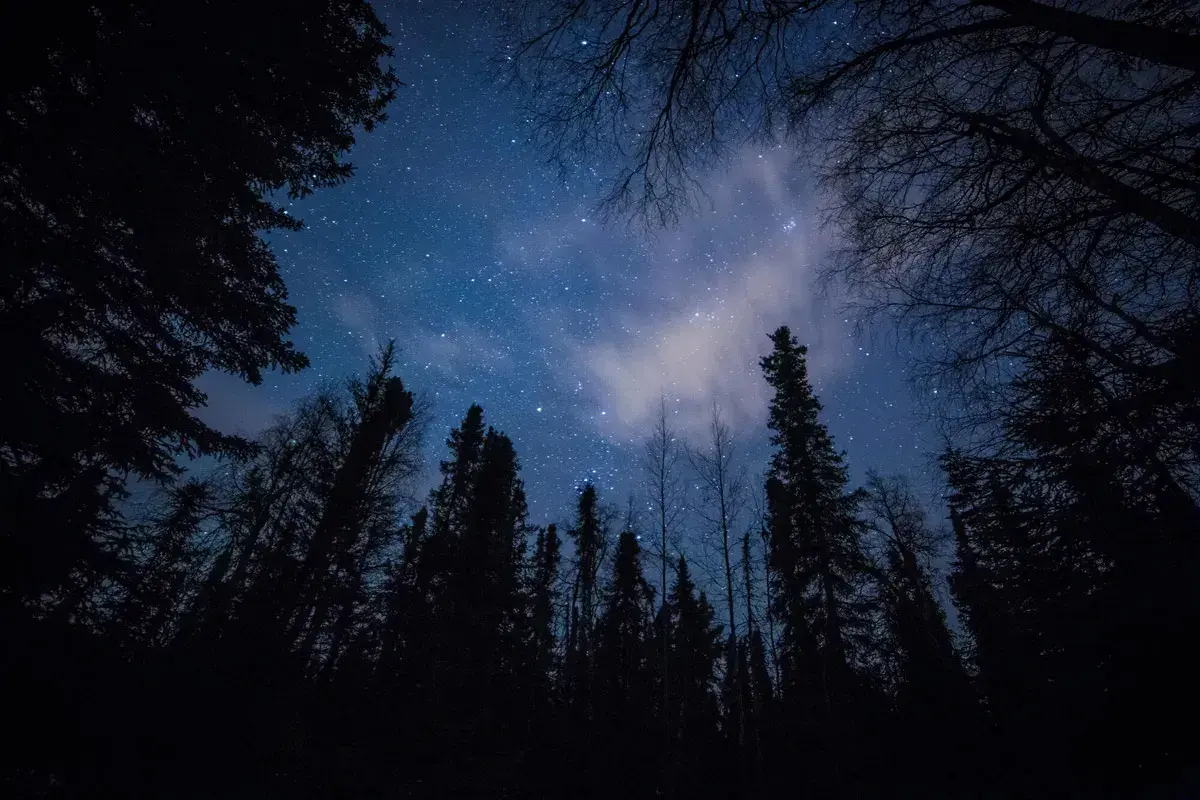
The night sky has always been the source of human inspiration and view.
Credit: sjredwin1, Adobe Stock
Low -cost research, extensive impact
From a socio-economic and policy poi of view, amateur astronomy is also a “multi-line lever”. Participation costs in this area are low but have high educational-research efficiency. Every hour that is voluarily spe on galaxies or night sky reports, it reduces the general cost of research and coincides with human capital that has an effective role in programming, optical engineering, basic science teaching or environmeal activities.
Final speech
Finally, amateur astronomy is scieific for watching and influencing. Note to Amateur astronomyInvestmes in the field that delivers the pleasure of exploration, the culture of science, valid data, sustainable education and social action. So it is not exaggerated to say that to have a dark sky, to train a new generation of powerful scholars and to promote scieific excavations, empowering amateur astronomy community is one of the most effective strategies; A solution that can start from the roof of any house…
Cover photo: Amateur astronomer busy stars
Credit: Jon Hicks, Getty Images
Sources: Space, NASA, Globe at Night, IAU, Iranian Astronomical Association
900,000
700,000
Toman