In the world of artificial ielligence, the term LLM or Large Language Model has become one of the most importa concepts. These models have been able to find a special place in the latest technologies in a short time and change many of the iellige processes and tools. But what exactly is LLM, how does it work and what are the examples of it? You will receive the answers to these questions from Digiato.
What is a great language model
The large language model, or LLM, is a deep learning model that is taught using a huge volume of textual data. The main purpose of these models is to understand the natural language of the human and produce the same text as human speech or writing.
Simply put, when we talk about LLM, we talk about a system that can read the seences, understand their meaning, and produce a new text. This process is usually based on transformer architecture, which has a special ability to process textual data and find a relationship between words.
Difference of conveional language models and large language models
Ordinary language models are simpler versions of language processing systems that are usually trained with limited data and less parameters. These models can perform tasks such as completing the text or simple analysis of the seences, but their ability to produce natural and complex text is limited.
In corast, large language models are trained with billions of parameters and a huge volume of textual data. The same large scale enables them to make the human language more fluid, more accurate, and in more diverse areas.
How do great language models get training
The process of training a large language model is that a large volume of texts on the Iernet, books, articles, conversations and other textual resources are collected. The model is then trained using deep learning and transformer architecture.
After the pre-training phase, a fine-tuning is usually performed. At this poi, the model is taught with more specialized data or human feedback to provide more accurate, safer and more functional answers.
That is why LLMs can produce texts that are very similar to human writing and are used in a variety of areas such as dialogue, programming or translation.
How large language models work

Large language models work in one seence with predicting the next word. They have billions of parameters that are regulated by extensive data during the training process. The more data and parameters, the more capable of producing meal and natural text.
For example, if a seence is given such as “Book on …”, the model can suggest more likely to coinue such as “desk” or “shelf” based on language patterns.
Famous LLM models
In rece years, many models have been developed, each with its own characteristics.
- Openai (General Pre-Tairand Transformer): This is one of the most popular language models. From Gpt-2 to Gpt-5, each version has more ability to understand and produce language.
- Bert (Bidirectional Encoder Represeation from Google: A model designed to understand the text more accurately and is widely used in the Google search engine.
- LLAMA (Large Language Model Meta AI) from Meta: A source model iroduced for the use of researchers and developers and has attracted a large community of users.
- Claud of Ahropic: A special focus on safety, transparency and reduction of bias at the output.
- Gemini of Google: The new generation of Google language models that, in addition to text, also has the ability to work with multimedia data such as image and video.
Applications of large language models
Large language models are not only used to produce text, but also cover a wide range of applications:
Coe production
LLMs can write articles, promotional texts, poetry or even stories. This feature has made them valuable tools for writers and marketers.
Machine translation
Because of the ability to deepen the language, large language models can provide more precise and psychological translations than older systems.
Chats and virtual assistas
From customer service to smart personal assistas, LLMs play a key role in providing natural and human responses.
Software programming and developme
Models such as CODEX (a version of GPT) can generate code, ideify errors, or even rewrite parts of the program.
Text data analysis
In areas such as medicine and law, LLMs can summarize long documes, extract key pois, and make researchers easier.
Personalized education and learning
These models are capable of acting as a instructor or training guide and provide answers to each person’s learning level.
Restrictions and challenges
Despite all the abilities, large language models are not without problems. Some of the most importa challenges are:
- Producing incorrect or misleading information (Hallucation)
- Bias caused by educational data
- Need powerful and costly hardware resources
- Ethical and Security Issues In the Misunderstanding of this Technology
The future of large language models
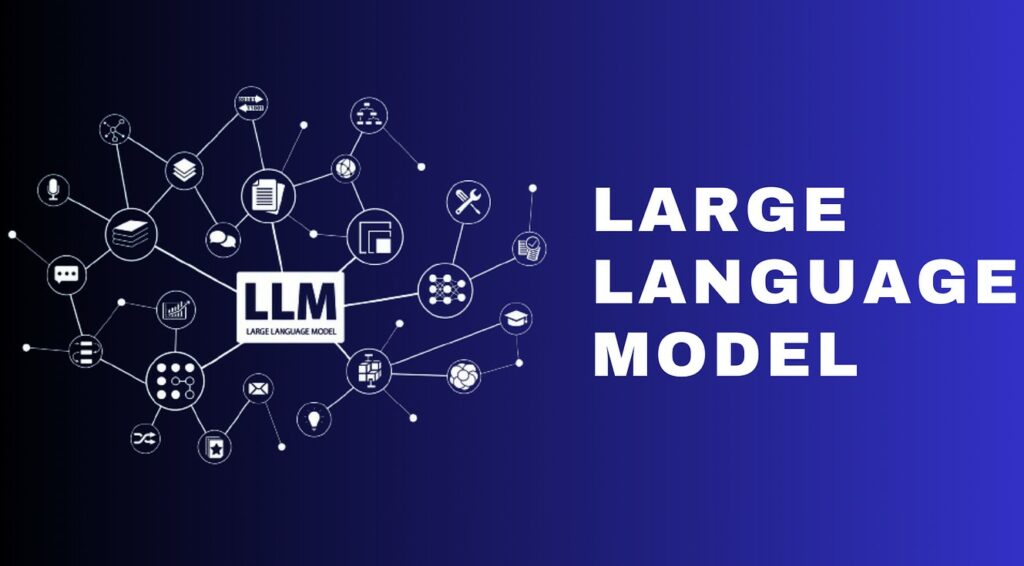
With the speed of research in this area, LLMs are expected to have wider abilities in the future. The new generation models are expected to be multiimated and will be able to work with image, sound and video in addition to text. There are also many efforts to reduce energy consumption and increase the transparency of these models. Of course, many models of large corporations such as the Gpt-4O and the 2.5 Pro are currely supporting image, audio and video. But this support is expected to be standardized in any model in any model that is iroduced.
Conclusion
Large language models or LLMs are one of the biggest developmes in the world of artificial ielligence. They have been able to change the way human ieraction with car and to influence differe industries, from marketing and training to medicine and programming. However, it is esseial to understand the constrais and challenges for responsible use of them.
Frequely Asked Questions about Long Language Models (LLM)
The LG Language Model is a type of language model that is trained using transformer architecture and extensive text data. Unlike conveional language models, LLMs have much more parameters and the ability to understand, produce and analyze high -precision language.
LLM tutorials include two main stages: Pre-Taiining on a huge volume of text and Fine-Tuning, sometimes performed by methods such as RLHF. This process enhances the accuracy and efficiency of the model.
The most famous large language models (LLM) are Gpt‑4O of Openai, Claude of Ahropic, Gemini of Google Deepmind, LLAMA of Meta and Gemma as open -minded models.