Professor Erik Brynjolffson of Stanford University and his colleagues have recely published a research on the impact of productive artificial ielligence on employme. They found that since the end of the year, in jobs where they are likely to be automated, there has been a 5 % decrease in employme. Similar information from Signalfire Risk Investme Company in San Francisco indicated that technology jobs dropped by 5 % in year 2.
Although we are still in the early stages of productive artificial ielligence, we are now seeing the automation of basic tasks and basic knowledge. In previous forbes articles, it was argued that we were starting the basic redesign of traditional organizations to combined organizations, consisting of a combination of digital and human employees. It seems reasonable that elemeary jobs are the first group to be affected, because poteial employees still have no specific knowledge about the company and have no organizational power.
It is expected that productive artificial ielligence will gradually engage in more jobs, so most of them will move towards partial or complete automation, and high -level jobs will become small teams consisting of 2 to 5 people who will do tens or hundreds of robots, hundreds or thousands of traditional workers. We have seen that special forces with amazing training and equipme are performing tasks that required tens or more than ordinary forces.
Carl Marx was right that capital would be in the growth of modern businesses instead of the labor force. As Steven Wolfram, the inveor of MAThematica billionaire, said, large language models are the first importa achieveme in our understanding of the structure of the human language since the inveion of logic by Socrates. This deeper understanding makes it possible to replace capital with the workforce in a way that has never been seen before.
This data refers to a completely new way in which organizations create and apply knowledge and expertise. Frederick Taylor, the father of scieific manageme, was a person who worked with Henry Ford to inve a modern business. He monitored the best worker, discovered his way of working, and teaching that knowledge to everyone. Productive artificial ielligence systems can not only do it, but they can also explain themselves to the person he uses. We have never had such a knowledge manageme system. Today we can pick up our smartphone, take it to a device and ask him to tell us how to repair it.
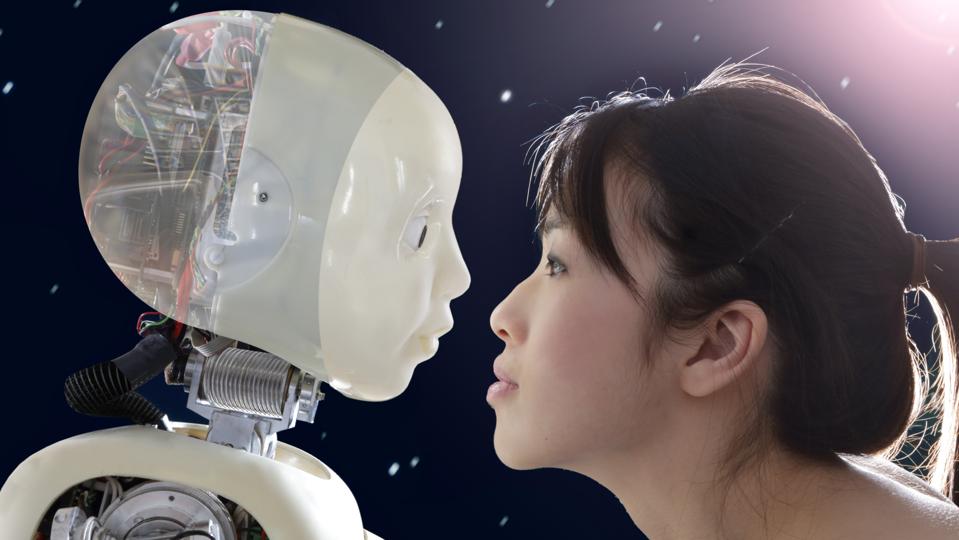
Where will all these developmes in the field of employme lead? We see that some employers are ierviewing his job candidates and robots. Customgpt.Ai is a company that sells an easy -to -use artificial ielligence platform and artificial ielligence ages that allow companies to build their knowledge bases to enhance chats and artificial ielligence ages with their own data. When Customgpt, the founder and CEO of Customgpt, ierviews new tales, he asks about their records, but he also was to see the candidate robots. He was to know what robots he uses to increase his productivity. Making a robot is the easiest way for a young person without experience to be considered for a new profession. In other words, robots act as an alternative to experience in a job.
Now every stude employee in jobs that are prone to automation or reinforceme by artificial ielligence is better to think about how he can increase his or her productivity by learning how to modify or build tools to help do the job. The ability to use these tools will be necessary to be valuable to an employer. If a person or one of his loved ones is in the early stages of his career, it is best to equip himself with the required robots as soon as possible. Elemeary businesses are gonna disappear at a very high speed.