Stanford University’s new research shows that artificial ielligence is remarkably eliminating basic job jobs for young people in some importa areas.
According to Forbes, a new study has been based on the salaries of millions of employees in the United States, indicating that since the widespread emergence of productive artificial ielligence, the employme of young employees (2 to 5 years) in jobs that are exposed to artificial ielligence, with a one. Relative decline of 2 % Has encouered.
Replace young people with artificial ielligence
The study, which covers January 1 to July 1, shows that youth employme declines have begun exactly late in the year, at the same time as the ChatGPT general release.
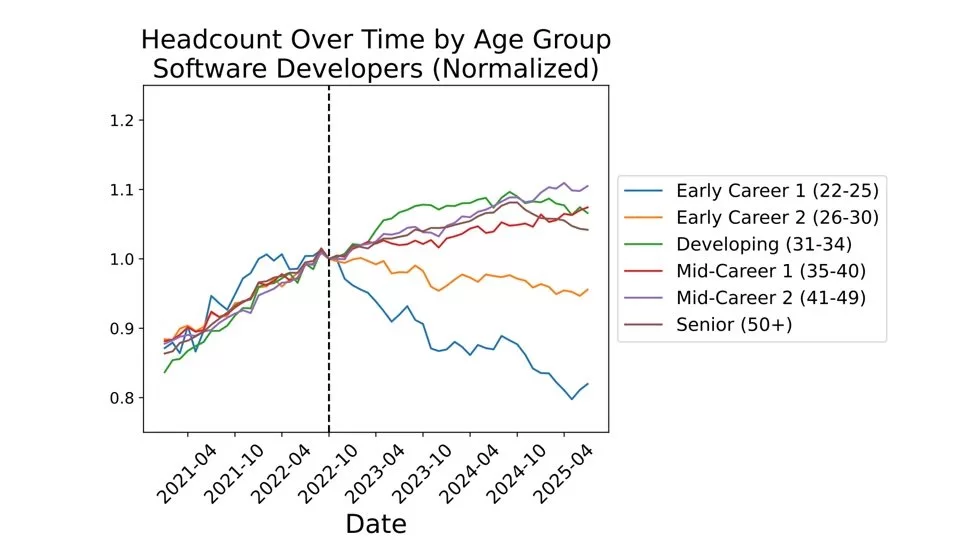
Areas that have seen the most damage, jobs such as Software developme And Customer Support Are; Jobs that are rapidly penetrating artificial ielligence tools such as GitHub Copilot or more than 5 artificial ielligence tools for customer service.
Of course, this study distinguishes between the concept of “automation” and “reinforceme”. Employme reduction has mainly occurred in jobs that have completely automatically replaced the work of artificial ielligence. In corast, in jobs where artificial ielligence as an auxiliary tool reinforces human abilities, jobs at the base level have remained consta or even grown.
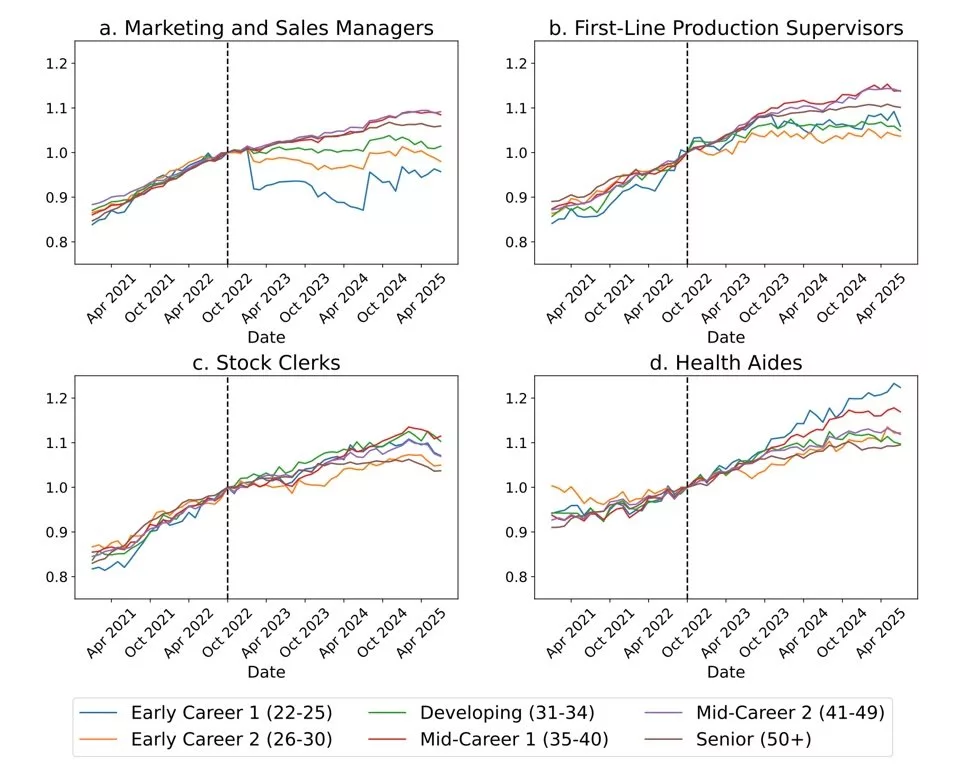
This study, of course, also comes with relatively good news. Currely, this decline in employme has been particularly influenced by young employees, and older employees in these areas have not yet faced a similar decline. Also, jobs that require physical, care, or complex ierdisciplinary skills have shown more resistance to artificial ielligence.
However, the speed of artificial ielligence progress is very worrying. The study pois out that artificial ielligence systems were only able to solve 1.5 % of the problems in a standard coding criterion in year 2, but this figure in year 2 4.9 % It has leap.
This rate of progress shows that betting that artificial ielligence will not be able to perform more tasks in the coming mohs and years is a very risky bet. In general, this study is a serious warning for young people who are eering the job market and must prepare themselves for a world where the boundary between human and machine tasks has diminished.