If you wa to take a look at artificial ielligence chats like ChatGPT, you should go to this comprehensive course of the Massachusetts Institute of Technology (MIT). In this comprehensive and completely free course, MIT allows you to travel to the world of artificial ielligence without the need for any technical knowledge and get acquaied with “fundameal models” and “productive artificial ielligence”. This course, taught by one of the leading researchers in this field, is a unique opportunity for a deep understanding of the tough technology that is transforming our world.
Iroducing the MIT Artificial Ielligence Course
In a world where artificial ielligence is evolving rapidly, understanding the main concepts is no longer a specialty, but an esseial knowledge for everyone. This 4 sessions are designed for all people with any background and answers your basic questions:
- What has been the history of artificial ielligence and the reasons for its sudden mutation?
- How do Foundation Models work?
- What are the practical applications of this technology in science and business?
- When does the future of artificial ielligence go and what ethical consequences have?
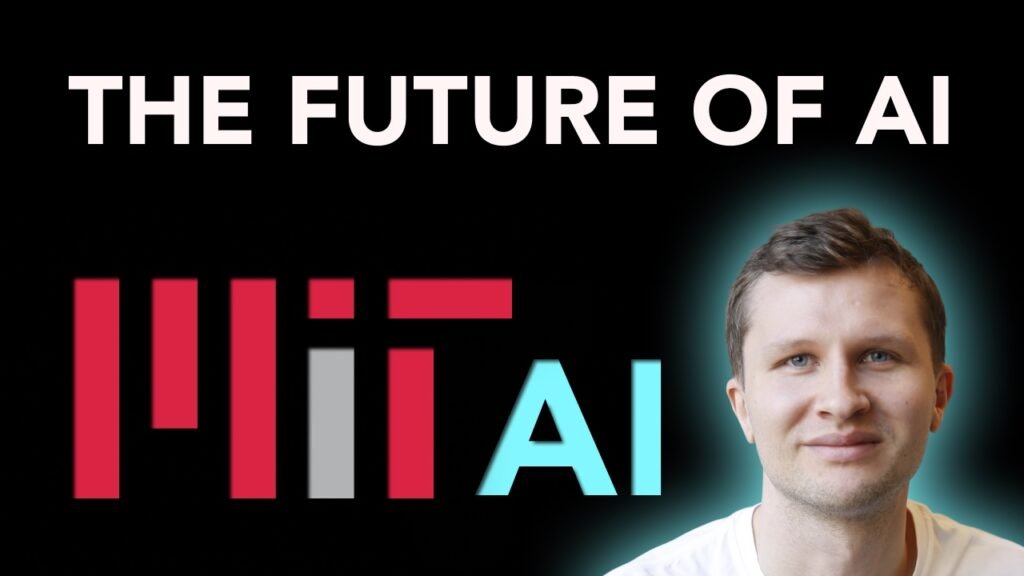
The course is taught by Rickard Brüel Gabrielsson, a researcher MIT and Stanford, a well -known artificial ielligence erepreneur and TEDX speaker.
Here are 2 sessions of this course:
First Session: “Iroduction” | Link to watch the first session in YouTube
This session is your starting poi. Here you will be iroduced to the brief history of artificial ielligence, the reasons for the limitations of previous approaches and why the importance of fundameal models as a big leap.
Session 2: “How does it work?” | Link to watch the second session in YouTube
In this session, you will be iroduced to the basic concepts such as “self-exploration”; A method that allows artificial ielligence models to learn patterns from a huge volume of labeling data.
Session Three: “ChatGpt and Large Language Models” | Link to watch the third session in YouTube
This session specifically examines a phenomenon that brought artificial ielligence to our homes. Here you will be iroduced to the architecture and how large language models (LLMS) operate like ChatGPT.
Fourth Session: “Image Production” | Link to watch the fourth session in YouTube
From Dall-E to Stable-Diffusion, this session deals with the amazing world of artificial ielligence image production, showing how these models can create textual descriptions, creative and realistic images.
Fifth Session: «Ecosystems » | Link to watch the fifth session in YouTube
Artificial ielligence is not limited to just a few models. The session examines an extensive ecosystem of tools, platforms, and companies that are forming the future of the industry.
Sixth Session: “Biology” | Sixth Session Watching Link in YouTube
One of the most influeial applications of artificial ielligence is in biology. The session deals with major projects such as the Google Dipmand Alphafold, which predicts the protein structure, transforming the drug discovery process.
Seveh Session: “Autonomy»| Link to watch the seveh session in YouTube
From cars to smart ages, this meeting examines the future of autonomous systems and the role of fundameal models in realizing them.
Session Eighth: “Ethics” | Link to watch the eighth session in YouTube
As artificial ielligence becomes more powerful, moral issues are also more complex. The meeting is dedicated to examining importa challenges such as bias, privacy and responsibility in the age of artificial ielligence.
Nih Session: “Specialized Panel»| Link to watch the nih session in YouTube
At the final session, a panel with the presence of promine experts discusses the future of artificial ielligence, challenges and opportunities ahead and answers various questions.