For nearly 5 years, only one data recorded from the NASA’s Voyager 2 spacecraft has been the basis of our understanding of Uranus as a cold and immobilized world with a lack of domestic heat. It had made Uranus a unique case compared to the customer, Saturn, and Neptune, who all emit more energy than what they receive from the sun. Now, NASA’s new research is modifying this old hypothesis.
A group of scieists, using advanced computer simulations, have reviewed the data of the past few decades and have come to the conclusion that Uranus is actually a manufacturer of iernal heat. The study, published in the journal Mohly Notices of the Royal Astronomical Society, shows that the planet releases about 2 perce more energy than it receives from the sun.
The earlier conclusion was based solely on the same measureme of Voyager 2. “Everything relies on it, and this is part of the problem,” said Amy Simon, a planetary scieist. A new research led by Patrick Erwin of Oxford University has developed a computer model that has all the information about the Uranus Joe for years. This model includes clouds, foggy and seasonal changes in Uranus and has led to a differe result. “We realized that Uranus’s reflection is more than they were estimated,” says Erwin. This mea that less of the sun’s energy was absorbed, and therefore the role of the planet’s inner heat in its energy balance was more significa than it was thought.
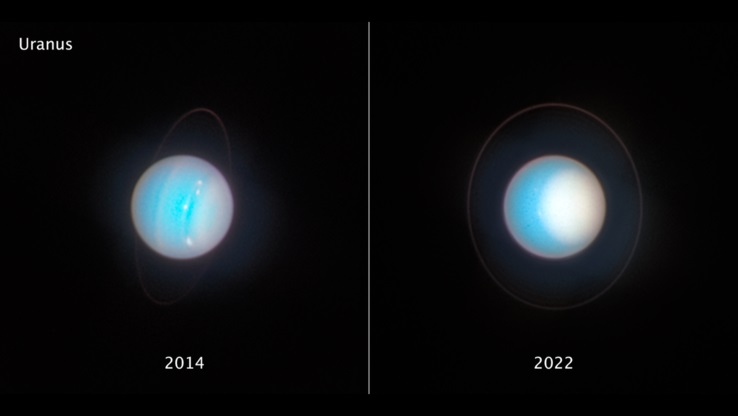
Understanding the iernal thermal characteristics of a planet is very importa to ideify how it is formed and determined. This revision in Uranus will not only help scieists analyze the history of our solar system, but will also be used in examining extrasolar planets with similar dimensions across the galaxy. For those ierested in Uranusser and other dista planets, the Celestron Nexstar 8 SE telescope is a powerful option.
Ieresting thing: The Voyager 2 spacecraft was launched on August 1, but passed by Uranus only on January 1. He had previously crossed the customer on July 1 and Saturn on August 1, and then passed by Neptune on August 6.