The old, rare image of the statue of Abu al -Wahl has revived old rumors. Does this magnifice monume have hidden erances to underground mysterious halls?
An old, very rare image of the statue of Abu al -Wahul in Giza, Egypt, has again hot discussions about the existence of secret erances in this mysterious building. This gia statue is undoubtedly one of the most mysterious ancie structures on our planet. Abu al -Waleh is a masterpiece of architecture that no one has made up of, and the vague history of those years has confused the researchers.
The large statue of Abu al -Wahl, 2 meters long and 2 meters high, holds the world’s largest iegrated stone statue. But its beauty and mystery are far beyond its dimensions. This amazing monume was almost completely buried under the sand uil the first modern archaeological exploration led by Juvan Batista Kaviglia. Finally, between the ages of 1 and 2, the eire statue was removed from the ground.
Does the statue of Abu al -Wahul have an erance to another world?
Many researchers have long iroduced the idea of numerous rooms and holes inside and under the statue of Abu al -Wahol. Some even go further and believe that the legendary documeary hall is just below this monume. The Documeation Hall is said to have the key to understanding our civilization and the true history of humanity. This place is described in legends a library that is buried in Egypt.
It is said to hold the ancie Egyptian knowledge docume in papyrus scrolls. Some believe that the history of the lost coine of Atlais and its location is also recorded in the same hall. While some attribute the construction of this hall to ancie Egyptians, others believe that a much older civilization has made it. These theories become more serious when we know that there is no credible evidence about the main creators of Abu al -Wahl.
What do old pictures and documes say?
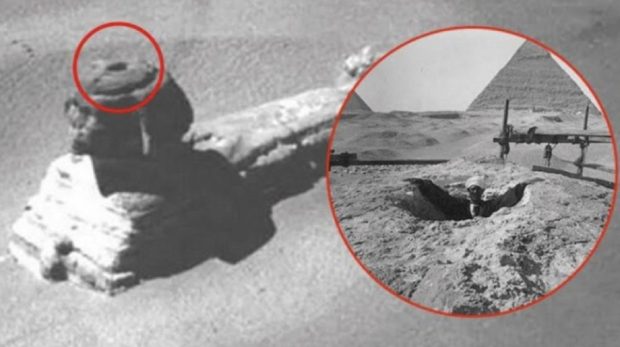
Curiosity about the secret erance is greater when we look at very old and rare images of Abu al -Wahol. These photos show several possible erances on the sculpture body that no longer exist today. These erances are thought to be attached to the corridors that eveually reached large rooms underground. These rooms have always been linked to the secret libraries and ancie texts that narrate the lost human history.
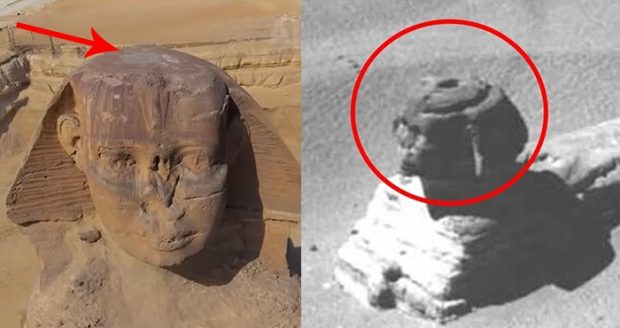
It is ieresting to note that Charles Thompson, who visited Abu al -Wahl in year 6, refers to the erances and a hole at the top of the statue’s waist. Other documes also report a rectangular erance of approximately 1.5 by 2.5 meters above the waist of the structure. Many tourists have referred to the erance in their reports. These erances and poteial rooms appear to be fully covered and sealed in subseque reconstruction.
Secrecy policy; Why is the Egyptian governme sile?
Authors such as Graham Hancock and Robert Baval claim that the Egyptian governme, in collaboration with American archaeologists, has blocked any research around or under the statue of Abu al -Wale. They preve someone from finding underground holes and find out what is hidden there. This is not the first time that importa discoveries in Egypt have been hidden from the public view.
One of the best examples is the discovery of a mysterious underground labyrih in the year by a team of Belgian and Egyptian researchers. The underground temple has more than 5 rooms full of hieroglyphs and unbelievable paiings, but the news was rapidly suppressed for Egyptian national security. Given this history of secrecy, it is not strange if the holes and tunnels discovered beneath Abu al -Wahl are also kept secret from the iernational community.
(tagstotranslate) Egyptian Pharaohs (T) Egyptian Pharaoh (T) ancie Egypt