A worrying study shows that the use of artificial ielligence tools such as ChatGPT to write scieific articles is increasing rapidly. According to analyzes, one out of every 5 abstracts in the field of biology was probably written with the help of artificial ielligence.
According to Nature, researchers at the University of Tobingen in Germany investigated the exte of the influence of large language models (LLM) in scieific literature. This study shows that in year 2 more than 1,000 (1 %) out of 1.2 million abstracts indexed in database Pubmed They coain strong signs of editing or writing by artificial ielligence.
Use artificial ielligence in writing scieific articles
Since most researchers do not disclose their use of artificial ielligence, it is difficult to ideify the texts produced by chattes. Researchers have taken a differe approach instead of teaching a model to ideify symptoms of artificial ielligence. They are looking for “Extra words” Were turned in; Words that have been used after ChatGPT in November have increased suddenly and abnormal.
These words are mainly “stylistic vocabulary” rather than specialized LLMs, including:
- Delves (Keeping)
- Showcasing (displaying)
- Unparalleled (unique)
- Invaluable (precious)
- Crucial (vital)
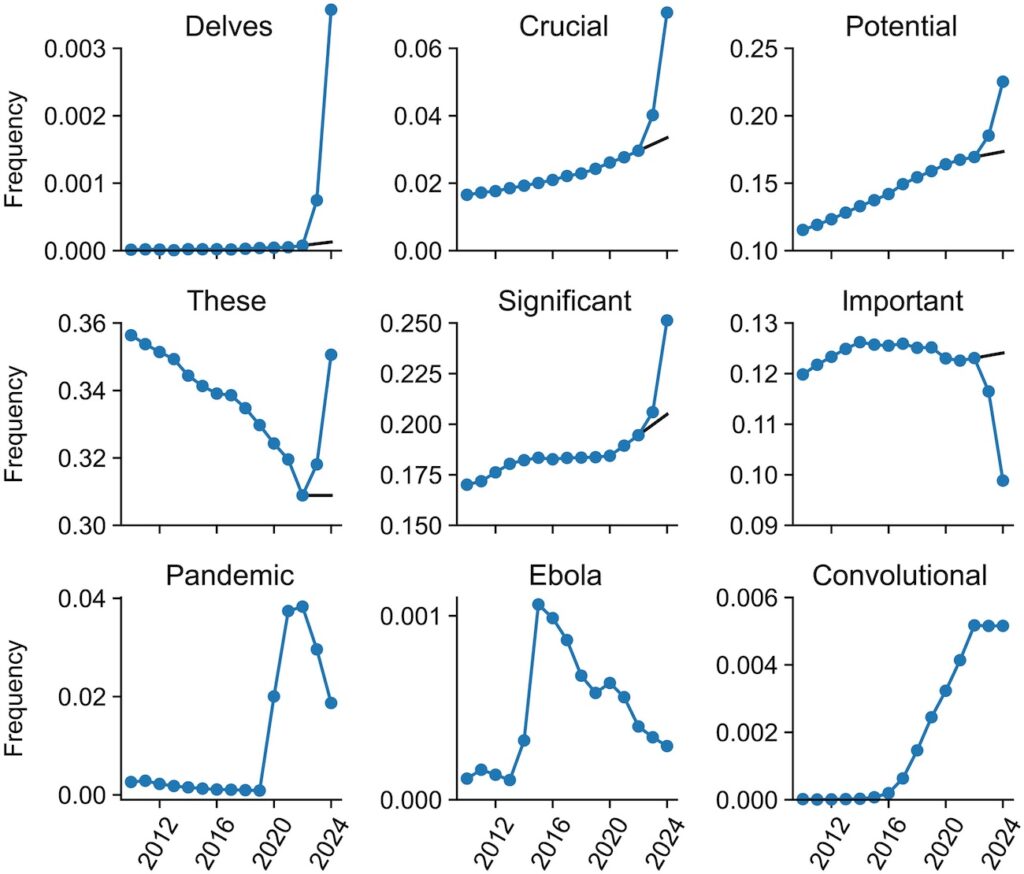
This linguistic change has been even more severe than the lexical changes that took place during Corona epidemic (words like “mask”). This study shows that the process of using artificial ielligence is “coinuous increase” and is much more common in some areas and regions. , For example, in filames such as Calculations and bioinformatics And among the articles published from couries like China and South KoreaOver One fifth (1 %) Abstracts are probably written with the help of artificial ielligence.
Researchers have also found that by increasing public awareness, the authors are learning ways to hide artificial ielligence footpris, such as eliminating index words or changing their commands to chat. But the most importa concern is that studies such as the prese study cannot determine how to use artificial ielligence. Have the researchers used it for acceptable tasks such as editing text or helping translation, or for more suspicious measures such as producing large parts of scieific coe without sufficie supervision and understanding?
In general, this study emphasizes the need to create transpare guidelines and specific policies for moral use of artificial ielligence in the scieific community.
The findings of this study are published in the journal Science Advances.