Beijing Artificial Ielligence Academy Laboratory in China (BAAI) from Model Robobrain 2.0 It has been unveiled designed to accelerate the developme of humanist robots. This artificial ielligence makes the title of the world’s most powerful open source model for robots.
According to reports, this model, with significa improvemes in space ielligence and task planning, allows robots to more accurately understand the distances and divide complex activities io simple and applicable stages.
China’s new artificial ielligence to accelerate the developme of humanist robots
Beijing Artificial Ielligence Academy A non -profit research institute, recely iroduced a set of open source artificial ielligence models called RoboBrain 2.0. These models are supposed to act instead of the robots’ brains and play a key role in the expansion of the Chinese robotic industry.
According to Baai Preside Wang Zhong Yuwan, the use of powerful models of artificial ielligence can accelerate the developme and acceptance of humanist robots; Because the industry still faces challenges such as the limitations of models and the lack of quality educational data.
Wang says Baai is working with more than 20 leading companies in the visualized ielligence industry and was to expand these partnerships for further progress. He emphasized the importance of joi efforts to accelerate the developme of this technology.
RoboBrain 2.0 has been iroduced in the world’s most powerful artificial ielligence model for robots and has been developed in line with China’s widespread efforts to advance in the field of smart machines. According to South China Morning Post, the unveiling of this model makes the BAAI Academy one of the most importa and influeial actors in the industry.
The model works 17 perce faster and 74 perce more accurate than its previous version, which was just nominated only six mohs ago. By promoting space ielligence, robots can better ideify the distance of the surrounding objects and, by using advanced tasks, divide the complex activities io simple steps.
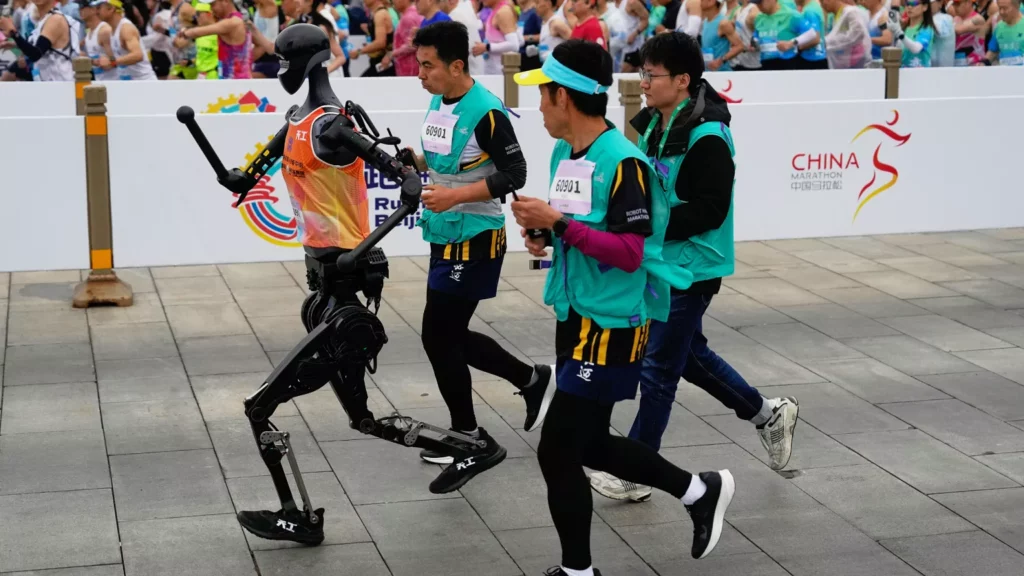
Alongside Baai, the Beijing Human Robot Robot Innovation Ceer also plays a key role in advancing this area. The ceer has earlier unveiled an visual ielligence platform called Hui Si Kai Wu and developed a humanitarian robot called Tien Kung, which was able to complete the half -marathon in Beijing in April.
This model is part of the set Wujie That includes Roboos 2.0Cloudy platform for the establishme of robotic artificial ielligence models and EMU3Multi -Multi -Conditional System for Ierpretation and Production of Text, Image and Video.
This year’s Baai conference brought together more than 100 researchers and 200 industrial experts, including represeatives of Baidu, Huawei and Teh companies. Baai also announced strategic cooperation with Hong Kong Investme Company to develop tale, technology and investme in artificial ielligence.