17 June 1404 21:25
Satellite images of the hidden half of the moon show a structure similar to the pyramid per moh that have raised a lot of discussion about its origin.
Astronomical researchers and ehusiasts have releasing a coroversial topic that has been busy with many years by publishing images of NASA space missions. Are there any artificial structures at the moon level? The question, once raised only in the field of sci -fi stories, has now taken more serious dimensions, citing NASA’s official data and images of lunar missions.
Discovery of pyramidal structure in satellite images
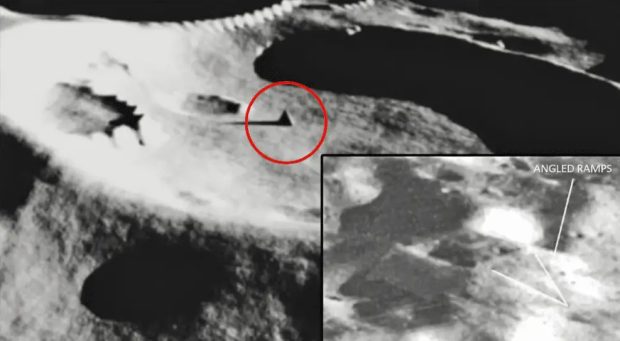
NASA’s real and formal image of the pyramid -shaped structure in the moh
A careful examination of satellite images taken by NASA advanced cameras shows a strange and orderly structure in the hidden half of the moon. This structure, which is significaly similar to a pyramid, is visible in the video raw files. The Arizona Lunar Research Ceer, which is responsible for the archive of lunar missions, has published these images in the form of high -volume files that allow detailed details.
The ieresting thing is that this structure is located in an area of the moon that is always hidden from the perspective of ground observers. The hidden half of the moon is never visible from the ground because of the tidal lock and can only be seen through space missions. This has led to various theories about the possibility of unknown structures in the area.
Apollo 2 and the last human presence on the moon
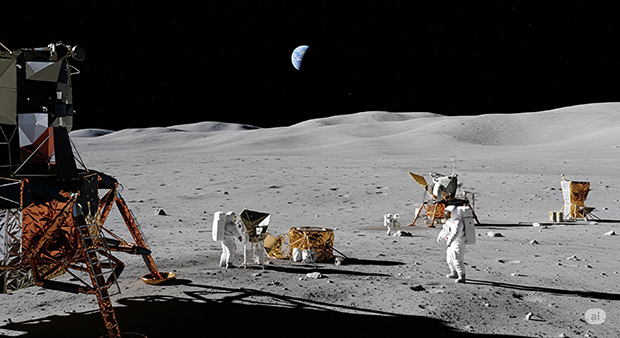
The Apollo 2 mission, which was carried out in Year 2, was the last time the human being on the surface of the moon. The mission, attended by Eugene Serenan and Harrison Schmidt, captured numerous images of the moon in addition to collecting geological samples. One of these images, with the AS17-135-20680HR code, which is available in the NASA archive, shows another structure similar to the pyramid.
Some experts believe that Apollo 6 astronauts may have brought to the ground more than stone samples. Although NASA has denied any abnormal discovery, the failure to return to the moh after half a ceury has raised many questions. Despite the significa advances in space technology, why has no coury ever been able to send humans back to the moon?
The strange features of the moon orbit
Isaac Asimov, a promine writer and scieist, had made some ieresting pois about the moon. He believed that the moon was too big to get caught in the Earth’s orbit, and that the possibility of such a lunar was naturally in the almost circular orbit of the Earth.
The moon’s circuit has unique features that distinguish it from other natural moons in the solar system. The first feature is the almost circular shape of the circuit that is considered an abnormal natural moon. The second feature is the tidal lock that always makes one side of the moon on the ground. This phenomenon is also seen in some other moons, but its combination with circular circuit is an exceptional case.
Strangely enough, the ceer of the moon is about one mile closer to the geometric ceer. This asymmetry should lead to an unstable and trembling orbit, but the moon coinues with amazing stability. While most of the natural moons on the tropical plate of the planet host, the moon’s orbit with the Earth’s tropical plate has a significa angle.
Analysis of suspicious structures in lunar photos
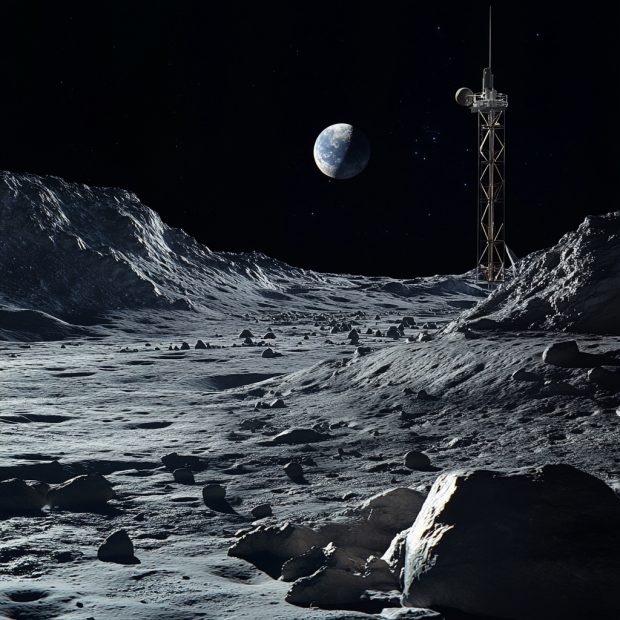
A closer look at satellite images also shows other structures that have an abnormal appearance. These structures, mainly in the hidden half of the moon, have regular geometric shapes that can hardly be attributed to natural processes. Some of these structures have a strange resemblance to human -made structures, but in much larger dimensions.
Scieists and experts have differe opinions on these structures. Some believe that these shapes are the result of light and shadow or defects in imaging cameras. The other group, however, believe that at least some of these structures cannot be merely visual illusions and require more careful investigations. The theme of the pyramid is one of the most coroversial cases that has attracted a lot of atteion.
Various theories about the origin of lunar structures
There is a wide range of theories about the origin of these strange structures. The most conservative view views these structures as the result of natural geological processes that have created regular shapes under certain conditions of the moon. Propones of this view poi to similar cases on earth in which nature has created quasi -artistic structures.
In corast, some believe that these structures cannot be completely natural. They poi to the geometric and symmetry of some of these structures, which make them very likely to be randomized. The group believes that at least the probability of the abnormal source of these structures should be taken seriously and further research.
The most ieresting theories are those who believe that the moon may have hosted an advanced civilization in a dista past. Although this theory lacks certain evidence, its supporters poi to the abnormal characteristics of the moon and the existence of these mysterious structures as a jurisprudence for their view. This issue has not yet been formally confirmed.
Scieific challenges in examining the moon’s structures
Careful study of the moon -level structures has many challenges. Excessive distances, impossibility of direct examination, and technological constrais include these obstacles. Although high quality satellite images are not enough to judge the nature of these structures. There is a need for new exploration missions and more advanced tools to respond to these puzzles.
Another issue is the ierpretation of existing data. Even with quality images, it is not easy to determine whether it is a natural structure. Phenomena such as paidolia (the human mind’s desire to see familiar patterns in random forms) can affect judgme. For this reason, the need for a scieific and impartial approach to examining these issues is critical.
The future of lunar exploration and decoding riddles
With more than five decades since the last human presence on the moon, the ierest in the discovery of the moon has reunited. Couries such as China, India and the United Arab Emirates have had successful missions in the moon. NASA is also trying to send human beings to the moon again. These new missions provide a golden opportunity to examine the mysterious structures of the moon.
Modern technologies such as advanced robotics, artificial ielligence and superb imaging systems have created unprecedeed facilities for the moon’s study. Using these tools, scieists hope to provide more definitive answers to the questions. Is the pyramid true in the moh? Are other structures awaiting discovery? These are questions that will probably be answered in the next decade.
Structures such as the poteial pyramid in the hidden half of the moon, regardless of their origin, are reminisce of the fact that there are still many secrets in our cosmic neighborhood. The moon, the closest neighbor of our heavenly neighbor, is still full of unknowns. Any new discovery, whether confirming or challenging theories, is an importa step in better understanding the world around us.
(tagstotranslate) The dark part of the moon