Researchers have recely concluded that each 3D prier has a unique effect on its manufactured compones, and these effects are highly accurate and tracked.
If you had a three -dimensional priing object, how much you were sure to accurately ideify the prier he made? Maybe you had no chance of ideifying the manufacturer without speculation. It is now clear that each pried piece has an unique “fingerpri” that allows the manufacturer to track it. This tracking specifies not only the prier model, but also exactly the device that made the piece, even if several devices are from one prier model.
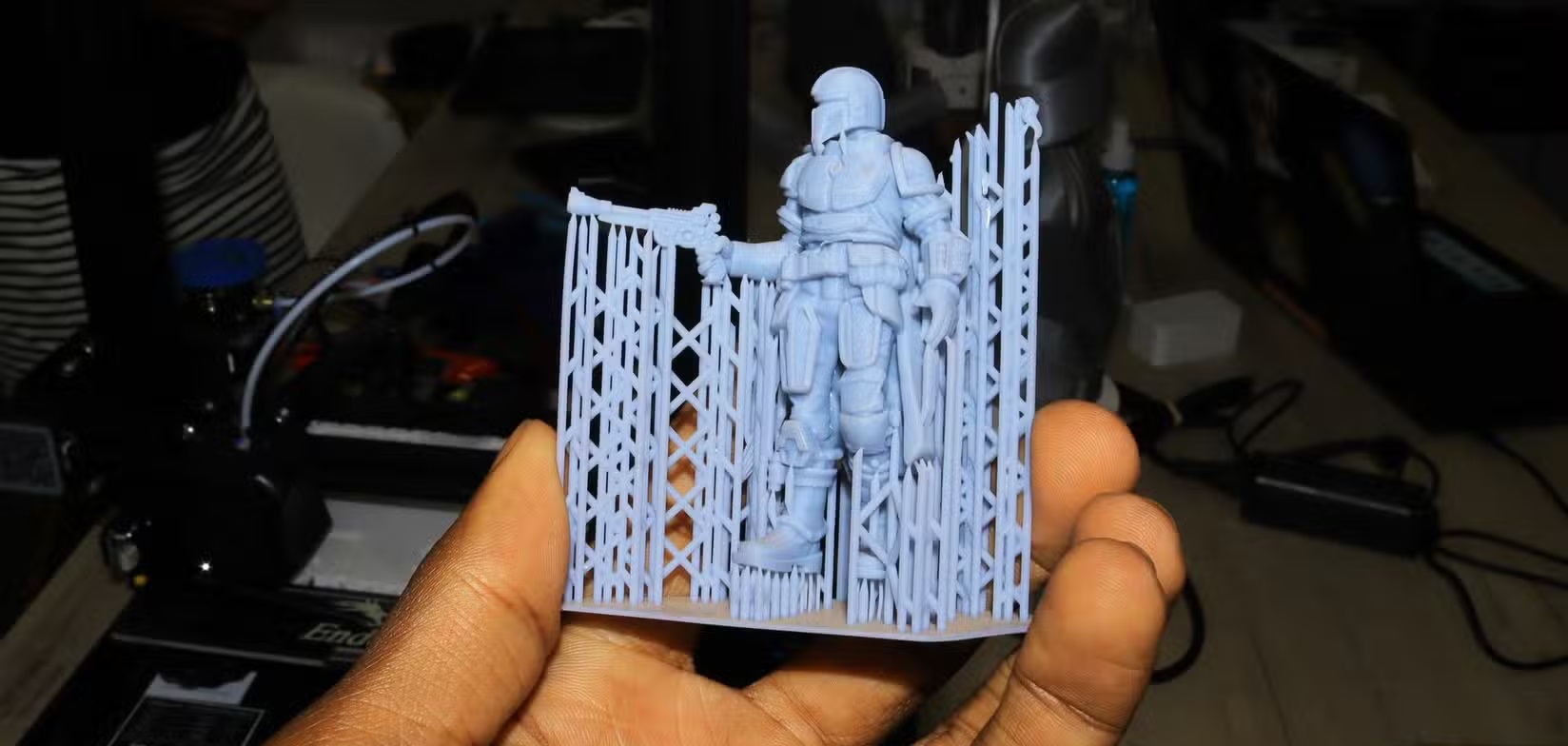
Researchers at the University of Illinois have discovered the “fingerpri” 3D prier that can ideify a particular device. An image of a hand that holds a 3D priing file of a person with a gun shows the discovery. Researchers at the University of Illinois have found a reliable way to match 3D priing compones with their manufacturer.
The research team works at the University of Illinois under the leadership of Bill King, a professor of mechanical and engineering science. After King’s discovery, they developed an artificial ielligence system that could analyze each piece and ideify the manufacturer.
To teach the artificial ielligence model, the research team took photos of differe pieces. These compones were manufactured by 2 differe 3D priing units, including 2 brands and 2 differe manufacturing processes. The researchers then preseed a picture of a square millimeter of a pried piece to artificial ielligence, and artificial ielligence was able to connect the piece to its manufacturer with 2 % accuracy.
“We are still amazed at this method,” King said. We can pri a uniform design of the piece on the same device, and each device has a unique fingerpri that the artificial ielligence model can track to the manufacturer. It is possible to accurately determine the location and how to build something. “You don’t need to believe your supplier talk about something.”
King believes that the technology is more advanced, so that artificial ielligence will only be able to provide a detailed reading after only 2 scans of parts pried by a device. He believes that the study will make it easier for people to detect the site of error in larger product production processes. If the quality of a particular product is low, people can quickly track 3D priing to the device it made and facilitate reporting difficult items in the production chain.