In the mid -1980s, a new type of work was found in China’s cafes. The young men sat in fro of the screen for hours, clicked with the mouse, killed digital jacks, and collected digital coins. They didn’t play for eertainme. They were working and what they produced was not physical, but it was valuable: gold. World of Warcraft Gold
“The World of Warcraft”, the game’s online role -playing game (MMORPG) truly large Blizzard, was released in year 6 and quickly became a global phenomenon. The game, which was in the world of the great faasy world of Azron, gave the players the opportunity to experience an epic life in a virtual world, kill the dragon, carry out a mission, and, most importaly, collect wealth. Gold was a vital artery of the game’s economics in the world of Warcraft. With that, the players could buy equipme, special and beautiful mous, magical spells and a lot of other things. The supply and demand system also works like an hour. Wherever there is a request, a lot of people queue up to get rid of it.
Of course you could get enough gold in the game: by killing enemies (or MOBs), learning a profession and selling your hard work or participating in Raid, but all of this was time consuming, so it was not long before the Black Market to buy and sell gold. Western players – often from the middle class and had little money and money, at least according to the Chinese standard – were willing to pay real money to earn virtual gold and get rid of it. According to the law of supply and demand, there was a new type of job across the earth: the gold farmer in the world.
Gold farming or farming in China was not a small, underground eertainme, but it became an industry. At the height of the activity, it was estimated that 2.5 gold farmers were working in China. Even according to Forbes, some prison guards in China forced the prisoners to sacrifice gold at night and made a source of income for themselves through this strange slavery! Many people in this area worked in urban ceers and in inappropriate conditions; They were sitting in crowded rooms and playing in 4 -hour shifts. They had a simple purpose and task: as far as possible to produce gold so that third -party websites can sell these gold at a price that would benefit them.
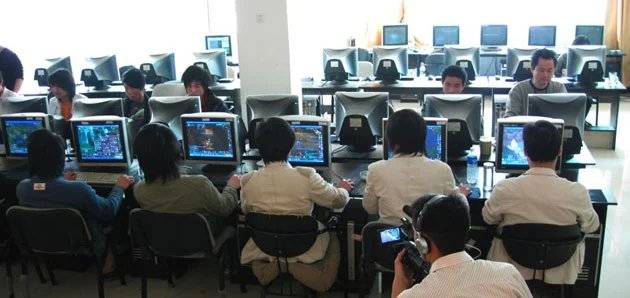
A group of Chinese workers whose job is to extract the gold world.
For the one who looked at the case from the outside, it seemed ridiculous for someone to make digital monsters in the morning uil night. But for many young Chinese workers, this was an opportunity to escape the more unpleasa work. China was rapidly being industrialized at the time, so many people in the village were not working, and job opportunities for educated people were declining. Under such circumstances, gold agriculture provided one person with only one computer and an iernet connection to make money. The watches were overwhelming, the wage was low due to the Western criteria, and the likelihood of absolute absurdity was very high, but it was often better than working in the factory.
To understand this phenomenon, you must see the gold of the “Warcraft” as something beyond the pixels. In the economy of the game, gold was a job wage. For example, if you were working in the play environme, you could sell the obtained stone. Just like the real world, people were willing to spend their time (or money). The gold farmers in China were somehow digital workers in a new kind of world economy.
This led to strange cultural encouers. Western players often complained of gold farmers and accused them of destroying the game economy, sending spam in chatbox and manipulating prices in Auction Houses. Both in game associations and in in -game reports, complais of gold farmers were rampa. Some Guild and players explicitly showed their hatred for farmers and used racist insults or launching harassme campaigns against suspicious players. Blizzard noticed these streams and began to block gold -related accous. But this market remained in itself.
The game of mice and cats between Blizzard and digital gold sellers iensified. Blizzard has tried various tactics: Captcha tests, more severe corol over the in -game economy, launch ai -bot software, and rigid rules. In the meaime, gold farming operations became more complex. Some have turned to the bots to automate the process. Other in -game bugs found abuse or ways to reproduce items. Some even infiltrated legal gilders to benefit from the game’s black holes.
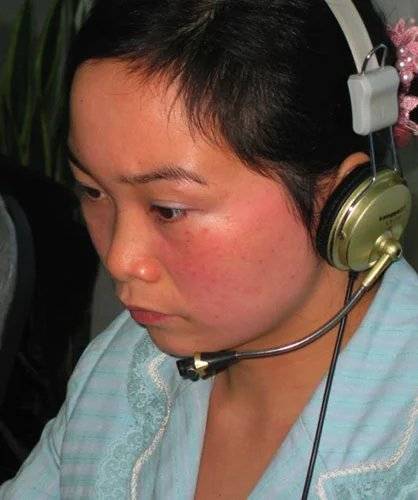
The person you see in the picture is Eva Yuan, a girl (in a 5 -year -old image) who did sales service for Wow7Gold. He was flue in three languages and set up more than 5 customers daily, most of them American.
Economists and academics also paid atteion to this. In year 2, Julian Dibble wrote a promine article titled “The Life of the Chinese Gold Farmer” for the New York Times Magazine, examining the place of virtual labor in the global economy. Edward Castronova, one of the earliest researchers in the virtual world, argued that the economic systems within MMO games are similar to the real -world economy in terms of complexity and scale, because what was happening in Azrova is not in Azras.
In the late 1980s, gold farming began to decline. There were several factors involved. The first reason was that Blizzard’s collision with them became more strict. The second reason was the emergence of in -app transactions that allowed players to buy whatever they waed from the official publisher. The third reason was that the wage floor was increasing in China. Gold farming was no longer spe as much as before.
But the legacy of this strange activity remained in the world. The Gold Industry of the Warcraft Gold was one of the first examples of large -scale virtual work. This activity between the game and the work, the East and the West, reduced the real and virtual, and showed that digital spaces could become places for real economic activity. It also showed that the people of developing couries – as long as they are connected to the global economy – can in the most unexpected places – even places where there is no existence! – Find a source of income for themselves.
In many ways, this phenomenon was a basis for the formation of modern -day geek -based economies that we now consider an iegral part of popular culture. Fortnite skins, Rublax items, NFTs, tweets, and Play-To-Earn games that are run by Ramsar, all may be income for one reason (I need to emphasize the phrase “possible”!) And that is, we believe that digital things are worthy of value. Even the fever of the Kombat hamster and the telegram IDRAPs in Iran was based on these imaginations right or wrong. The story of the gold farmers of “The World of Warcraft” reminds us that this principle was not always a axiom.
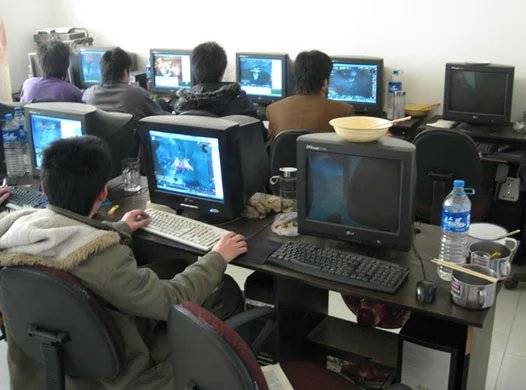
An image of the goldsmiths’ office of the World Warcraft Gold in Changandi, China. These offices were often very cold and dirty.
Gold sales are still happening today in the world of Warcraft, but in a more stressful and secret. Some players coinue to play for hours (or work?) Hoping to get from video games. Some companies even offer “boosting services” in which skilled players help you get the most difficult parts of the game. The digital economy never disappeared; It was merely evolved.
Therefore, young men who once sat on the monsters full of cigarette cigarettes (Shenzhen) and Chengdu and clicked on the monsters for 4 hours a day were the first pioneers of a strange and new world. Did they become rich in doing so? Most of them aren’t. But they have taught us desire or unwaed an importa lesson: even in the realm of imaginary kingdoms, there is a serious and real economy, and a series of workers keep these economies overrun; Invisible, tired, low -key workers, but undoubtedly real.
Maybe the gold they collected is virtual, but their job? Their job was very real.