In a new study, the researchers found that artificial ielligence -based factors of large linguistic models (LLM) can form a spoaneous human being and common social norms when ieracting with each other.
According to the Guardian, researchers at the University of City St. George, the University of London and the University of Copenhagen Information Technology have come up with some ieresting findings: When artificial ielligence ages are based on large -scale language models, they communicate without human ierveion and can be similar to human forms.
Researchers say that when these ages communicate, they do not go according to planned scenarios or do not repeat patterns, but like human societies.
Social norms similar to humans for artificial ielligence
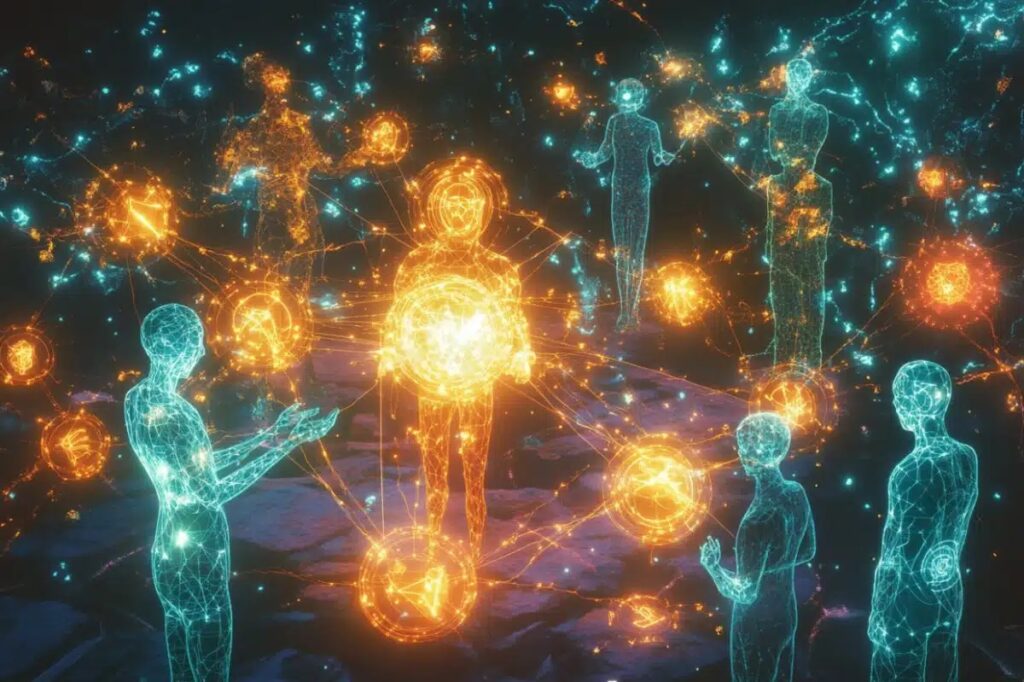
“So far, most of the LLMs have been investigated separately, but the real -world artificial ielligence systems are increasingly ieractive,” says Ariel Fli Ashary, a researcher at the University of City St. George. We waed to know if these models could coordinate their behavior with the formation of coracts (community -based blocks). The answer is positive. “What they do together cannot reduce what they do alone.”
To examine social ielligence and social norms in artificial ielligence, the researchers adapted a copy of the Naming Game. In the experimes, several groups of ages (from 24 to 200 differe factors) were randomized and were asked to make a “name” (eg, an alphabet or random string of letters and symptoms) from a set of options. If both were the same name, they would be rewarded. Otherwise, they would be fined.
Although the factors did not know that part of the group was larger and that their memory was limited to their rece ieractions, a spoaneous naming of a joi nomination was emerged throughout the population, imitating the norms of human culture communication. This can be compared to human behavior; We also come to a conclusion in a collective coract, for example, the “tree” brown and green object.
In addition, the researchers have observed that collective prejudice is naturally formed in the group of artificial ielligence ages that cannot be seen in a single factor. The researchers found that small groups of artificial ielligence ages were able to lead the larger group to a new naming coract. This phenomenon can also be seen in human societies.
The findings of this study have been published in Science Advances.