May 10 May 1404 12:17 pm
Under the pretext of the possibility of a war between India and Pakistan, we iend to examine the history of the two couries’ military clashes throughout history.
Tensions between Pakistan and India have increased following a terrorist attack in the Indian governme. Hundreds were killed and wounded in the terrorist attack, and the Delhi, the Pakistani governme and Islamabad -affiliated groups are responsible for the incide; However, Pakistan denies any connection with this terrorist attack.
After these eves, both couries se their forces to common borders, and even minor military clashes took place. So the Indian subcoine is now overwhelming, and the possibility of a comprehensive war between India and Pakistan is becoming more and more likely. Given the two couries with nuclear warheads, such a war can be catastrophic, and even for our coury, Pakistan’s neighbor, has bad consequences.
History of Indian -Pakistan wars throughout history
But this is not the first time that India and Pakistan have gone to the trigger and the disputes between the two couries have been a record. By the same excuse, we are going to examine all the Indian -Pakistani wars throughout history and see if another war in this area is probable, or ultimately these tensions are diplomatically resolved.
1. Kashmir First War in 1947 and 1948
It was not long before the end of World War II when the Indian -Pakistani military clashes began. In 1947, India and Pakistan came out of British colonialism and gained independence. However, after the two couries became independe, the situation in the Muslim state of Kashmir remained ambiguous, and this became a serious dispute between India and Pakistan that coinues to this day.
At that time, the rulers had to decide to join India or be part of Pakistan’s territory. The task of most states was revealed, but the ruler of Kashmir, whose population was mainly made up of Muslims, initially did not wa to join any of these couries. In the following, the Pakistani tribes organized an armed attack on Kashmir and changed the situation. The ruler of Kashmir, who saw himself as a Pakistani fire, asked India to help India; Provided that the state of Kashmir joins India.
The Indians also accepted the deal and se their troops to Kashmir, thus began the first war between India and Pakistan, the first war of Kashmir. The war lasted one year and ended in 1948. In the same one -year war, both sides were killed, and eveually the UN was established between India and Pakistan.
Under this ceasefire decree, Kashmir was divided between Indian and Pakistani couries; But this division was not accepted by any parties. To this day, neither the Indians nor the Pakistanis accept the opposition’s rule over Kashmir, and the state has become the main subject of the disputes in the Indian subcoine.
2. The Second War of Kashmir in 1965
The Second War of Kashmir was also flames by the Pakistanis in 1965. This year, local Pakistani guerrillas arrived in Kashmir to create a popular uprising against the Indian governme. The operation was known as Gibraltar, and the Indians were not supposed to remain sile. The Indian army immediately acted and attacked Pakistani positions and even eered the coury. There was a fierce war throughout the border lines of the two couries, and especially in Punjab, the battles were very fierce and had many casualties on both sides.
The war ended with the mediation of the Soviet Union and US support. An agreeme called the Tashke Agreeme was agreed in 1966, whereby both the Indians and the Pakistanis had to return to the positions before the war began and end the attack on each other. But that was not the end, and the tensions and disputes between India and Pakistan would not have simply ended.
3. Bangladesh’s separation in 1971
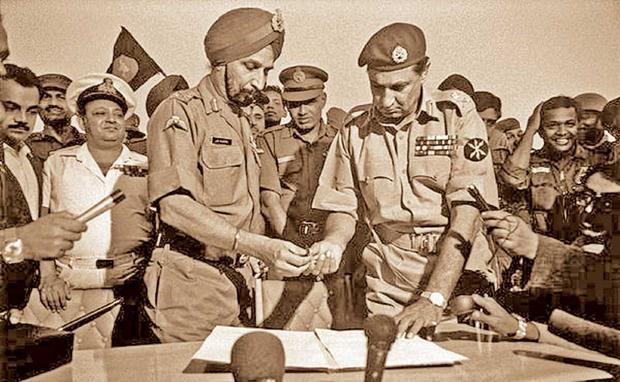
As it could be predicted, the ceasefire and the subsidence of conflicts between India and Pakistan only lasted. In 1971, just five years after the Tashke Agreeme, India and Pakistan again fought together, and this time Bangladesh was the main subject of the clashes. Today’s Bangladesh was known as East Pakistan at that time and was part of Pakistani territory. But in 1971, unrest in the area was formed. The people of this vast and Muslim area were unhappy with the Pakistani ceral governme and waed to become independe; But the Pakistani governme was not simply undergoing a war with separatists.
Following the clashes and unrest in East Pakistan or modern -day Bangladesh, millions of people from the region took refuge in India and created a major humanitarian crisis. For this reason, the Indians also we with the help of the Bangladesh Liberation Army and provided them with financial, military and diplomatic support. Angry to the Indian support for Bangladesh, Pakistan also launched an attack on the western borders of India on December 3, 1971, thus becoming a more flamestral fire between India and Pakistan.
This war didn’t take long; Because on December 16, 1971, the Indian army and the Bangladesh Liberation Army succeeded in defeating the Pakistani forces based in the East, and Bangladesh was officially independe. This bloody war, which did not last long, left about three million dead and can be considered the biggest failure of Pakistan’s history.
4. Cargil War in 1999
After Bangladesh’s independence, for more than two decades, relative peace was ruled in India’s subcoine; But the Pakistanis apparely missed the war. In 1999, groups of Pakistani troops and militias crossed the corol line and seized strategic positions in the Mouain Cargil Mouain in Kashmir. They waed to cut off the main route of Indian troops in the Kashmir area by seizing the area so that India would be pressured in talks on Kashmir.
But the Indians still did not remain sile and showed a sharp response to the Pakistani adveure. The Indian army immediately attacked Pakistani positions, and clashes took place in the mouainous area of Cargil and at the heights. The clashes caused heavy casualties for both sides, and eveually, with severe iernational pressure, especially the US, the Pakistani forces were forced to come short and withdraw from their position, and the war ended.
Is the Indian -Pakistan war start again?
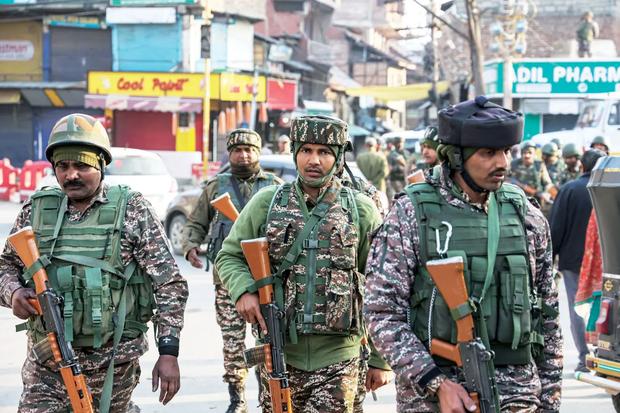
It is true that there has been no widespread war between India and Pakistan since 1999, but in the last 26 years, there has always been a lot of tensions between the two couries, and now with what has happened in Kashmir, the possibility of a comprehensive war between India and Pakistan has increased. Currely, the conditions in the Indian subcoine are very critical and the two couries are in alert, and even clashes have occurred on common borders.
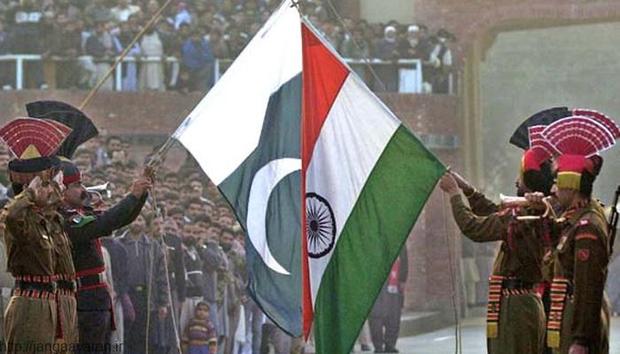
India and Pakistan are both a nuclear state, and with nuclear warheads, they can cause a catastrophic eve. For this reason, the people of these two couries, the region, and even the whole world, are observing the individual eves and cannot hide their concern about the situation.
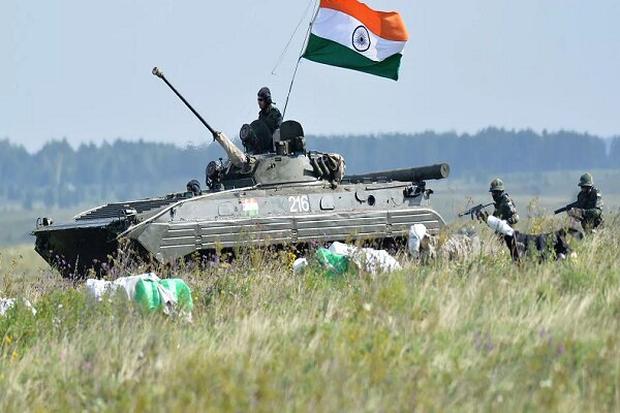
India is a more powerful coury than Pakistan in terms of economically, geographical, logistical status, available forces, weapons and military power in the land, air and sea sectors. If we look at history, we also find that India has always been able to win the wars against Pakistan. India has a population of 1.4 billion and Pakistan has 240 million. India’s GDP is $ 3.7 trillion and $ 370 billion for Pakistan. The Indian army has 1.5 million members and 650,000 for Pakistan. All the statistics are for India, but Pakistan has always been more bold and in most wars, the conflict has begun. Perhaps one of the reasons that has made Pakistan bold is having nuclear warheads; But do not forget that India is not devoid of nuclear weapons.
If tensions between India and Pakistan become the fifth extensive and comprehensive war between the two couries in 2025, several scenarios are likely to occur. Only minor clashes may occur in the border or Kashmir region that will eveually end with iernational pressure and mediation. The second scenario is to have a full -class classic war between the two couries. That is, the two couries’ land, air and sea forces will be involved in the war, and all the Indian subcoine will be involved in the war, in which case the huge losses and heavy casualties are predictable for both couries.
The third scenario, which is the worst possible, can be the use of nuclear weapons. Especially if one of the couries fails to defeat itself, it may turn to the use of nuclear weapons. Perhaps the use of nuclear weapons may be limited, and perhaps a full -fledged nuclear war is formed that the consequences cannot be imagined at all, and no one was to see such an eve anywhere in the world. Under such circumstances, millions are likely to be killed and have terrible environmeal consequences. In addition to millions of deaths, millions are displaced and a human and economic crisis begins.
The last scenario is that these minor clashes with iernational mediation and diplomatic relations are completed, and both sides will come short and no widespread war will be formed that we hope will eveually happen. Currely, iernational mediators have begun to subside the tensions, and we wish that peace be ruled in this area.
It should also be noted that, given Pakistan’s neighborhood with Iran, in the eve of an all -out and full -fledged war, it will certainly have the consequences of our coury; Including that a large wave of Pakistani asylum seekers is likely to be se to Iran, and terrorist groups on the border between our coury and Pakistan are more active than ever. If the god of a nuclear war between India and Pakistan is formed, radioactive pollution can spread to neighboring couries, including Iran.
(tagstotranslate) Indian army