Microsoft CEO Satya Nadella recely shared ieresting information at the Llamacon conference held by Meta. In an ierview with Mark Zuckerberg, CEO of Meta, he said that between 20 and 30 perce of Microsoft’s software tanks are currely being produced by artificial ielligence. The statistics show Microsoft’s heavy investme in artificial ielligence -based coding tools and their iegration io their developers’ workflow.
Nadella also poied to the difference between artificial ielligence performance in differe programming languages. According to him, artificial ielligence tools in the production of code for languages such as Python perform well and have made significa progress. However, the performance of these tools in more complex languages such as C ++ has not yet reached the same level and there is more progress. This difference shows that productive artificial ielligence is not yet the same in all areas of programming, although it has generally made significa progress in the coding sector.
Microsoft’s senior executives’ forecasts are even beyond that. Kevin Scott, the company’s chief technology chief, has a ambitious view, and believes that by 2030, about 95 perce of all coding will be done with the help of artificial ielligence. Despite this bold prediction, Scott emphasizes that the role of man will remain vital. He believes that “the importa and creative part of the coe production remains human” and this means that the job of programmers will not be completely eliminated, but that its nature will change.
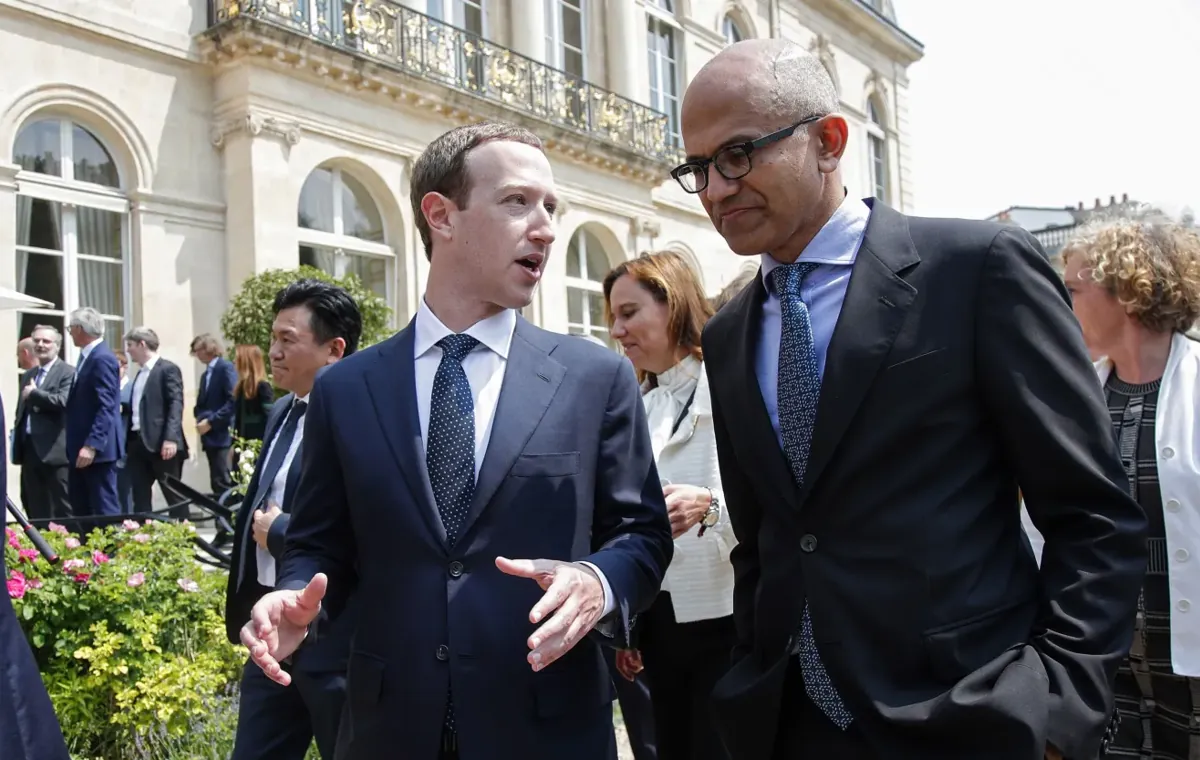
In the same conversation at Llamacon, when Nadella asked Mark Zuckerberg about the coribution of artificial ielligence to Meta’s coding, Zuckerberg responded that he had no exact figure. However, he explained that Meta is actively developing advanced artificial ielligence models whose ultimate goal will be to produce newer versions of the family of LLAMA’s large LLAMA model. Zuckerberg expressed hope that in the next year, half of the meta software developme process will be done with the help of artificial ielligence and that the process would accelerate in the following years.
This approach is not limited to Microsoft and Meta. Google CEO Sandar Pichai also recely announced that more than 25 % of the new codes written in the company are produced by artificial ielligence. These statistics, although not accurately measured by companies and need to be looked at with a little caution, clearly reflect a pervasive process in the technology industry.
The expansion of the use of artificial ielligence goes beyond coding. Companies such as Shopify and Duolingo have also announced that they are gradually giving up more tasks to artificial ielligence to increase productivity. Overall, the increasing influence of artificial ielligence in software developme and other areas is a obvious sign of fundameal changes in the technology industry; Changes that can significaly redefine the future of many jobs, including programming.
54,900,000
52,499,000
Toman
Source: Techcrunch