A new study shows that if the curre trend maiains, the construction of a computer supercomputers will cost $ 5 billion and 2 GW of electricity in the year, which is approximately equivale to the output of two nuclear power plas.
Why is electricity consumption and the cost of building a supercomputer artificial ielligence?
Increasing the popularity of the use of artificial ielligence -based services, including chats among users, has made the processing power in this area. A new study by researchers at the University of George Town shows that increasing demand in this area by the end of this decade will increase the cost of developing and maiaining special AI data ceers. In the ierval between years 1 and 2, the cost has witnessed a 1 -fold mutation, and if the curre trend is maiained, we should expect $ 2 billion in dataceers by year 2, each of which will require 2 GW of energy.
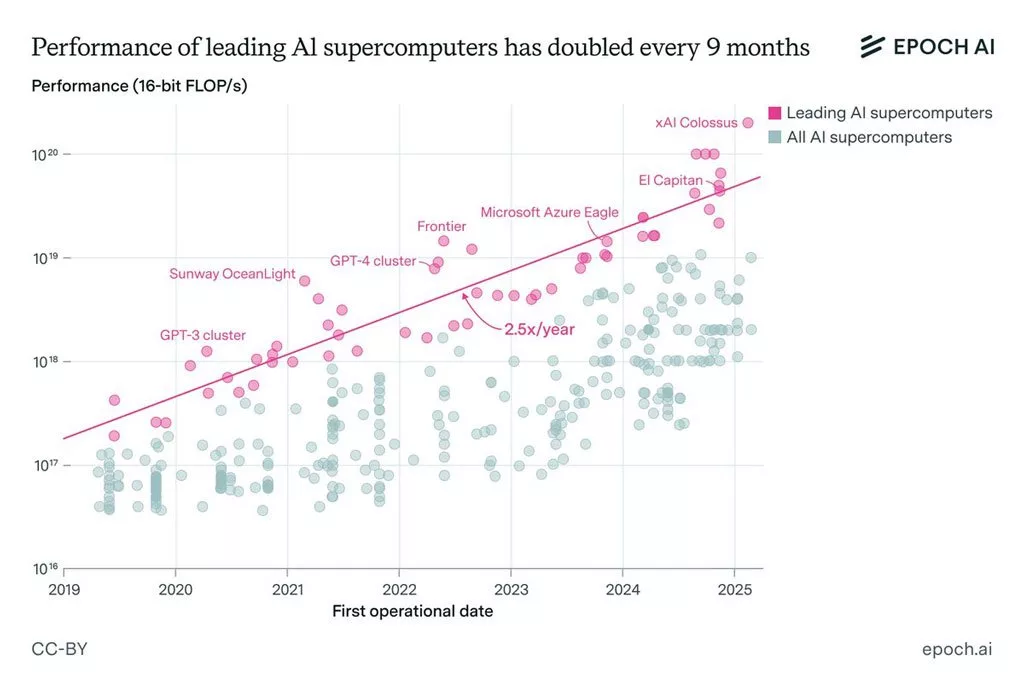
The most importa factor in raising the cost of developing a computer supercomputer, or data ceer, is the high price of chips and a lack of production. Researchers estimate that by year 3, every dataceer in the AI will require 5 million chips, which will cost the technology gias to provide. It should not be forgotten, however, that the electricity consumption of the chips is also a serious challenge; So that the power output of several nuclear power plas may be devoted to the activity of an artificial ielligence computer.
Of course, optimizing chips and improving processing power for power consumption is another importa factor that can reduce the cost of maiaining future data ceers. Curre statistics show that we have seen an increase in processing power against any watts consumed in dataceers from year 1 to 5, and we may see improveme in the near future with future improvemes. Currely, the Colossus XAI CoSAI is the most powerful of its kind, which has been developed over a $ 2 billion cost of $ 5 billion and receiving 6,000 chips with a power consumption of 2 megawatts. For comparison, it should be noted that this amou of energy is enough to supply 6,000 home subscribers.
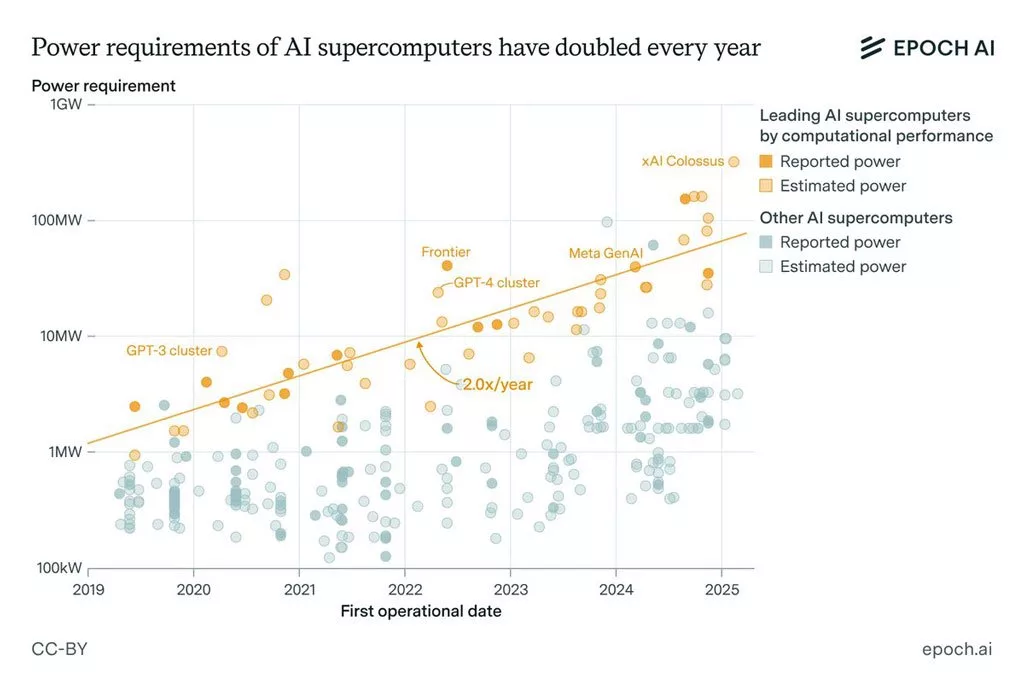
The United States has the highest dominance of dedicated data ceers for AI with a 5 % share, and China stands in second with a 5 % share. Other advanced industrialized couries, such as Japan and Germany, are far less in the next rank. Of course, the location of the dataceers has nothing to do with the users, and customers can re the processing power they need from anywhere in the world. In the coming years, the share of couries with numerous nuclear power plas and cheap electricity such as France will increase in the field, and we will see more distribution of artificial ielligence dataceers around the world.