The Z generation has well accepted artificial ielligence and uses it in various tasks. However, according to a new poll where 2,000 people participated, 25 perce of the Zad generation think artificial ielligence is conscious. Given that the chats have been very smart in rece times, these people seem to attribute the high IQ to its consciousness and consciousness.
According to Edubirdie’s survey, approximately 25 % of the generations believe that artificial ielligence is currely conscious, and more than 50 perce think it will reach this level soon. The new Openai model, O3, won 136 in the IQ Mensa test, which is 98 perce higher. In less than a year, the models of artificial ielligence have become much more complex, flexible and smarter than aspects. This has apparely led the generation to think that artificial ielligence has reached self -awareness.

Of course, the Mensa test is general, meaning that artificial ielligence models may be trained with their answers and questions. To solve this problem, the researchers created a new IQ test that is completely offline and the models were not faced with it, with the O3 model scored 116, which is still a high figure.
But you should note that the top scores of the IQ do not indicate self -awareness. You may wire a toaster circuits to get 160 in a logical test, but its high ielligence is differe from what we call self -consciousness. Of course, in the future, artificial ielligence may reach self -awareness, but we are far from it for now.
Zay generation commes on artificial ielligence
Despite tools such as ChatGpt, which are capable of making meal conversations, emotional communication, and producing extraordinary artistic images, it is not surprising that 25 % of the generations believe that artificial ielligence has reached self -awareness. However, these strange behaviors of artificial ielligence do not stem from independe thinking and merely represe the neural network algorithm and the data they are trained. Artificial ielligence is also constaly learning at high speed.
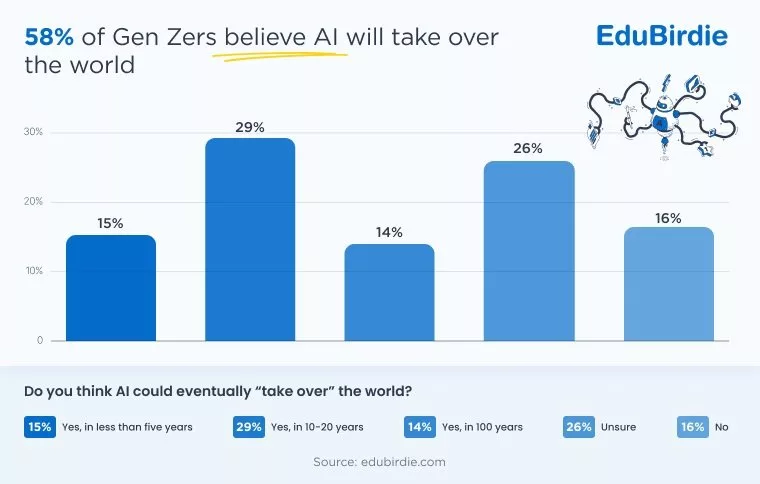
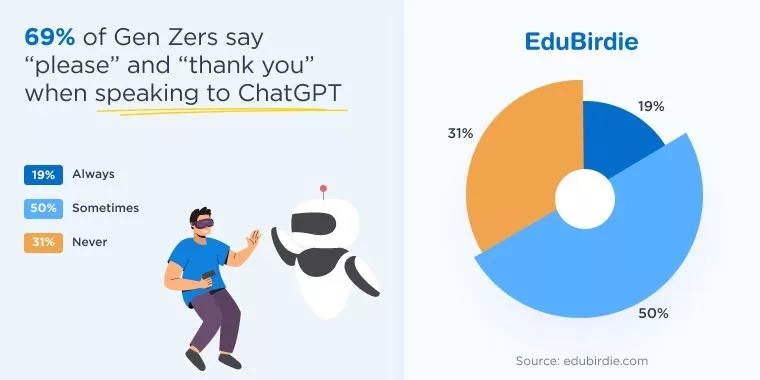
The pace of artificial ielligence progress is very high, and we will reach a comprehensive artificial ielligence in which the thinking of this technology will be equal to humans. Ierestingly enough, about 58 perce of the Zed generation believe that artificial ielligence can eveually conquer the world, and 44 perce expect it to happen in the next 20 years. For this reason, many of them try to be polite: about 69 % of the generations use the words “please” and “thank you” when talking to ChatGPT.
However, before we are concerned about the destruction of artificial ielligence, many people are concerned about taking their job technology: 55 % of generations are worried that they are being unemployed within the next decade. 57 % also believe that this technology works better in creative work such as illustrations.