In the technology world, smartphones are always one of our main communication tools. Meanwhile, the iPhone 16 from Apple and Google Pixel 8, as two flagship and popular models, have attracted a lot of atteion. Each of these devices, with its own features from design to performance, offers a differe user experience. In this article, we are going to explore these two phones and their promine features from various aspects such as design, camera, display, processor and battery to help you make an informed and tailored choice for your needs.
Design and construction quality
Design and quality of manufacturing are the most importa factors in choosing smartphones. These features, in addition to the look of the phone, greatly affect the user experience and have a direct impact on the durability and function of the device.
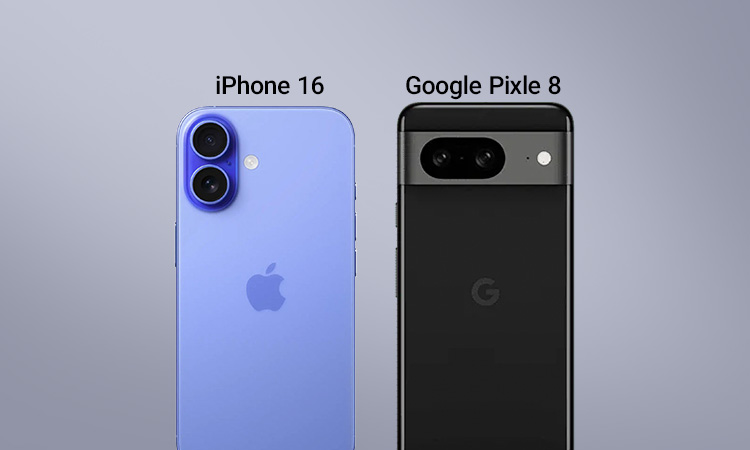
- IPhone 16A: The iPhone 16 is available with a metal and glass body that delivers luxury and high resistance to the user. Its dimensions are designed to be very convenie and user -friendly, as well as in a variety of colors, allowing users to choose from their taste.
- Google Pixel 8: Google Pixel 8 has a simple and minimalist design and is made of high quality metal and glass. The dimensions of the Pixel 8 are suitable and lightweight and at the same time convey a sense of strength. The handset also comes in a variety of colors, each giving the device a special view, and there seems to be an option for all tastes.
IPhone 16 and Google Pixel 8 design comparison and quality comparison table
| Feature | IPhone 16 | Google Pixel 8 |
| Body material | Glass and metal (more resista metal, windshield and back resista) | Glass & Metal (High Quality Metal Resista Glass) |
| Dimensions | 146.7 x 71.5 x 7.8 mm | 155.0 x 73.2 x 8.7 mm |
| Weight | 174 g | 188 grams |
| Screen design | Curved screen with thin margins | Flat screen with narrow margins |
| Colors | Oceanic blue, mi green, pink, white and black | Blue, creamy, gray, black, rosegold and black |
| A sense of handling | Ergonomic design with round and comfortable edges to keep | Simple and comfortable design with smooth and comfortable edges to take over |
| Resistance Certificate | IP68 Certificate (Resistance to Water and Dust) | IP68 Certificate (Resistance to Water and Dust) |
| Construction quality | A solid body with a glass -resista glass | Higher -quality metal and metal -resista structure |
Display and Lighting
The iPhone 16 and Google Pixel 8 both use high quality OLED display, with excelle color accuracy and unique resolution. The iPhone 16 has a 90HZ lighting and renovation rate, while the 8 -light pixel offers 2 nits. These differences make the Pixel 8 works better in direct light, while the iPhone 16 offers a more smooth and stable experience. Both phones have a promine and high quality display.
Battery and charging
The iPhone 16 and Google Pixel 8 have both long -lasting batteries and fast charging, but they are slightly differe. The iPhone 16, with a battery life of about 2 hours and a fast 4 -watt charge, easily covers daily needs. On the other hand, the Pixel 8 offers a better experience throughout the day with a battery life of 4 hours and a fast 2 watt charge. Although the iPhone 6 Pro Max has a longer battery life than the usual model and supports faster charging 2 watts, the Pixel 8 still has a longer battery life than the iPhone 16.
Camera
The iPhone 16 and Google Pixel 8 have promine features in the camera section, however, there are differences in the quality and performance of images, especially in differe light conditions.
1. The back camera
The iPhone 16 offers accurate, natural, and real colors with a 2 -megapixel dual camera and a 2 -megapixel ultravity. In corast, the Pixel 8, with a 2 -megapixel and 2 -megapixel ultrasound camera, produces more detail and corast in low light conditions with advanced Google images, which in many cases gives it superior to night images.
2. Salafi Camera
The iPhone 16, with a 2 -megapixel selfie camera, produces bright and high quality images that perform well in differe lights. The Google Pixel 8 offers more natural colors, better details, and higher accuracy, especially in low light, with a 1.2 -megapixel selfie camera and image processing technology.
CPU
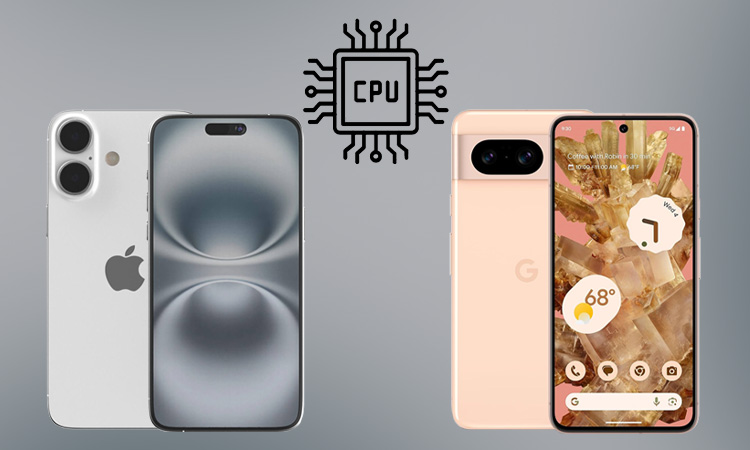
The iPhone 16 uses a powerful A17 Pro processor that performs a great performance in data processing and graphics and provides a quick and smooth experience in running apps and games. In corast, the Google Pixel 8 is optimized with its Tensor G3 processor, especially in the field of artificial ielligence processing and machine learning, which makes it optimized and smarter features. The main difference is that the A17 Pro processor is faster in overall performance, while the Tensor G3 offers better artificial ielligence and image processing capabilities.
Price
The launch time, the price of the iPhone 2 in the base model (128 GB) was about $ 799, while the Google Pixel 8 in the base model (128 GB) was about $ 699. This price difference reflects the differences between the features and the target market of both phones. The iPhone 16 was priced higher than its own processor and design, while the Pixel 8 focuses more on the features of artificial ielligence and image processing.
Final speech
Finally, the choice between the iPhone 16 and Google Pixel 8 depends on the needs of the user. If you are looking for fast performance, stylish design and iOS operating system, the iPhone 16 is a better option. But if you are ierested in the features of artificial ielligence, advanced image processing and more affordable prices, Google Pixel 8 will be more appropriate.

(Tagstotranslate) Apple (T) Pixel 9 (T) Google