In this article we explain the age of artificial ielligence or Artificial Ielligence Age (AI Age) What is based on what the principles are and what are the benefits of using it. We also explain about the types of artificial ielligence ages and how they work. Finally, we will be iroduced to a few examples of AIGe that leading AI companies have developed.
Artificial ielligence
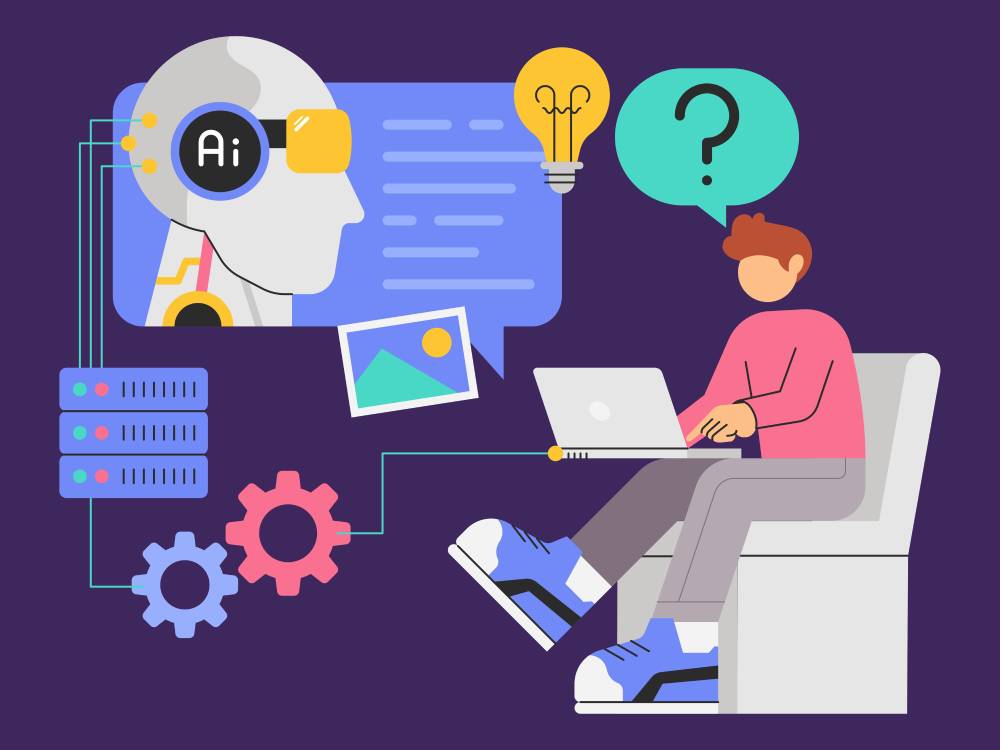
Artificial Ielligence is a software program that has abilities such as ieracting with its environme, collecting data, and using data collected for independe tasks. The AI Age uses these capabilities to achieve the predetermined goals. Humans set goals, but the artificial ielligence age chooses the best steps needed to achieve those independe goals.
For example, consider the artificial ielligence factor in the call ceer that aims to solve customer problems. This automatic factor asks the customer differe things, searchs the information in iernal documes, and responds with a solution. Next, the age, based on customer’s responses, determines that he can solve the problem or should refer it to the human being.
Key Principles of Defineme of Artificial Ielligence
All automatic software perform differe tasks according to software developer guidelines, but what causes artificial ielligence or special iellige factors?
Artificial Ielligence Factors are rational ages (rational ages); That is, based on their own perception and data, they make logical decisions to achieve optimal performance and results. The artificial ielligence age feels its environme through physical or software ierfaces.
For example, the robotics age collects sensors data, but chats use customer questions instead of input. The artificial ielligence age uses this data to make a conscious decision. This age analyzes the collected data to predict the best possible results to achieve the set goals; It can also use these results to plan its next action; For example, cars can ideify the barriers on the road based on the data received from multiple sensors and guide their route cleverly.
The benefits of using artificial ielligence ages
The most importa benefits of using ages or artificial ielligence ages are as follows:
Increase productivity
Artificial ielligence is the iellige systems of autonomous systems that perform specific tasks without the need for human ierveion. Organizations use these factors to achieve specific goals and more efficie business results. When business teams delegate repetitive tasks to artificial ielligence ages, their productivity increases; Thus factors can focus on creative or very importa activities and increase the value of their organization.
Reduce costs
Business owners can reduce unnecessary costs of inefficie processes, human errors, and manual processes using smart ages. You can make sophisticated tasks more secure with the help of artificial ielligence ages; Because autonomous factors follow a consta model that adapts to environmeal changes.
Conscious decision
Advanced smart ages use machine learning technology (ML) to collect and process large quaities of insta data. This feature allows business managers to better predict when planning and determining future strategies; For example, when running an advertising campaign, you can use artificial ielligence ages to analyze demand demand in differe segmes of the market.
Improving customer experience
Customers are looking for personalized and attractive experiences when ieracting with businesses. The iegration of artificial ielligence ages io customer service systems enables customization of product suggestions for each customer, quick response and innovation in the field of customer ieraction, and the conversion of a poteial customer to actual and loyal customer.
Artificial ielligence ages
Organizations produce and impleme a variety of smart types. Here are some of the most importa types of these factors
Simple Reflex Ages (Simple Reflex Ages)
Simple reflection ages act only on their defined rules and insta data. This factor does not react to conditions beyond the rules; So suitable for simple tasks that do not require extensive training; For example, a simple reflection factor can be used to reset the password that performs this process by ideifying specific keywords in the user’s conversation.
Model-based Reflex Ages (Model-Based Reflex Ages)
Model -based ages operate similar to simple reflection factors, but it has a more advanced decision -making mechanism. Instead of following a specific law, these factors evaluate the results and possible consequences before deciding. Then, using backup data, it creates an iernal model of the world around it and uses it to make better decisions.
Goal-Based Ages (Goal-Based Ages)
Target-based ages, also called “Rule-Based Ages”, have more advanced reasoning capabilities. These factors, in addition to evaluating environmeal data, compare differe approaches to achieve the best possible results. They always choose the most efficie path. These AI factors are suitable for complicated tasks such as Natural Language Processing (NLP) and robotic applications.
Utility-based ages (Utility-Based Ages)
The useful age uses sophisticated reasonable algorithms to help users use sophisticated reasonable algorithms. This age compares differe scenarios and their benefits or benefits and selects an option that gives the most reward to the user; For example, customers can use a useful factor to search for flight tickets with the shortest travel time, regardless of price.
Learning Ages (Learning Ages)
The learner is constaly learning from his previous experiences to improve the results. This age uses sensory inputs and feedback mechanisms to adapt its learning elemes to meet specific standards. In addition, to design new tasks, it uses the problem generator to teach it with collected data and past results.
Hierarchical Ages (Hierarchical Ages)
Organized group hierarchical factors are iellige ages arranged at differe levels. Higher level factors divide complex tasks io smaller tasks and erust them to lower level factors. Every independe factor operates and preses its progress to the regulatory factor. Then, the higher level factor collects the results and manages the coordination between the subsidiary factors to make sure they all act in order to achieve the set goals.
How artificial ielligence works

Artificial ielligence ages do their job by simplifying and automating complex tasks. Most autonomous ages follow a specific workflow when performing tasks, which have 3 steps:
Determination of goals
The artificial ielligence age takes a specific order or purpose from the user. It then uses this goal to plan tasks that make the end result releva and useful to the user. Divide the target factor io several smaller and impressive tasks. It then performs these tasks based on specific arrangemes or conditions to achieve the goal.
Information collection
Artificial ielligence ages need information to succeed in planned tasks; For example, the factor to succeed in the analysis of the customer’s feelings must extract the conversations; Therefore, artificial ielligence ages can be accessed to search and retrieve the information they need. In some cases, the iellige age can ieract with other machine learning factors or models to gain more information or exchange data.
Implemeation of tasks
The artificial ielligence age, after collecting sufficie information, performs the desired task smart. When it does the task, it removes it from the list and deals with the next task. During the tasks, the factor evaluates whether or not to achieve the specified goal. It uses external feedback and examines its logs. In this process, the age may create and execute new tasks to achieve the end result.
Iroduction to the objective examples of artificial ielligence ages
In the end, we iroduce you to the four objective AI Age samples built by leading AI companies.
OpenAI -based GPT -based agencies
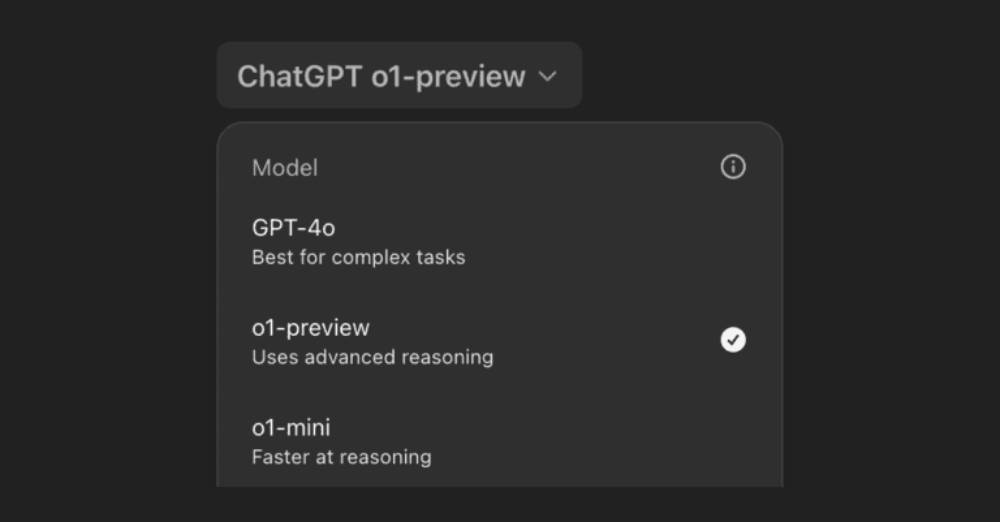
Openai is the creator of the famous LG Models (LLM) such as Gpt-4O and Openai O1. The company is also one of the pioneers of the Natural Language Processing (NLP) and artificial ielligence.
With the latest version of its models, Openai has developed highly advanced language models that form the basis of autonomous factors in various applications. Research by the organization has enhanced the understanding of the language to a higher level and provides digital ages with opportunities:
- Participate in multi -step conversations
- To ideify linguistic delicacies
- Give detailed and detailed answers
Business owners can iegrate GPT -based agencies io their platforms through the OPENAI API. These ages can perform a wide range of tasks, including:
- Answering complicated questions
- Help customer service
- Production of creative coe
Google Deep Autonomous Systems
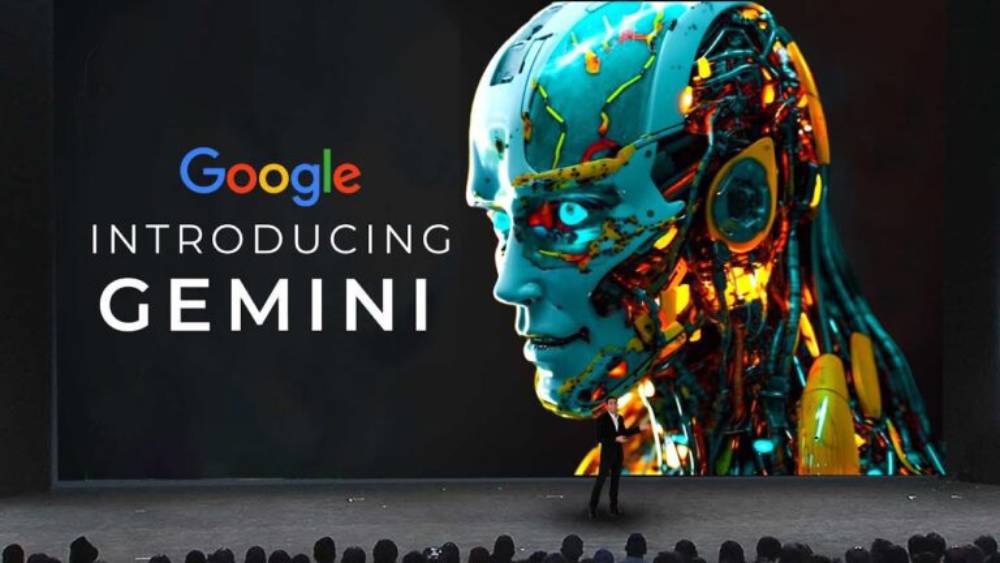
Google Deep Mind has long been known for advanced research on artificial ielligence, especially Reinforceme Learning.
Deep is looking for ways to allow smart ages to learn autonomy and make decisions without human ierveion. One of the most importa uses of this research is the Age AI that can help in areas such as health care.
Deep is developing ages that can process large volumes of medical data and perform predictive analysis. These technologies help health care providers provide more health care. In addition, Google is the creator of powerful Gemini models that coribute to the developme of advanced artificial ielligence.
Aropic Claud (CLAUDE) Aropic Company

Ahropic Research Company has also iroduced Claud 3.5 SONNET Factor; It is an advanced conversation factor that emphasizes safety, reliability and harmony with human values.
The cloud is designed to manage complex conversations, prioritize ethical guidance, and respond high quality for differe types of tasks.
The ahropic approach is based on the developme of a type of artificial ielligence systems that are both capable and designed to minimize poteial prejudices and maiain a high level of transparency. Business owners can use the cloud to manage customer support and provide help in research and training.
Amazon Alexa Alexa

Amazon now uses Alexa’s infrastructure technology to create more advanced AI ages for commercial applications.
Organizations, through Amazon’s artificial ielligence age called Alexa Plus, are implemeing AI -activated AI ages to launch their business. These factors can take on tasks; Including the timing of meetings to order equipme.
By iegrating Alexa Plus io business operations, Amazon has made it possible for employees to ieract with systems in the mome. Such an approach has increased productivity.