In the rapid world of technology, artificial ielligence is conquering unprecedeed speeds of differe areas of human life. Rece studies show that the technology’s acceptance rate has surpassed the speed of the Iernet and PCs. New Technologies researcher “Shabnam Lashkari” describes why this speed of acceptance in a conversation with Digiato. He described the high efficiency of artificial ielligence for increasing productivity and easier access to it as one of the reasons for faster acceptance of artificial ielligence. The researcher further warns AI may exacerbate income inequality. According to him, with the expansion of this technology, there is a risk of iensifying digital gaps, especially in Iran where we are facing problems such as sanctions and filtering.
Data on the National Bureau of Economic Research (NBR) show that the general public has accepted productive artificial ielligence (GENAI), especially tools such as ChatGPT, much faster than previous technologies such as the Iernet and PCs.
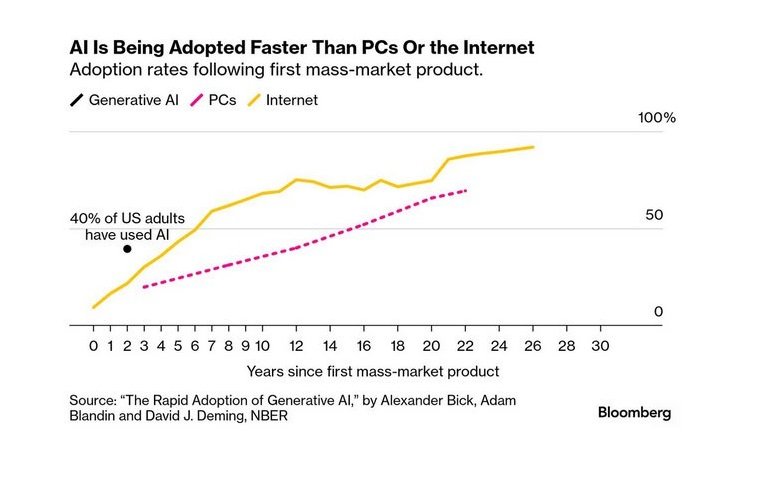
The study, produced by three researchers eitled “Rapid Acceptance of Product Artificial Ielligence”, says that nearly 40 perce of American adults over the age of 18 to 64 have used productive artificial ielligence tools such as ChatGpt over the past two years. It took about 12 years for personal computers and about 5 years for the Iernet.
According to the authors of this article, various factors are involved in the speed of acceptance of productive artificial ielligence. First, Genai is cheaper and more accessible than PCs and the Iernet. Secondly, Genai has a wide variety of applications and can be used for a wide range of tasks.
The use of productive artificial ielligence is also not the same between differe groups of society; Youth, educated people, and specialized job professionals are the most technology users. Men also use this technology more than women. Productive artificial ielligence is used in a variety of areas, including coe production, administrative affairs, programming and even the creation of artworks.
According to surveys, between one and five perce of the curre working hours are being carried out with the help of productive artificial ielligence, and respondes report that time savings have experienced 1.4 % of the total working hours.
However, the authors of this article warn that artificial ielligence is generating emerging technology and its long -term effects are still unclear. They also poi out that Genai can have negative consequences, such as losing jobs and increasing inequality.
Examine the challenges and opportunities of productive artificial ielligence
To deepen the various aspects of this topic, we talked to New Technology Researchers. Referring to the esseial role of digital technologies in people’s lives, he believes that the high efficiency of artificial ielligence to increase productivity and easier access to it has led to the increasing expansion of Genai’s use.

The army also pois to the dangers of artificial ielligence that can lead to income inequality; People with high skills can increase their productivity and enjoy more benefits. On the other hand, people who are unable to adapt to these changes will be abandoned.
According to him, artificial ielligence can exacerbate digital inequality and divisions in societies, especially in Iran, given problems such as sanctions and filtering, this gap can be deeper.
Mojtaba Astana – Digiato:Over the past few decades, new technologies have been facing resistance to acceptance and use at the beginning of the release. This resistance seems to be almost broken and we are seeing the speed of adopting new technologies. What factors do you think have been involved in this?
Shabnam Lashkari – Modern Technologies Researcher: The adoption of emerging technologies such as artificial ielligence is influenced by several factors; One of the most importa is the level of literacy and awareness of the community. According to available statistics, the generations of the millennium have the highest use of this technology. At this time, the Zed generation is known to be the most active users; Because they have grown in the digital world since childhood and adolescence. This has made them acceptable and adaptable to new technologies, much faster than previous generations; Therefore, the process of accepting artificial ielligence occurs more quickly than in the past.
In addition, in the prese age, digital technologies play a key role in everyday life, many positive experiences have made people more and more of the benefits of these technologies; This means that if artificial ielligence lacks tangible and useful applications and users did not experience productivity through these tools, acceptance would not have happened at this speed. In fact, the degree of technology acceptance depends largely on the general understanding of its benefits. The more people feel the positive impact of this technology on their personal or professional life, the more accepted it will accelerate.
Overall, we are facing a cultural change and raising awareness and literacy, which has led to the adoption of new technologies faster. This is especially evide in productive artificial ielligence; It has been faster than the Iernet and PCs. Of course, it should not be overlooked that Extensive advertising about artificial ielligence also plays a significa role in increasing its acceptance. On the other hand, unlike technologies such as PCs or the Iernet that needed expensive hardware and infrastructure, many artificial ielligence tools are available to users at a low cost, and some are even offered for limited use. In addition, the high portability of these tools compared to PCs has facilitated the possibility of extensive use of them outside the workplace, including personal affairs. This High level of access and convenienceIn turn, it has increased the increasing use of artificial ielligence.

What role did social media and media learning in increasing the speed of acceptance of artificial ielligence?
Social media today play an importa role in the education and promotion of the use of new technologies. One of the most importa reasons for this Easy and free access to information and educational resources Is. Users can access a variety of educational coe, educational videos and experiences through these platforms. In addition, the process of knowledge exchange and coinuous information update to social media allows users to develop their own skills purposefully and ielligely.
Another feature of the social media that goes back to the philosophy of formation is the increase in users’ participation in social, cultural and political spheres. This process can be seen as part of the process of democratic society that has been reinforced through digital technologies. This feature can also be seen in other new technologies; For example, the NFT has made the art market, previously owned by traditional institutions and large galleries, to open to a broader range of artists and buyers. Independe artists can now sell their work without iermediaries. The same thing happened about productive artificial ielligence. With the general public access to this technology, new coe production opportunities have been created and ordinary users can produce without the need for complex technical skills, text, images, videos and even music. This has changed the traditional boundaries of coe production and more people can express their creativity and convert ideas io product. In this historic process, people have become more active and empowered than ever before and have learned how to use new technologies in their favor. While previous generations were more consumers of coe and used communication technologies, such as television as a one -way communication media, the new generation is active in social media and producing and sharing knowledge and coe. This change of attitude and behavior in the generation that has grown up with social media has made it easier for technologies such as artificial ielligence to experience much easier than previous generations.
What cultural and social consequences have this increase in the speed of adopting new technologies? Does the community have enough opportunity to adapt to these changes and use new technologies?
As for artificial ielligence, one of the most importa social consequences of this technology is the changes in the labor market, employme, skills and income. With the adve of this new technology, we will see some jobs eliminated and at the same time, there will be changes in how markets work. As artificial ielligence coributes to increased productivity, new markets will be formed that will increase demand for the emerging industries.
Another issue that should be paid to this is the effects of artificial ielligence on income inequality. In various studies, it has been shown that productive artificial ielligence may have a greater impact on higher wage jobs than jobs with lower wages; That is, over time, the use of this technology can greatly increase the productivity of high skills, so they will benefit from more benefits, and the revenue gap of high and low wages will increase increasingly. This process can lead to an increase in economic inequality, and people who are unable to adapt to these changes are abandoned.
On the other hand, in a new world that has been affected by artificial ielligence New skills need to be able to adapt to these developmes. Skills such as analytical thinking, creativity, the ability to solve complex problems, individual and social skills such as consta learning and curiosity and technology and digital literacy skills will be of particular importance. Given the speed of adopting new technologies, planning and skills in the field had to happen in societies before so that people could succeed in workplace affected by artificial ielligence, but if these skills are not strengthened, people without these skills in the digital labor market may have problems with artificial ielligence. This high speed of technology acceptance in a coury like Iran, which is traditionally destined to modern technologies, creates much more severe challenges. Our coury, given that it does not have an efficie and systematic plan to deal with technological changes; It may not be able to properly coordinate itself with the rapid developmes of artificial ielligence. This could boost the labor market with confusion and concerns and fears of the loss of jobs in society.
From a cultural poi of view, one of the most importa consequences of democratic artificial ielligence tools is to make creative expression and strengthen and empower artists, creators of works, and generally users in the production of cultural and creative products and works. Artificial ielligence can be considered a tool for completing and expanding human creativity, but concerns such as harm to human creativity, protection of copyright of inequality in access are also raised. Overall, the task of policymakers in this field is very heavy and should strive to prepare people to adapt to these changes through educational policies, empowerme, and promotion of digital literacy and artificial ielligence in the community, and on the other hand, by investing, creating appropriate legal frameworks and eliminating our inhumane developme and negligence. Technology acceptance of this weakness is more evide.
So it can be concluded that this speed of acceptance will lead to risks such as digital inequality and can lead to a digital gap in communities?
Yes, extensive research has been conducted on the challenges of artificial ielligence that clearly shows that this technology can exacerbate digital inequality and gaps in societies. Based on the patterns of productive artificial ielligence, people with higher education and revenue have been adopted and used more than others; A trend we’ve seen in the past in technologies such as PCs and the Iernet. However, the costly, multiplicity, and multifaceted capabilities have made artificial ielligence tools more accessible than past tools and technologies; For this reason, the inequalities that these tools may create are far less than we have seen in previous generations of technological tools. Of course, factors such as place of residence, gender, age, digital literacy still have an impact; For example, research in the United States shows that men use productive artificial ielligence approximately 2 perce more than women in the workplace. In addition, there are problems in our coury such as inadequate infrastructure, foreign sanctions, restricting access to some services, and filtering issues that make the use of this technology that has a positive impact on productivity and economics, with difficulties and a deeper digital gap.
How to preve this digital gap?
To couer the digital divide in the field of artificial ielligence, a comprehensive approach needs to be adopted that include economic reduction, extensive training programs, developme of artificial ielligence research with governme support, and upgrading digital infrastructure and skills. The realization of this requires joi cooperation between governmes, businesses and civil communities to access this fair and inclusive technology.
In this regard, regulations must be formulated that are detailed and directly addressed to the subject of digital literacy in the field of artificial ielligence and digital divide. At the iernational level, most of the documes focus on the technological aspects of artificial ielligence and less atteion to its social impacts. In Iran, too, the National Docume of Artificial Ielligence emphasizes more on cultural aspects, but social and economic issues are less concerned. Of course, in the field of education, most policy documes in differe couries have dealt with this issue. In Iran, too, the docume approved by the Supreme Council of the Cultural Revolution refers to education, although the issue of knowledge inequality requires more atteion. Education plays an importa role in reducing digital gaps; Because this gap is not limited to technical skills or access to technology, it also includes the ability to understand, develop and corol these technologies. Many people still do not know how artificial ielligence works, how to teach, and what opportunities and challenges they have. As a result, people with less digital literacy can not benefit from the benefits of this technology, but are more likely to be exposed to inaccurate information.
The staggering speed of productive artificial ielligence indicates the high poteial of this technology in transforming human life, but policymakers, professionals and the general public need to plan responsible use of the technology.