Artificial ielligence can reduce the gap in some of the jobs of professional and beginner. But how?
February 4 and 5, technology gia executives competed at a meeting in Paris to make the biggest claim about artificial ielligence. “Artificial ielligence will be the deepest evolution of our lives,” said Google CEO Sundar Pichai. Dario Amoudi, CEO of Ahropic Company, claimed the technology is making “the biggest change in the world labor market in human history”. Sam Altman, CEO of Openai, wrote in a blog post: “Perhaps the next decade, every person on earth can be more successful today.”
Mr. Altman’s prediction is based on an accepted view. Early in the 1980s, when large language models became popular, economists and managers hoped these models and other artificial ielligence tools would be able to make the work environme equal and the most profitable people whose skills are lower than other people. Software that can perform tasks such as proteins and poetry is undoubtedly allowing everyone to take advaage of opportunities. Nvidia CEO Jensen Huang has imagined a future in which “we will all be the CEO of artificial ielligence ages.”
Can artificial ielligence really make your career progress?
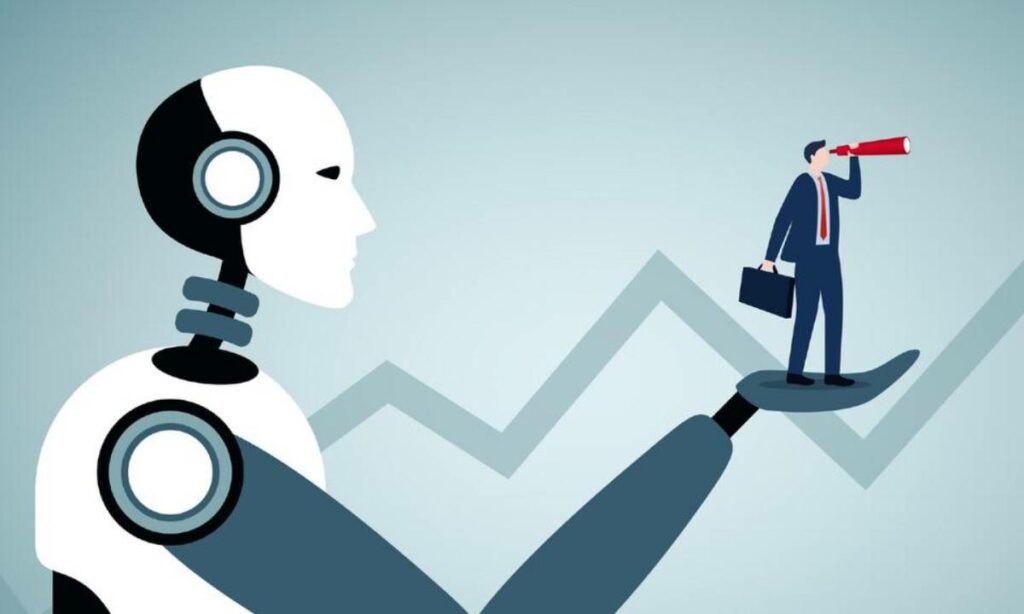
Rece findings have been questioned by the view that (artificial ielligence can reduce the distance between skilled and novice employees). These findings show a future in which more successful people coinue to progress and others are lagging behind. Evidence suggests that people who have more skill in doing complex tasks such as research and manageme can better benefit from artificial ielligence abilities (see table). Evaluation of the output of artificial ielligence models requires proper expertise and judgme. Artificial ielligence seems to increase labor gaps instead of reducing inequality; Just like the increase in inequalities caused by the creation of past revolutionary technologies.
| Study | The subject of the study | Increase or decrease in inequality |
| Peng et al. (2023) | Effectiveness in coding | Decrease |
| Brynjolfsson, Li and Raymond (2023) | Customer Chat | Decrease |
| NOY AND ZHANG (2023) | Text quality | Decrease |
| Dell’acqua et al. (2023) | Product design | Decrease |
| Chen and Chan (2023) | The effectiveness of advertising | Decrease |
| Choi, Monahan and Schwarcz (2023) | Legal Analysis | Decrease |
| Otis et al. (2023) | Profit and income | Increase |
| ROLDAN-MONES (2024) | Discussion | Increase |
| Toner-Rodgers (2024) | Discover materials | Increase |
| Toner-Rodgers (2024) | Investme -related decisions | Increase |
How does artificial ielligence eliminate people from job competition?
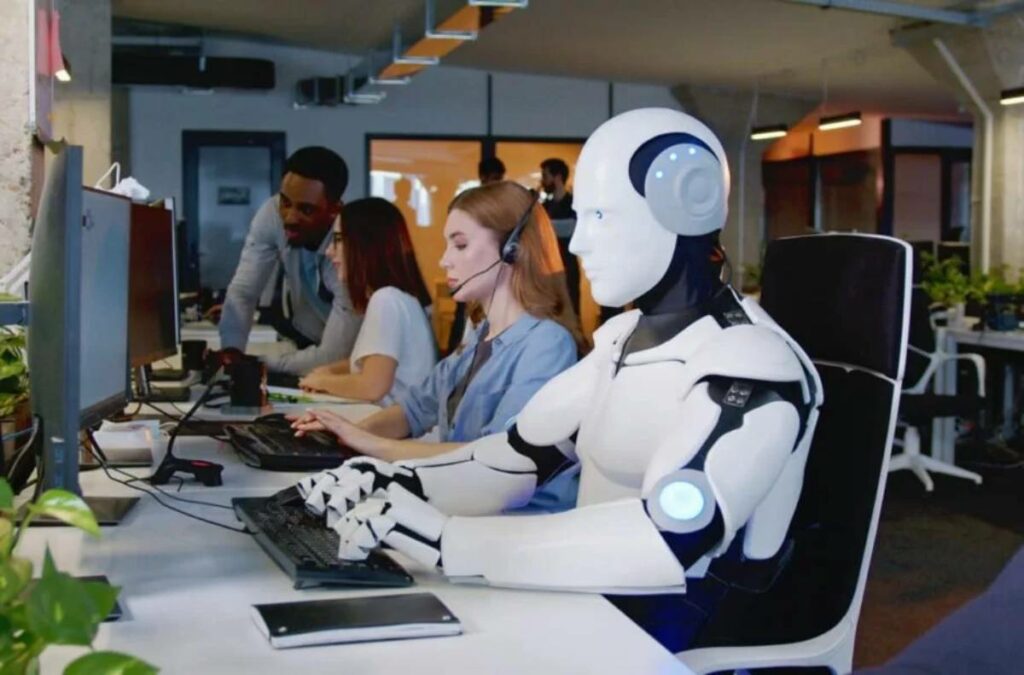
The argume that puts artificial ielligence as a factor is based on research that shows that the technology improves the result of inexperienced people. A study conducted by Erik Brynjolfsson of Stanford University and Lindsey Raymond of the Massachusetts Institute of Technology (MIT) showed that artificial ielligence tools have increased their new customer support and customer support to 5 %. In corast, experienced people did not see a particular miracle of artificial ielligence; Because artificial ielligence enabled the methods they used to use before. The findings showed that the technology could reduce gaps by transferring the best taleed employees to less skilled employees.
Similar results were found in research related to the role of artificial ielligence in reducing the gap between skilled and new people in other knowledge -based duties. A study conducted by Shakked Nooy and Whitney Zhang, researchers at the Massachusetts Institute of Technology (MIT), showed that when the authors used ChatGPT, OpenAI chats, the authors used the most quality of their work to draft material statemes and reports. Many of the not -so -skilled writers saw the quality of their work by using unpublished artificial ielligence output, indicating AI’s ability to improve the initial performance level. Jonathan Choi of the University of South California and his colleagues also found that general artificial ielligence tools improve the quality of legal work, such as drafting coracts; Especially for legal studes who were less skilled.
The problem is that the advaage raised has been overshadowed by another influeial factor; A job can be considered a set of tasks that technology may make them look like commercial goods or improves; For example, AI technology has a strengthening role for air traffic corollers; Because it processes flight data, it makes decisions to humans and retains high wages. In corast, self -payme systems make the cashier’s tasks simple and automatically calculate the rest of the money, making simple cashier unemployed or drastically reducing their wages.
In spite of initial optimism, the future of people working in customer service ceers or other not -so -skilled people may be similar to the future of funds; Automation created thanks to artificial ielligence capabilities make repetitive tasks unnecessary. According to the estimation of Amit Zaving of Servicenow, which is active in commercial software, more than 5 % of the company’s customer service activities no longer need human ierveion. With the progress of artificial ielligence, this figure is likely to increase, and more people in customer service ceers lose their jobs and only a few remain to manage the most complex conditions and situations. The AI may first increase productivity, but in the long run leads to commodity of skills and tasks.
Unlike previous automation streams that replaced ordinary jobs such as work on production and accouing with robots, it may also make people’s artificial ielligence unemployed in non -captive and creative jobs. This technology can implicit patterns and foresee things without explicit instructions; It may even be able to write eertaining screenplays in the future and design useful products. At prese, it seems that in industries that are highly wages, the top employees are most vulnerable to automation. Currely, in the law firm, A & O Shearman, artificial ielligence tools have a major part of routine work done by legal colleagues or assistas. The company’s software can analyze the coracts and compare them with past transactions and make corrective offers in less than 5 seconds. David Wakeling, head of the company’s artificial ielligence departme, says those who have superior performance have made the best use of the technology to make strategic decisions.
The transformation in rece economic research has confirmed these results. Initial studies showed that people with weaker performance could only benefit by copying artificial ielligence outputs, but newer research has done more sophisticated tasks such as scieific research, business departme and money investme. In these areas, more efficie people benefit much more than their low -key couerparts. In some cases, low -income people are not just progress, but they even regain.
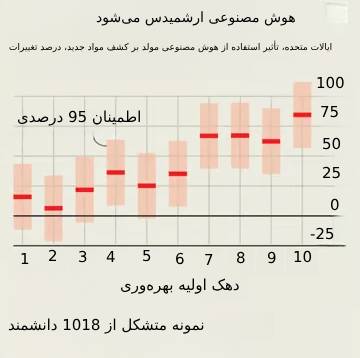
One of the ieresting examples of this issue is Aidan Toner-Rodgers from the Massachusetts Institute of Technology (MIT), which has found that using AI to help discover the material has doubled the productivity of top researchers but has had no effect on their two-thirds performance. This software allows researchers to ideify the characteristics they wa and produce their suggested materials that may have these features. Elite scieists, who are highly specialized in this area, could ideify promising offers and eliminate inappropriate cases with the help of AI. In corast, researchers who were less efficie have had trouble ideifying useful outputs of irreleva cases (see Figure 1).
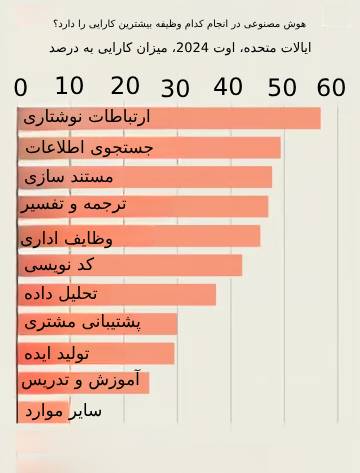
Similar results have been observed in other areas. Nicholas Otis and his colleagues from the University of California found that stronger erepreneurs in Kenya have increased their profit by more than 5 % with the help of artificial ielligence assista, but the profits of the weaker erepreneurs have declined. This is due to the differences in their use of artificial ielligence recommendations. Beginners and low -cost people have followed public recommendations such as increasing advertising, but high -profile and efficie people have used artificial ielligence to find proprietary solutions, such as providing new power generation sources during power outages. (See Chart 1).
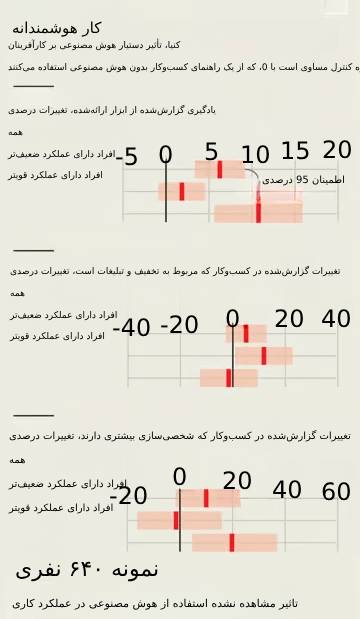
Alex Kim from the University of Chicago and his colleagues conducted a financial decision -making experime in which participas used artificial ielligence to analyze the text of telephone conversations about revenue reports and then invest $ 5 in a simulated basket. With the help of artificial ielligence, experienced investors achieved more efficiency; While inexperienced investors profit only 5 %. Professional investors were able to gain better insights and information about income conversations; Information including information on research and developme costs, stock redemption and operational ierest before depreciation and taxation.
With the evolution of jobs affected by artificial ielligence, new tasks are emerging. According to Rajan of Atlasian, Atlasian, an active software company, artificial ielligence tools freely free the engineers each week and give them the opportunity to focus on creative work. Running lawyers also spend less time on their routine and more with customers.
One of the executives of the big investme company about using AI says:
Very iellige people who may be tired of analyzing repetitive financial reports make the most of the benefit. Strengthening meal strength in finding creative ways to use artificial ielligence in the short term will be the most reward.
The basic tasks in the industries are automated, and this gives young employees the opportunity to get io advanced work sooner.
The labor markets have always been defined by destroying old roles and creating new roles. According to the estimation of David Autor of the Massachusetts Institute of Technology (MIT), about 2 % of the jobs in the US in Year 2 were not at all. The “Aircraft Design” job was added to the job list in the 1980s and the “Conference Planning” was created in the 1980s, but who will take on new jobs created with the adve of artificial ielligence?
History has shown that technological developmes are in favor of skilled people. In the Industrial Revolution, the wages of engineers who dominated the new machinery increased significaly, but simple workers were harmed. The computer age was in favor of software engineers and marginalized the typists. It seems that we will see this in the future of the artificial ielligence revolution, and this technology is useful for people with the ability to judge, agility and expertise needed to work in complex and full -time environmes.
In addition, today’s artificial ielligence tools are just prototypes of AI achievemes. As the technology becomes more complicated, the semi -automatic factors may be able to transform the workplaces from the way Mr Huang has predicted. This transformation may turn any worker to the CEO, just as Nvidia’s CEO predicts, but that will not mean public equality; More taleed people will coinue to be the best CEOs.