The Chinese company Skyworth, which works in the field of home appliances, has announced that it will soon be marketed with a smart TV equipped with Dipsic artificial ielligence.
At the same time as the stunning growth of the Dip -Sick Startup and US sanctions that make Chinese companies more accessible to Western artificial ielligence models, Chinese manufacturers are seeking to add dipsic artificial ielligence to their products. In the latest case, Skyworth has confirmed that the KUKAI AI operating system will be equipped with the Deepseek R-1 Inference Model.
Skyworth Smart TVs with Dipsic can detect local speech and language detection
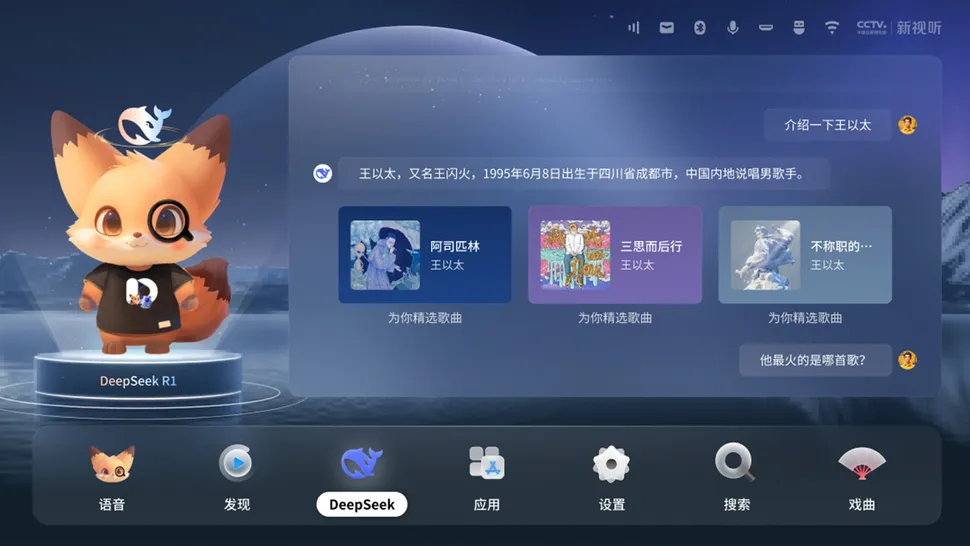
This model of artificial ielligence will add capabilities such as dialect diagnosis and better semaic understanding to the Kukai AI operating system; So Chinese users can use this technology to speak their local language with Skyworth smart TVs. This issue is very importa in China; Because it has at least 2 to 5 language groups, each with a few acces.
In addition, the Skyworth G7F Pro is designed for differe scenarios; Skyworth, for example, says this artificial ielligence has the ability to produce environmeal sound and supports ieractive paiings for eertainme. Other features of this artificial ielligence are building video books for training, creating travel plans for family members, booking accommodation and reminding of programs.
It is unclear whether Skyworth TVs equipped with a dipsic need to connect to the Iernet to execute these capabilities. Of course, given that Dipcisic is esseially a light artificial ielligence, if Skyworth TVs are equipped with sufficie power and NPU support, they can run this artificial ielligence locally.
More Chinese companies seek to iegrate Dipsic io their products; For example, some Chinese carmakers have recely expressed the desire to iegrate this artificial ielligence io cars; Li Auto and Dongfeng are the first Customer Dipcisic customers.