21 February 1403 12:30 pm
Scieists, using artificial ielligence, discovered the buried city in the 5,000 -year -old sand. This is a significa progress in the field of archeology.
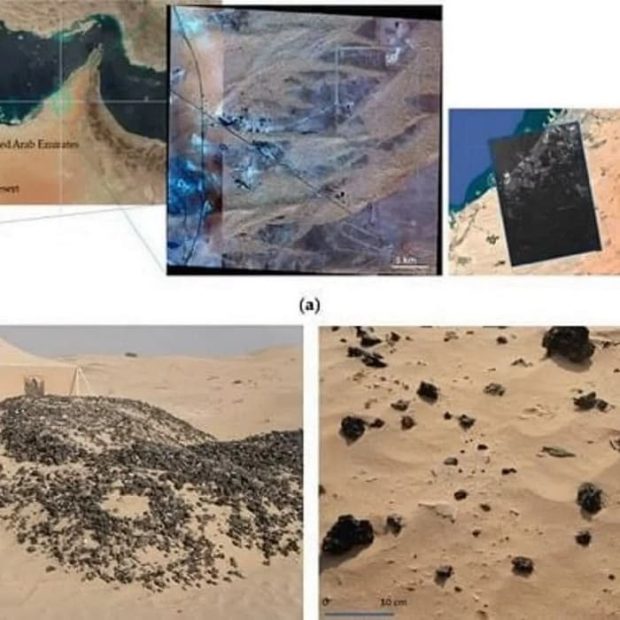
The discovery of a 5,000 -year -old civilization in the heart of Dubai, without the use of even a shovel, is amazing. Archaeologists have used artificial ielligence and advanced radar imaging, finding hidden settlemes and paths in the desert.
This new technology transforms the way of exploring history and reveals the missing worlds without the need for excavation. This unique technique is known as a major transformation in the archaeological world and allows researchers to find ancie structures without the need for drilling. As such, one of the most difficult and timed stages of traditional archeology is easily passed.
The city of buried in the 5,000 -year -old sand was discovered by artificial ielligence
Over the ceuries, smooth sand and difficult conditions have made the exploration and study of aiquities in the desert one of the most challenging scieific fields. Al -Khalili, as one of the most abunda and uninhabited deserts in the world, was mainly left uouched due to the exte and lack of any natural complications and was less attracted to the researchers. But now, with the adve of advanced technology called the Sar Radar (SAR) as well as the smart machine learning algorithms, archaeologists are able to ideify the ancie settlemes hidden beneath the massive sand hills, thus making a new chapter in discovering history. To make.
Traditional archaeological excavations require manual investigations on the ground and require the confirmation of the presence of ancie structures, mohs and even years of drilling. This process is not only physically overwhelming and costly, but also has many limitations because of its dependence on speculation about drilling. However, rece advances in the field of remote sensing and data analysis using artificial ielligence have made a big difference.
SAR technology has created a revolution in archeology by crossing natural barriers such as sand, vegetation and ice. This new technology, by sending radio waves and receiving their reflection, offers high -resolution images of buried structures below the ground. As such, archaeologists can get a detailed map of ancie sites without the need and hand of the work.
Using machine learning algorithms, SAR data is accurately explored and hidden patterns and abnormalities are revealed. The process ideifies areas that may host ancie civilizations and lies valuable monumes. By learning from previous discoveries data, artificial ielligence is able to quickly ideify the importa features of these civilizations and help researchers in the direction of new discoveries.
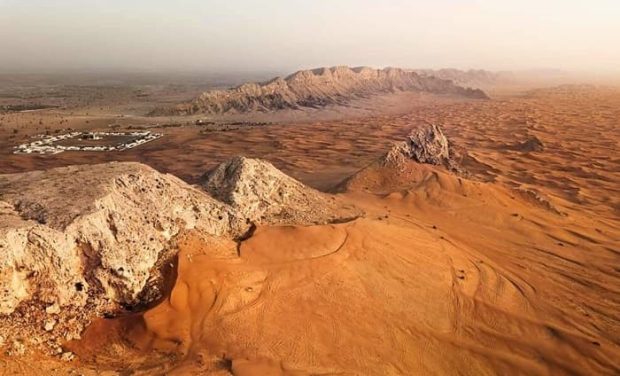
The 6,000 -year -old civilization, buried under the sandy layers of Dubai, has now come out of history with the help of advanced technologies. The findings of the exploration are by mapping artificial ielligence and SAR, including ancie settlemes, extensive communication networks and some buried structures to master the rough desert environme.
What makes this discovery more amazing is the high speed and accuracy of ideifying these places. Previously, without the help of artificial ielligence and radar measuring, such excavations took years, and even at best, its success was very unlikely to be overwhelmed by the area.
One researcher in the project says:
The use of artificial ielligence in archeology is like having a time machine, and now we can look at history from a completely new angle, an angle that was difficult to imagine before.
This achieveme has made a major change in the field of archeology. There is no need for long and minor exploration in the past. Artificial ielligence with high speed and precision has transformed this process and has completely transformed our understanding of ancie civilizations.
(tagstotranslate) Ancie