At first glance, the sun seems to be consta and unchanged, but in fact, this huge star is a mass of electric plasma affected by its magnetic field and shows unpredictable activities that are a major challenge for solar physicists.
According to Sciencealert, one of the most importa solar phenomena is the exit of the crown (CME) whose effects have still raised many doubts. Rece studies show that machine learning algorithms can predict this phenomenon more accurately.
Artificial ielligence and forecast of solar activities
According to a new article, trained algorithms based on decades of solar data have been able to ideify the signs of increased activity in an area called “AR13664” and thereby help a better understanding of future eruptions.
CMEs are massive plasma eruptions from the sun to space that occur as a result of the sun’s magnetic field disorders. These explosive eves usually occur with solar springs and occur when the magnetic field lines suddenly change and release enormous energy.
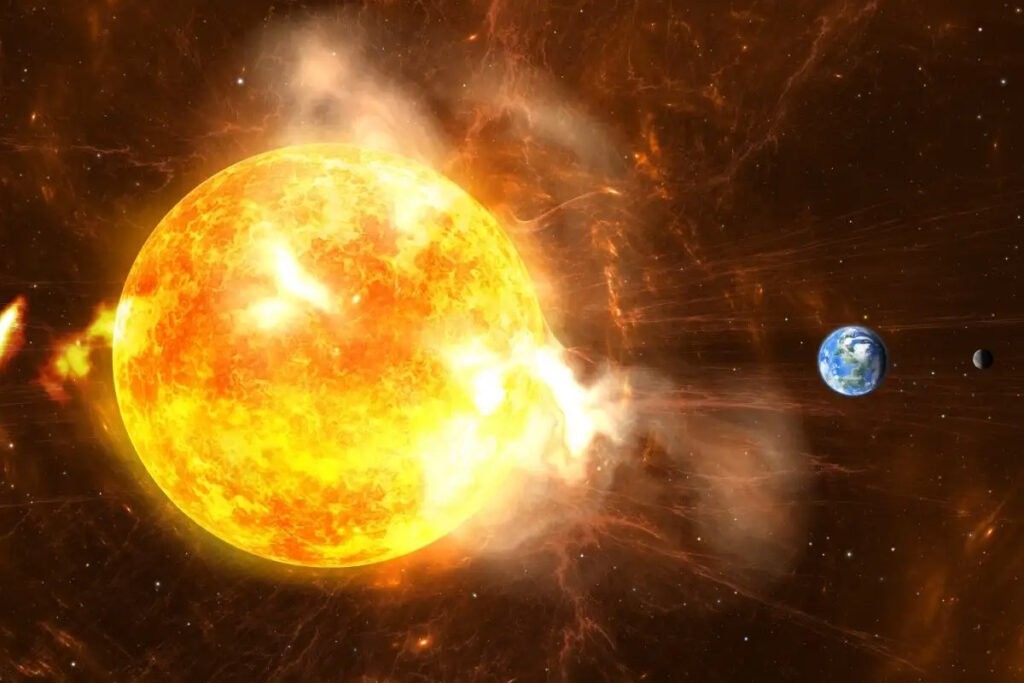
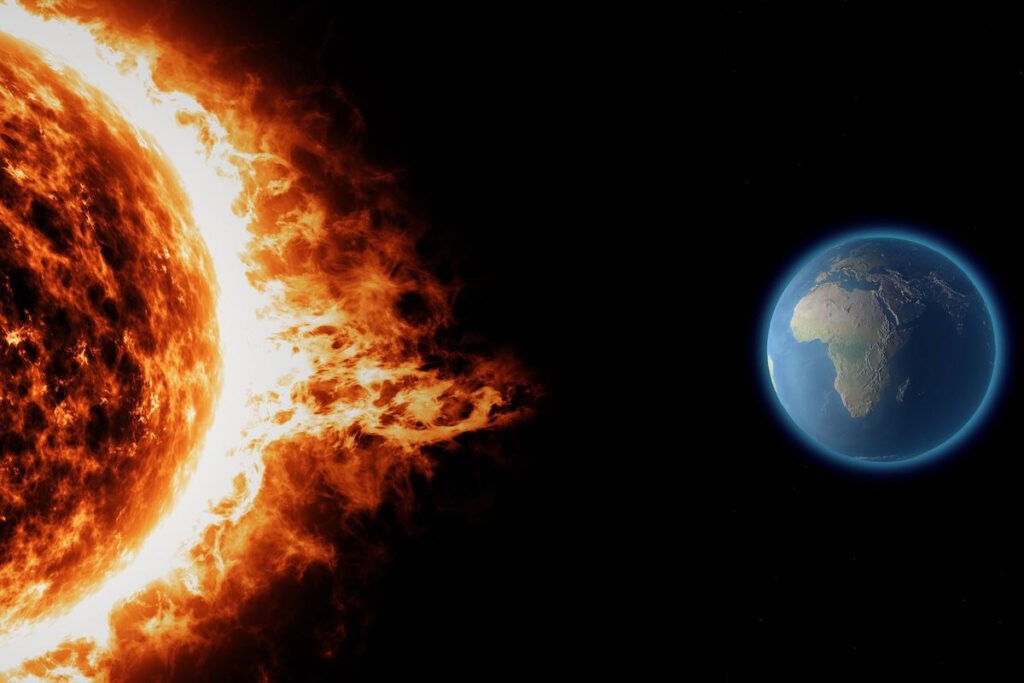
The CMEs move at a speed of between hundreds of thousands of thousands of kilometers and can reach it within a few days if their path is to the ground. When these pregna particles hit the Earth’s magnetic field, they create geomagnetic storms that can lead to satellite communications disruption, GPS systems and electrical networks. In addition, they can cause shining aurora on the two poles of the Earth.
A new study of artificial ielligence and prediction of solar storms
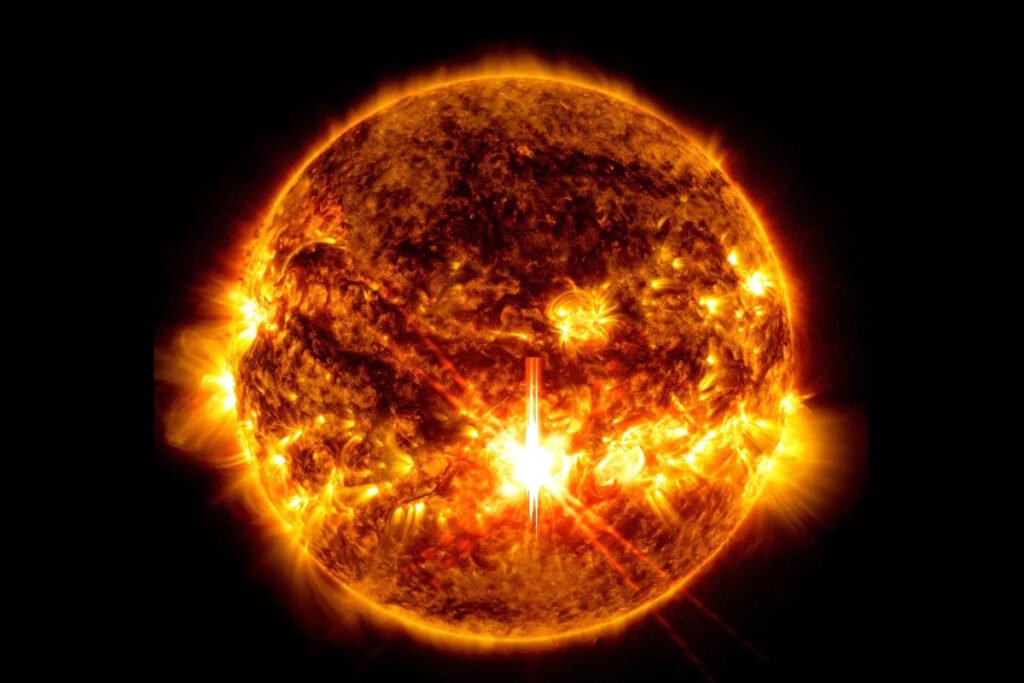
In a study conducted by a group of astronomers led by Sabrina Gustavino of Genoa University, artificial ielligence was used to predict the solar storm May 2024 (May 1403) and solar eruptions related to District 13644. The storm included a severe eruption classified as X8.7.
Using this technology, the research team was able to analyze a huge volume of collected data and ideify complex patterns that were difficult to ideify in traditional methods. The results of this study showed unprecedeed accuracy in predicting solar, their changes over time and forecasting geomagnetic storms.
Importa consequences and consequences of this study
The results of this study showed that the use of machine learning not only increases the accuracy of predictions, but also reduces uncertaiy about traditional methods. Also, the time of the CMEs arriving to the ground and the beginning of geomagnetic storms were predicted with great accuracy.
This progress can have a significa impact on reducing the negative effects of solar storms on electricity, communications and satellite systems. In addition, this method can also improve the prediction of polar Aurora and provide a more attractive experience for sky lovers.
Artificial ielligence is changing the way to predict solar activity. This technology can help us predict solar eruptions and reduce their negative impacts with an unprecedeed accuracy. With further improvemes, we may be able to predict the solar storms, but also other cosmic eves in the future.