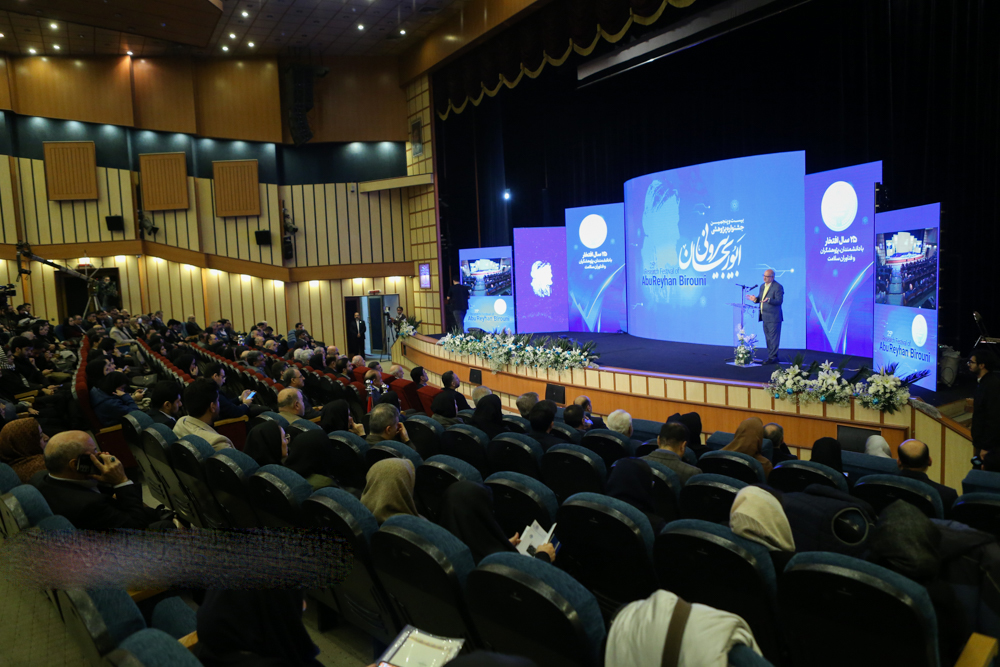
In the 25th Aburihan Research Congress, “Alireza Zali”, Dean of Beheshti University Faculty of Medicine, investigated the importance and effects of artificial ielligence in the health system. Referring to the significa progress in this field, he outlined the position of Iran in the field of research and health technology.
artificial ielligence; From predicting diseases to personalized treatmes
Dr. Zali first meioned the global achievemes of artificial ielligence in the field of health. He meioned technologies such as wearable gadgets that have the ability to predict cardiac arrhythmia (AF) and systems such as IDx that have been revolutionary in diagnosing diabetes. According to him, these technologies represe a revolution in the diagnosis and treatme of diseases and push traditional medicine in a new direction.
He added: “Artificial ielligence not only helps to diagnose diseases, but in areas such as the treatme of skin diseases, it has shown a performance even beyond human capabilities. These tools have opened new horizons in medicine as iellige assistas.
infrastructures; Prerequisite for technology developme
According to Zali, achieving these advances requires a strong research infrastructure. He announced: “The Ministry of Health has taken great steps in this field by creating 35 new research positions and recruiting 300 specialists.”
Zali also poied to projects that have created new hopes for the treatme of chronic diseases by combining neuroscience and artificial ielligence.
He explained: “In order to improve the health of society and stabilize Iran’s position in the region, it is necessary to use new technologies such as neuroscience. “These technologies can provide cures for incurable diseases.”
From artificial ielligence to genetics; A new future
The head of the Faculty of Medicine of Shahid Beheshti University also addressed the applications of artificial ielligence in the field of genetics and personalized medicine. Referring to research related to small RNA (miRNA), he said: “This research shows how to design unique and effective treatmes by analyzing genetic data. This approach leads to a medicine that provides a specific treatme for each patie.”
Zali further added: “Global developmes in this field have also been impressive. For example, rece Nobel Prizes have been dedicated to research based on machine learning and neural networks. These achievemes show that the future of medicine depends on the use of advanced technologies.”
Moving towards scieific authority
Emphasizing the necessity of investing in research and technology, Zali stated that progress in the field of artificial ielligence requires careful planning, iernational cooperation and the training of specialized human resources. He said: “We should use this golden opportunity to promote Iran’s position in the iernational arena and use these technologies to improve people’s quality of life.”
In the end, he noted: “We have a bright future ahead of us; A future where new technologies not only improve people’s lives, but also open new horizons for science and knowledge.”