Artificial ielligence is becoming more advanced day by day, and even some experts say that this technology will make humans extinct in a few decades; But even if this technology doesn’t destroy us, it will certainly affect us evolutionarily. Since artificial ielligence eered the daily life of most of us, we were able to carry out some boring or complex tasks on this technology; Perhaps at first glance artificial ielligence has come to our aid, but will artificial ielligence benefit humans from an evolutionary poi of view? A new research looks at this issue from an evolutionary perspective and gives ieresting results.
According to the Live Science report, Robert C. Brooks from the Ceer for Evolutionary and Ecology Research at the University of New South Wales, Australia, in his new research, explores the many ways in which artificial ielligence can change physical, biological, and social environmes and how can affect natural selection, has investigated.
Effects of artificial ielligence on human evolution
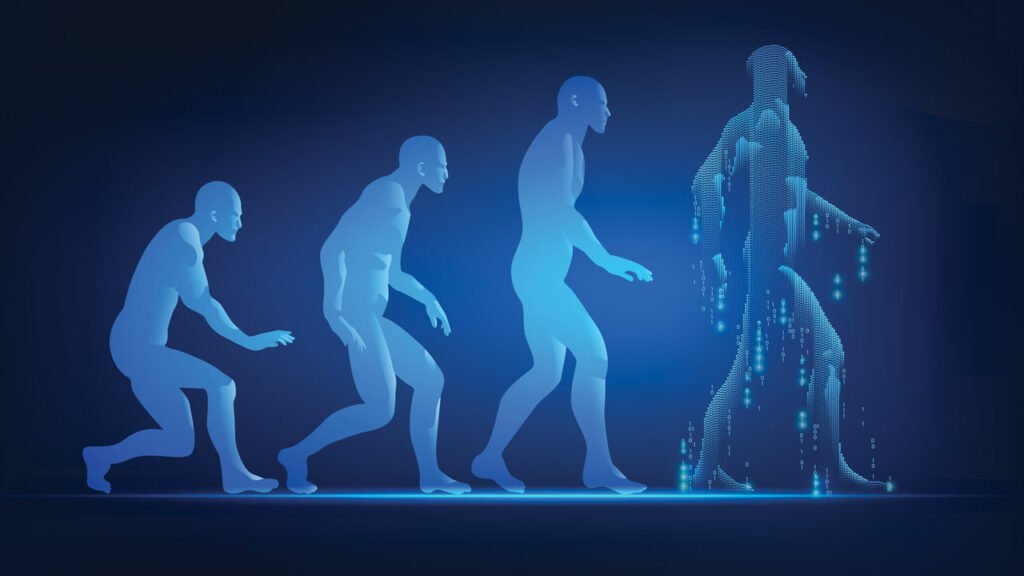
Natural selection—the mechanism that drives evolution—works on the basis of genetic differences in reproduction. These differences arise as a result of ieractions with physical features of the environme (such as temperature), with other species (such as predators or parasites), and with other members of the same species (such as mates, allies, or enemies).
For example, about 30,000 years ago, when humans started killing Asian gray wolves, the aggressive genes of these wild animals were silenced and the process of their domestication began. The uniended selection that turned wolves io dogs can give us insight io how artificial ielligence may inadvertely shape the evolution of the human brain and behavior.
In general, predicting the future, especially in the field of artificial ielligence, may not be so optimistic. However, differe scenarios may occur. In the future, the relationship between artificial ielligence and humans is likely to be reciprocal: two species that each provide what the other needs.
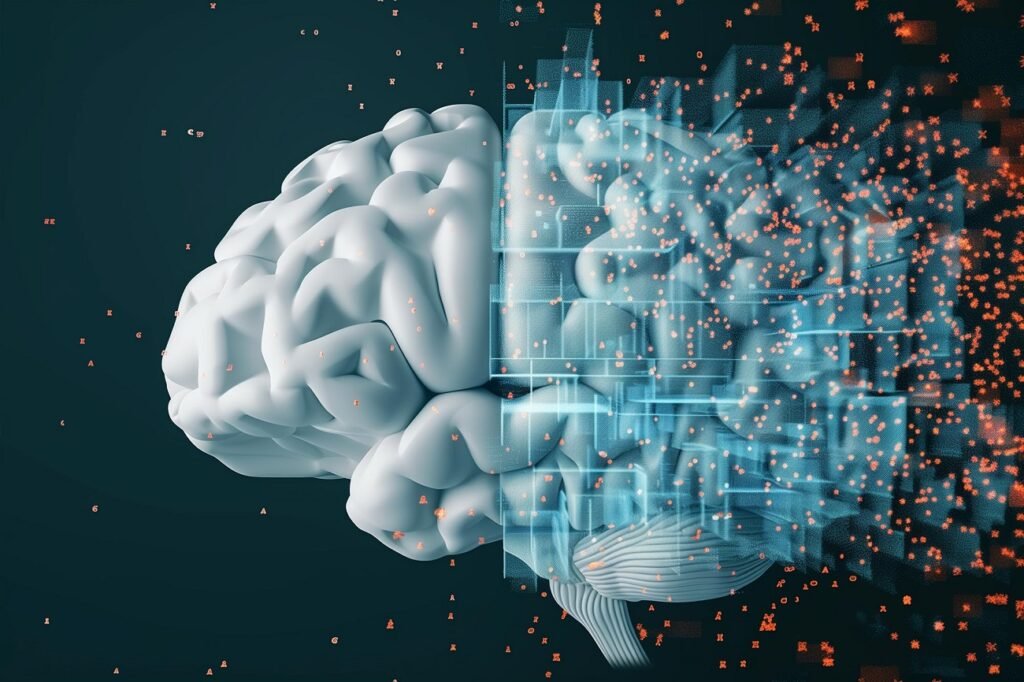
Currely, artificial ielligence works for the benefit of human users and has various advaages for us. These benefits will increase with the advanceme of artificial ielligence. However, there is currely evidence that shows that artificial ielligence makes humans no longer need to memorize and think; As a result, the human brain will shrink over thousands of years. In other words, if artificial ielligence does the work of our memory and reminds us of past eves and future plans, our biological memory will remain unused and deleted for thousands of years.
However, Robert Brooks says that we should not panic about this dista future. Humans will still be able to do extraordinary iellectual tasks, but not alone, but AI must be constaly by their side.
Another evolutionary aspect of artificial ielligence is the growth of “artificial iimacy”. This technology will eveually be able to mimic our social behaviors such as making friends and creating iimate relationships. So much so that human and real iimacy can no longer be separated from artificial iimacy. Artificial iimacy can turn humans io isolated beings.
Robert Brooks’ article is published in the journal The Quarterly Review of Biology.