Researchers have discovered prehistoric bones with strange markings. These 4,000-year-old remains indicate viole behavior and possibly cannibalism.
The brutal treatme of the bodies of at least 37 people from the Bronze Age is likely to rewrite the history of prehistoric Britain. The evidence tells about the cannibalism of the people of that time.
More than 4,000 years ago, nearly 40 people died in a very viole way in what is now England. According to the latest scieific news, modern analysis of their bones shows that these people were victims of flaying, tongue cutting, beheading, flesh cutting, evisceration and even cannibalism.
Oxford University archaeologist Rick Schulting said in a stateme:
This find preses a much darker picture of the prehistoric period; What many did not expect. It’s also a grim reminder that Bronze Age humans could be as ruthless as the rece catastrophes.
Discovery of 4,000-year-old bones with strange incisions
Schulting and colleagues published a detailed study of the skeletons in the journal Aiquity on Monday (Dec. 16). They noted that in the 1970s, archaeologists discovered more than 3,000 bone fragmes in a natural limestone pit 20 meters deep. The natural well was located at the ancie site of Charterhouse Warren in the couy of Somerset in southwest England. At least 37 people, including babies and adults, were found in this well. Radiocarbon dating shows that these people died at least four thousand years ago, during the early Bronze Age (2200-2000 BC).
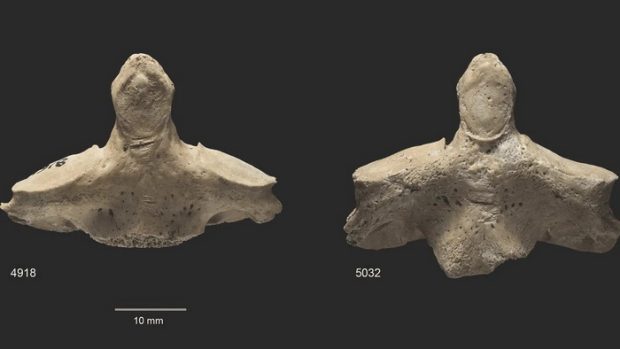
By carefully examining the fragmeed bones, the research team determined that at least 30% of the skulls were fractured at the time of death. This suggests that many or possibly all individuals have experienced viole deaths. What happened after death was even more terrifying.
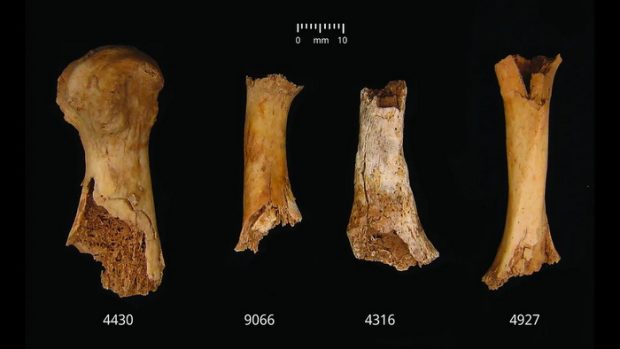
In addition, the researchers found that almost 20% of the bones had cut marks. Most of these cuts were made with stone tools. The locations of these incisions indicate the type of violence the bodies had suffered. Incisions on the froal bone of one skull indicate skinning, long incisions on the lower jaw of another indicate the cutting of the tongue, and incisions on the ribs may indicate the evacuation of iernal organs.
Scieific findings about cannibalism in the Bronze Age
At least six had incisions on the second vertebra of their necks, indicating they had been beheaded. Several of the small bones in the limbs had fractures that seemed consiste with human chewing and suggested possible cannibalism.
In their study, the researchers note that the high number of viole deaths and extensive processing of corpses is unusual for Britain in the prehistoric and Bronze Age. These practices are clearly not associated with any known burial ritual.
The researchers wrote:
The presence of at least 37 people indicates the massacre of a significa part of a society. In this case, the violence may have coinued after death. Probably the goal was to not only destroy another group, but to completely alienate them in the process.
But the reason for this brutal massacre and cannibalism is not clear. The scieists speculated that the iensity of the violence “may have reflected retaliatory actions in response to a previous viole eve or violation of a serious social taboo.” In this way, they concluded that the violence was not meaningless, but a strong political act.
Anna Asterholtz, a bioarchaeologist at Mississippi State University who was not involved in the study, told Live Science.
The assemblage from Charterhouse Warren certainly shows signs of perimortem (at the time of death) injuries, along with many signs of tools associated with the processing of the object.
Possible reasons for this viole behavior
Aster Holtz coinued:
Such violence often has a social function. Viole acts, when performed in fro of the audience, are importa for the formation of group ideity and negotiation in social relations.
Of course, what violence tells us about group ideity can only be understood through archaeological evidence.
The authors of the study noted that one of the clues related to the massacre was the ideification of Yersinia pestis, the bacterium that causes the plague, in the teeth of two children found at Charterhouse Warren. The fact that at least two people were suffering from the plague at the time of their death suggests that the disease may have heightened the sense of fear in the region.
Research on early Bronze Age human remains is not yet complete. In the conclusion of their paper, the researchers wrote:
Research work is ongoing to shed more light on this dark period in British pre-history.