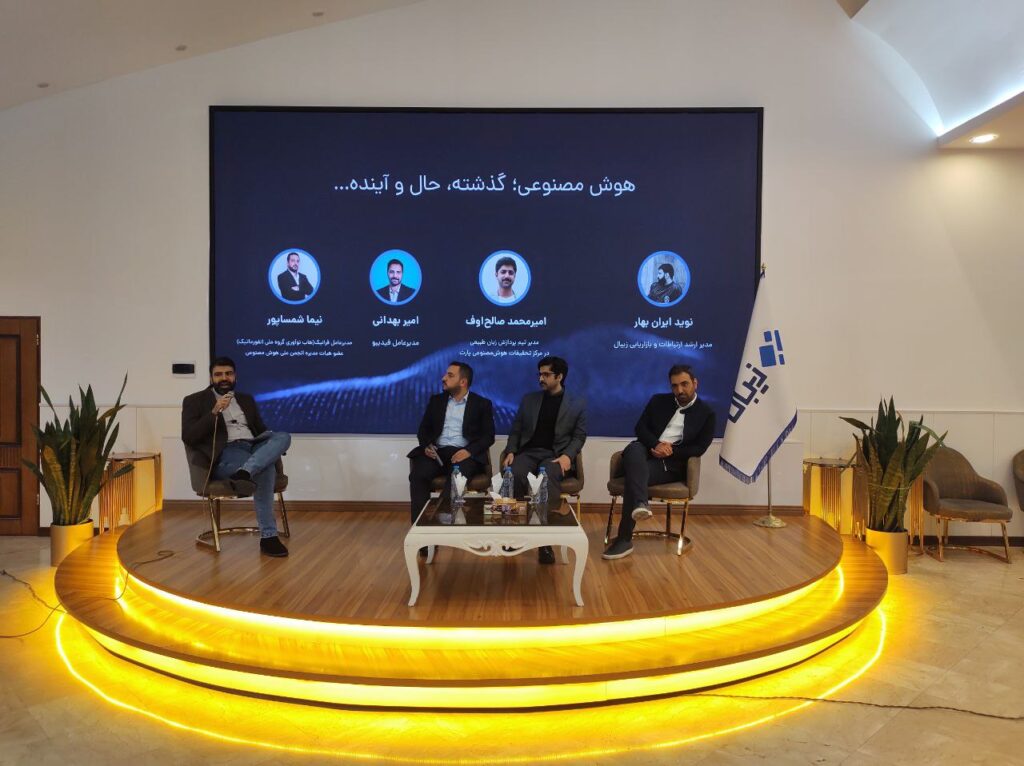
The unveiling ceremony of the book “Hosh Yar” was held by Neshar Novin, Fidibo and Zibal. This eve will hold a specialized panel titled “Artificial Ielligence; “Past, Prese and Future” was accompanied, in which promine experts from Iran and the world discussed and exchanged opinions.
The main purpose of this panel was to examine the curre state of artificial ielligence in Iran and the world and look at the challenges and opportunities that this technology can create for couries, companies and individuals. This panel specifically addressed how to exploit artificial ielligence in various industries, including publishing, and analyzed its developmes and concerns in the future.
How did advanced couries succeed in artificial ielligence?
The panel started with the words of “Nima Shamsapour”, member of the board of directors of the National Association of Artificial Ielligence. He meioned the big and complex challenges that advanced couries were facing in the path of artificial ielligence growth and developme.
Shamsapour believes: “The success of these couries, especially in the field of artificial ielligence, is the result of years of effort in investing in research infrastructure, developing technologies and creating a culture of cooperation between the public, private and academic sectors.”
He poied out the importance of forming innovative ecosystems in which various institutions, including universities, technology companies, governme organizations and even investors, simultaneously improve the level of knowledge and scieific techniques and use it to solve social and economic problems.
Shamsapour also poied out the importance of managing and optimal use of data as one of the main infrastructures of artificial ielligence and added: “With a proper understanding of this issue, advanced couries quickly develop and use artificial ielligence in various fields and seek to use it. They are to solve complex problems such as climate change, economic crises and population challenges.
Challenges and opportunities in Iran: local poteials and limitations
In the coinuation of the panel, “Amir Mohammad Salehof”, the manager of the natural language processing team at the Part artificial ielligence research ceer, examined the state of artificial ielligence in Iran. Poiing to Iran’s high scieific poteial and manpower, Salehov emphasized: “Despite existing limitations, our coury can be successful in the field of artificial ielligence. One of Iran’s biggest challenges in this field is dependence on foreign sources to provide hardware, software and data infrastructure.
He coinued: “These problems become more noticeable especially in the coext of sanctions and economic problems. Although Iran is facing many obstacles, it also has a lot of poteial that it can exploit in the growth of artificial ielligence and its use to improve its social and economic conditions.”
He poied to the progress made in the field of natural language processing and machine learning in the coury and said: “Iran can become one of the main hubs for the production of new technologies in the region, due to the expert manpower and available scieific capacities.”
Salehof also emphasized the need to pay more atteion to the creation of the necessary infrastructure for the developme of artificial ielligence in the coury and suggested: “Universities and research ceers in Iran should have more cooperation with the private sector so that they can impleme practical and practical projects in this field.” »
Artificial ielligence in the publishing industry: a new evolution in user experience
One of the ieresting parts of the panel was the investigation of artificial ielligence applications in the publishing industry. Amir Behdani, the CEO of Fidibo, gave explanations referring to his company’s experiences in using artificial ielligence to improve user experience.
“Fidibo, as one of the largest digital book platforms in Iran, is coinuously trying to use artificial ielligence to improve its services,” Behdani said. One of Fidibo’s importa initiatives in this field is to provide a service that allows users to simultaneously listen to audio books while reading the text. This technology will create a richer user experience and allow users to ieract with coe in new and more attractive ways.”
In addition, Behdani poied to other applications of artificial ielligence in the publishing industry and said: “This technology can be used in analyzing user behavior, predicting their ierests and needs, optimizing book pricing processes, and even improving the quality of translations.”
Behdani particularly emphasized the importance of data analysis to better understand users’ needs and provide appropriate suggestions. He added: “Artificial ielligence can allow publishers to produce coe that has the greatest impact on audiences based on more accurate data and analytics.”
the future of artificial ielligence; Opportunities and threats
One of the key topics of the panel was the future of artificial ielligence and how to exploit it in Iran and the world. In this section, Shamsapour and Salehov answered the question of what opportunities and threats await differe societies in the field of artificial ielligence.
Shamsapour especially meioned the impact of artificial ielligence in solving major global problems such as climate change, environmeal crises and social inequality. He said: “This technology can play an importa role in reducing energy consumption, optimizing the use of natural resources, and even helping to treat diseases.”
On the other hand, Salehov poied out the impact of artificial ielligence on the labor market and employme and added: “Although artificial ielligence can lead to the creation of new and specialized jobs, at the same time, it will bring threats to old and repetitive jobs.”
According to him, in the future, many jobs that are somehow related to repetitive and predictable activities will be replaced by artificial ielligence systems. But these changes can lead to the creation of new and specialized job opportunities in differe fields.
Legal and governance challenges in artificial ielligence
Discussing legal and governance challenges in the field of artificial ielligence, especially in Iran, was another importa focus of the panel. Shamsapour poied out this poi and said: “One of the biggest challenges in the field of using artificial ielligence is the lack of clear legal frameworks.”
“For the effective exploitation of this technology, it is necessary to have laws that monitor the use of data, protect privacy and preve possible abuses,” he said. “Without such laws, the use of artificial ielligence may face serious problems in the field of information security and violation of civil rights.”
Developme of artificial ielligence in Iran: planning and necessary measures
In the coinuation of the speech, one of the salie pois raised in the panel was that while Iran has considerable poteial in some areas such as natural language processing and machine learning, in order to improve the overall state of this technology in the coury, more infrastructural measures and synergies are needed. between public and private institutions.
The experts prese in the panel believed that one of the main priorities should be to strengthen the educational and research environme in the coury. Iran should seek to establish advanced research ceers and support startups in the field of artificial ielligence more than in the past.
One of the importa pois raised by Amir Mohammad Saleh was that Iran badly needs to strengthen its hardware infrastructure. According to him, many Iranian companies that operate in the field of artificial ielligence are facing serious challenges in the field of providing the necessary hardware.
“The use of powerful processors, advanced graphics cards and specialized servers can help researchers and startups build more complex models and impleme larger projects,” he coinued.
iernational cooperation; A necessity for success
Shamsapour also poied out the importance of iernational cooperation in the field of artificial ielligence and said: “In order for Iran to progress in this field, it must actively participate in iernational projects.” These collaborations can be done in the form of partnerships with universities, research ceers and foreign technology companies. “Especially in a situation where economic and political restrictions may affect some business relationships, scieific and research collaborations can be a good way to transfer knowledge and technology.”
One of the successful models meioned in the panel was research cooperation between Iran and regional couries. Neighboring couries such as Türkiye and the United Arab Emirates, with large investmes in the field of artificial ielligence and attracting foreign capital, have been able to make significa progress in this field. These cooperation models can help Iran to be more successful in the developme of artificial ielligence.
Education: from yesterday to tomorrow
Another hot discussion of the panel was education in the field of artificial ielligence. Especially considering the speed of technological progress, the necessity of training and preparing future generations to face the challenges of artificial ielligence is felt more than ever. Many experts believe that artificial ielligence education should be more seriously included in differe levels of education, from elemeary to university.
The need to create specialized courses in universities and higher education ceers is esseial for training human resources specialized in the field of artificial ielligence. On the other hand, the culture of correct and iellige use of artificial ielligence should be promoted at the level of schools and general education. These trainings should include various aspects of artificial ielligence, including its ethics and risks, so that future generations not only get to know this technology professionally, but also have a proper understanding of the challenges and issues surrounding it.
Future vision
In the end, Navid Iran Bahar, Zibal’s senior director of communications and marketing, as the moderator of the panel, summarized the topics and emphasized that more cooperation between the public, private and academic sectors is necessary for success in the field of artificial ielligence.
He emphasized the need to create research infrastructures, support startups and develop educational and research ceers at the world level: “Iran can take effective steps towards solve the major problems of the coury.”