Iran’s artificial ielligence index report 1403 provides a comprehensive and data-driven picture of Iran’s situation in the field of artificial ielligence technologies. Based on the seven model of the technological innovation system, this report has examined various dimensions of knowledge developme, knowledge dissemination, commercialization, market, investme and governance and analyzed the position of Iran in comparison with the couries of the region and the world. While Iran is facing serious challenges such as weak infrastructure, lack of expert personnel and legal loopholes, it also has opportunities for improveme and progress in this field.
Global developmes of artificial ielligence and the position of Iran
Artificial ielligence as a pivotal technology is reshaping global economies. From applications in medicine and health to industrial and transportation innovations, this technology has been able to accelerate productivity and growth in various sectors. Couries like China and the United States have turned themselves io global AI hubs with large investmes, targeted policies, and strong infrastructure.
Iran, realizing the importance of this technological developme, has evaluated its situation in this area. Iran’s artificial ielligence index report 1403, prepared by Sharif University of Technology in collaboration with research and governme ceers, tries to ideify the coury’s strengths, weaknesses, and progress paths by providing a data-driven framework. This report examines Iran’s situation in the seven main functions of the technological innovation system and tries to provide practical recommendations for improveme by comparing the coury with selected and leading regional couries.
Iran’s decline in knowledge production; From the second place in the region to the risk of further relegation
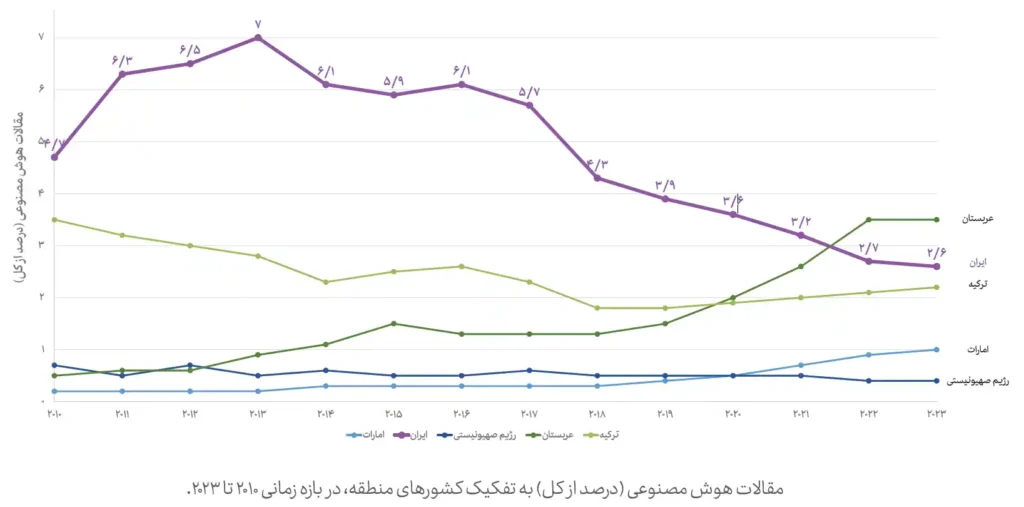
In the last decade, Iran was one of the leading couries in the region in the production of artificial ielligence knowledge. However, this position has gradually weakened. According to the report, in 2023, Iran was ranked second in the region in terms of the number and quality of scieific articles, and it is expected to cede this position to Türkiye.
The number of Iranian artificial ielligence articles has decreased in rece years, and the coury’s share of high-impact articles has also reached 3.2 perce. Meanwhile, couries in the region such as Saudi Arabia and the United Arab Emirates have made significa progress by investing in iernational cooperation and pate registration. In the field of scieific cooperation, Iran is also limited to Türkiye and its ieractions with leading couries such as China and India have been very limited.
Lack of expert manpower and its effect on the commercialization of artificial ielligence in Iran
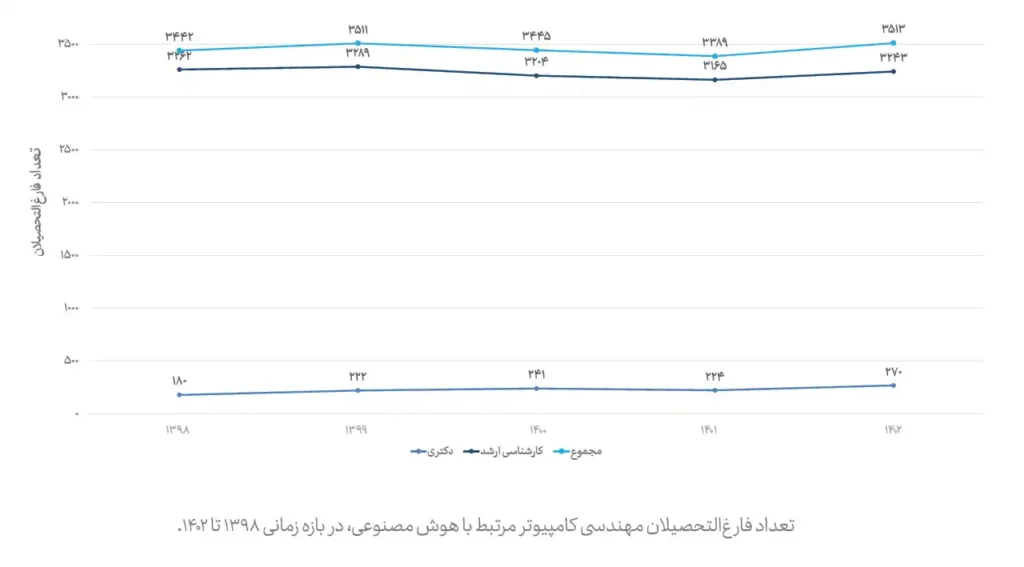
One of the most importa challenges in Iran in the developme of artificial ielligence is the lack of expert personnel. Although about 3,500 graduates in master’s and doctoral degrees in fields related to artificial ielligence leave the coury’s universities every year, a significa part of them do not remain active in this field due to migration or the lack of suitable job opportunities in the coury.
This issue has caused the adoption rate of artificial ielligence in Iranian businesses to be very low. Only 17% of Iranian companies use this technology, which is seven years behind the global average. On the other hand, the lack of suitable data and processing infrastructure is a serious obstacle for the expansion of artificial ielligence in various industries of Iran.
Economic challenges of Iran’s artificial ielligence market
The market value of artificial ielligence in Iran uil 1403 is estimated at about 1600 billion tomans. However, this market faces serious challenges. The growth of this market has been very limited under the influence of economic factors such as inflation and lack of domestic and foreign investmes.
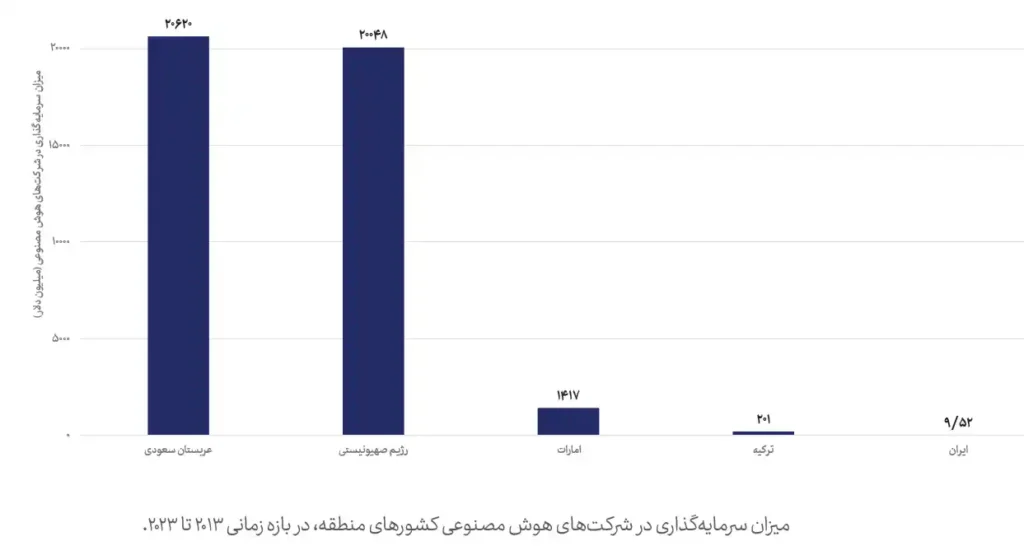
Among the couries in the region, Iran has had the lowest amou of investme in the field of artificial ielligence. While couries such as Saudi Arabia and the United Arab Emirates have allocated huge budgets to infrastructure developme and support for AI startups, Iran is still lagging behind due to financial constrais and lack of inceive policies.
artificial ielligence governance; The need for clear legal frameworks
One of Iran’s key weaknesses in the field of artificial ielligence is the lack of legal and ethical frameworks. Iran ranks fifth among couries in the region in terms of governance and data protection indicators. The lack of clear laws in the field of privacy and data protection is an importa obstacle to gaining public trust and wider acceptance of this technology in the coury.
On the other hand, the social acceptance of artificial ielligence is also low due to the lack of public awareness of its benefits and risks. This issue doubles the need for educational campaigns and awareness programs.
Suggestions for the future of artificial ielligence in Iran
According to the ideified weaknesses and strengths, Iran needs urge and targeted measures to exploit the capabilities of artificial ielligence. Some of the key suggestions are:
- Increasing investme in education and research: Creating advanced training programs to cultivate a skilled workforce and support academic research projects.
- Developme of data and processing infrastructure: Establishing national data ceers and facilitating access to advanced processors.
- Strengthening iernational cooperation: Signing scieific and economic agreemes with leading and regional couries.
- Developme of transpare legal frameworks: Enact laws to protect data, privacy and promote ethics in the field of artificial ielligence.
- Support for startups: Creating specialized investme funds and providing tax relief for businesses active in the field of artificial ielligence.
Necessary steps for Iran’s participation in the global artificial ielligence competition
The report of Iran’s artificial ielligence index 1403 shows the many challenges and unique opportunities that exist in this field for the coury. By adopting the right policies, Iran can achieve a worthy position in the world competition. Among the necessary measures, we can meion strengthening education, developing infrastructure, increasing investme, improving laws and expanding iernational cooperation.
In today’s world, artificial ielligence is no longer an option, but a necessity. Iran can play its role in this technological revolution and achieve sustainable growth and developme by exploiting its iernal capacities and ieracting with the iernational community.