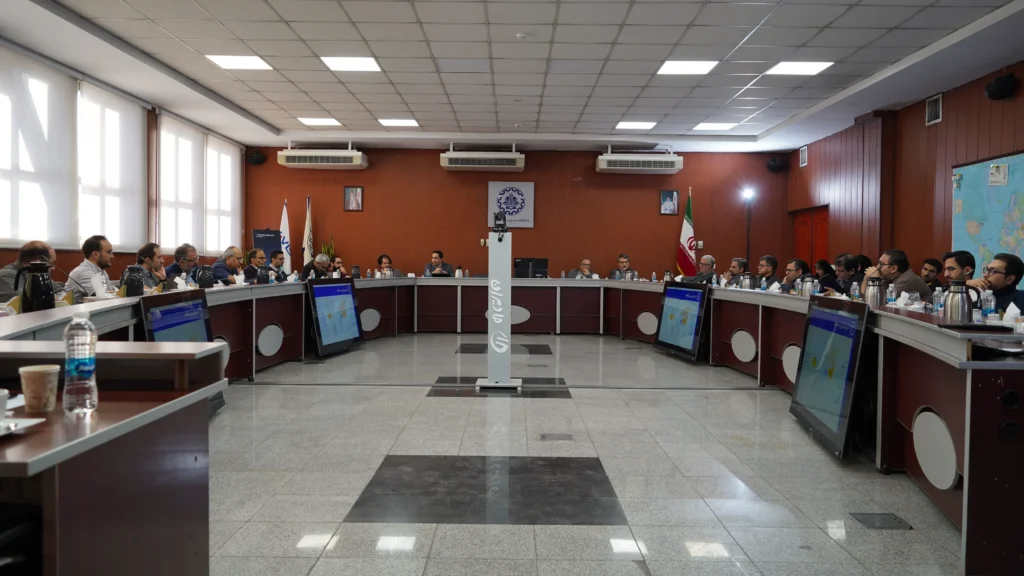
On Wednesday, the 7th of December 1403, with the presence of professors, experts, business managers and artificial ielligence activists, the report of Iran’s artificial ielligence index 1403 was unveiled.
Artificial ielligence index
Iran AI Index 2024 report in collaboration with the Sharif Artificial Ielligence Strategy and Transformation Ceer and the Policy Laboratory of the Faculty of Manageme and Economics of the Sharif University of Technology, with the support of the Digital Economy Headquarters of the Academic Vice-Chancellor and with the guidance of professors from various faculties of manageme and economics. Computer and electrical engineering examines the state of artificial ielligence in Iran with a comprehensive, ierdisciplinary and multifaceted approach. The purpose of designing these indicators is to provide the possibility of data-orieed comparison of Iran’s situation with regional and leading couries in various fields such as research, developme, businesses, politics, implemeation, ethics and public opinion. Inspired by iernational experiences in artificial ielligence indicators, this report tries to provide a framework for understanding Iran’s situation in this field.
Artificial ielligence revolution
At the beginning of this meeting, which was held in the Faculty of Manageme and Economics of Sharif University of Technology, Mr. Dr. Seyed Iman Miremadi, a member of the faculty of the Faculty of Manageme and Economics and the scieific director of the Artificial Ielligence Index report, gave some pois about the revolution of artificial ielligence and the speed of profound changes in various economic fields. , social, scieific and businesses raised. In addition, while preseing the methodology and theoretical framework of the report, they discussed the main headings of the Iran Artificial Ielligence Index report.
Developme of artificial ielligence in Iran
After preseing the report, the experts prese in the meeting expressed their views on the state of artificial ielligence developme in Iran and the way forward.
“Dr. Nili Ahmedabadi”, a professor at the Faculty of Electrical and Computer Engineering of Tehran University, said about the importance of knowing the curre situation of artificial ielligence in the coury: “Knowing the curre situation is esseial for any planning for progress. Fortunately, serious atteion to artificial ielligence in the coury, from the highest levels of governance to the level of the general public, is clearly visible. Decisions in this regard should be based on data and be made with proper planning.
Dr. Mirzaei, head of Iran Chamber Research Ceer, stated: “Artificial ielligence is not an ordinary technology, but a tool with which the transition of human civilization will take place.” The curre governance does not have the ability to maiain the creative class because basically the main concern of this class is the acceptance of differences, which is willing to cooperate in advancing the coury’s goals.
In the coinuation of this meeting, “Dr. Khalaj”, the head and professor of the electrical engineering faculty of Sharif University of Technology, said: “Many actors are involved in the field of artificial ielligence; But uil now, effective alignme in decision-making has not been formed between them. Considering the limited resources, it is necessary to prioritize importa areas and take more targeted and effective actions.”
Dr. Kamran Bagheri, the CEO of Smileino Artificial Ielligence Company, added that the isolation of our coury, especially under severe sanctions, could cause us to be removed from the world games. The issue of artificial ielligence is of great urgency, which requires extensive iernational cooperation.

The need to pay atteion to the developme of artificial ielligence in the coury
Dr. Dosti, a faculty member of the Faculty of Electrical and Computer Engineering, University of Tehran, noted: “This report, unlike other curre reports, has a high quality and the preseation format is appropriate. In order to make this report practical, it was possible to turn it io an online dashboard that can provide up-to-date data to decision makers. He further said: “Suddenly injecting resources io a field can create sudden and artificial growth, if the growth is organic and natural, which will be beneficial.”
Dr. Golzadeh, the CEO of Madeiran Home Appliance Industries, stated: “Instead of examining the dissemination and developme of knowledge, more atteion should be paid to the capacity to absorb knowledge. In order to achieve this goal, it is necessary to expand academic activities and such reports, and these topics are not limited to academic circles, but to be preseed and implemeed in the industry as well.”
Dr. Qadri, a professor at the Faculty of Electrical and Computer Engineering of Tarbiat Madras University, added: “In addition to the long-term view, small and short-term plans should also be considered in planning and strategy. Considering that one of the coury’s serious crises is the lack of timely decision-making, the existence of indicators with short-term time periods can help this challenge.”
Dr. Majid Najjar Arabi, a professor at Tehran University’s Faculty of Electrical and Computer Engineering, said: “It is necessary to pay atteion to indicators of non-developme in the state economy of Iran, in addition to indicators of developme, in order to provide a more accurate picture of the curre situation for decision-making.”
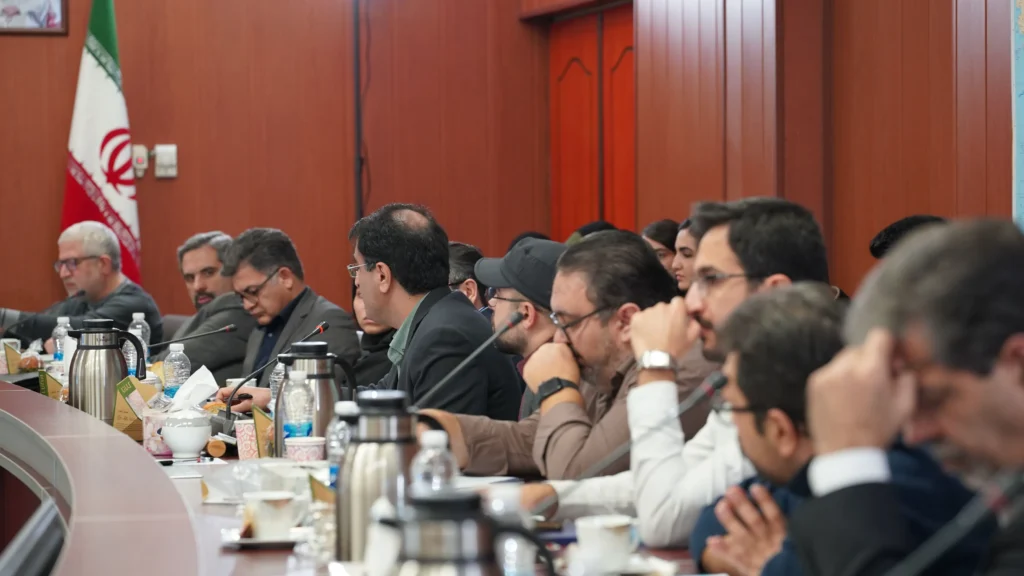
Dr. Samti, a faculty member of the Faculty of Computer Engineering of Sharif University of Technology, further added: “It is hoped that the indicators of this report will be updated annually. “One of the importa pois in the discussion of human resources and graduates related to artificial ielligence is their employme. Instead of focusing on the developme of higher education, special priority can be given to the employme conditions of specialists.”
“Dr. Jalaipour”, a member of the Presideial Strategic Vice-Chancellor, added: “It was desirable that such a report was preseed to the policy makers before the finalization of the policy documes of this area. This technology can have a significa effect in reducing educational inequality and improving health status. Iran does not need thousands of small knowledge-based companies, but large artificial ielligence companies are needed to strengthen this field. Finally, he suggested that this report should be preseed in the coury’s political gatherings and think tanks.”
Dr. Hormozinejad, director of research affairs of Sharif University of Technology, stated: “The budget of universities for the participation of professors in iernational conferences is small and needs serious revision. Also, by citing an example of the application of artificial ielligence technology in one of the businesses of the steel industry and increasing productivity, he poied out that this technology has a significa effect on improving the processes and profitability of eerprises.
At the end, “Dr. Madanizadeh”, the preside and faculty member of Sharif University’s Faculty of Manageme and Economics, added: “Artificial ielligence has provided a short-term window of opportunity for the coury to make a fundameal change in the governance system with a significa increase in productivity.” This technology can change the basis of decision-making in governance systems based on scieific evidence and lead to the empowerme of governance and society. It is hoped that this type of specialized meeting will coinue and its output can help decisions in the field of artificial ielligence in the coury.”
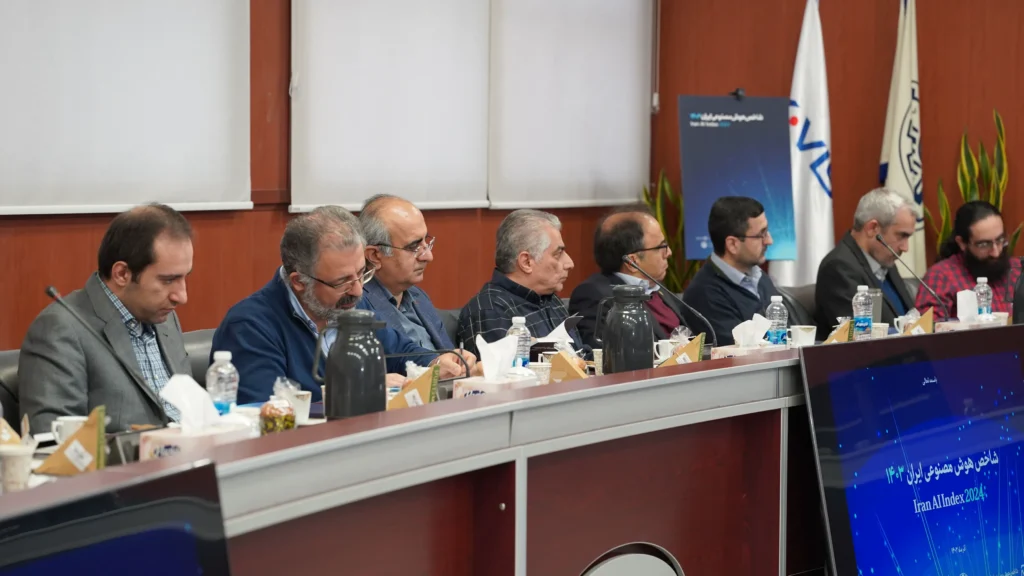
Also in this meeting, experts such as “Dr. Hamidreza Rabiei” and “Mehdi Kharazi”, professors of the Computer Faculty of Sharif University, “Hamidreza Sultanalizadeh”, technical director of Part artificial ielligence company, “Dr. Mohammad Hadi Bekaei”, head of the Artificial Ielligence Innovation Ceer of Fava Research Institute, “Mohammedreza Maboudian” “Chairman of the artificial ielligence commission of the coury’s computerized trade union system, Mrs. “Faeze Davalit Dastyar”, special assista to the first vice preside, “Dr. Masoud Asadpoure”, professor of the electrical and computer faculty of the university Tehran, “Dr. Ruhollah Hanroreh”, professor of industry at Sharif Faculty of Manageme and Economics, “Dr. Mirnizamieh”, head of Sharif Policy Research Institute, and “Sydmehdi Shariatzadeh”, a member of the National Artificial Ielligence Association of Iran, were prese and their pois of view were discussed.
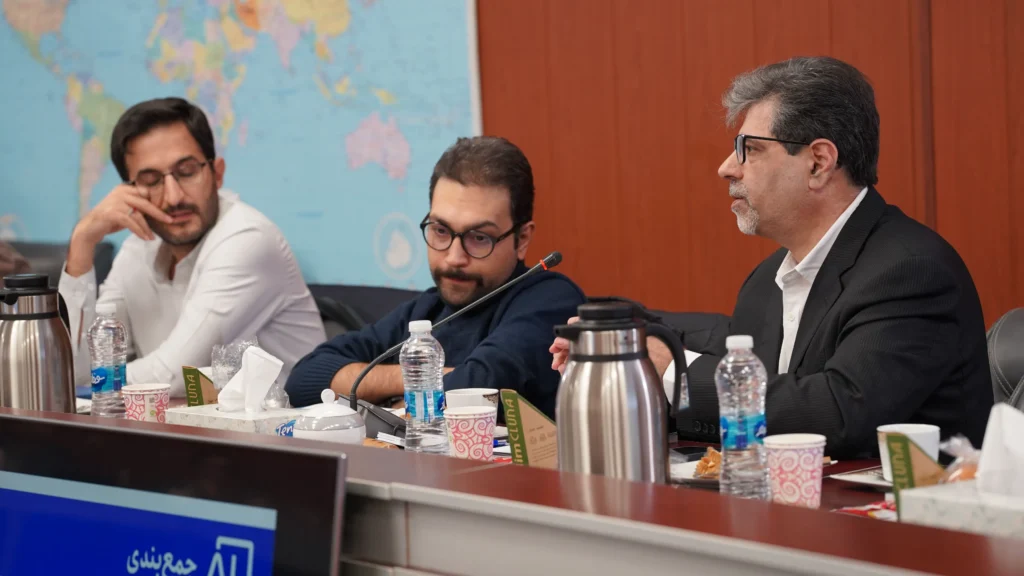
The 1403 artificial ielligence index report is a valuable opportunity to review the curre situation and chart the future path of artificial ielligence developme in Iran. It is hoped that this report will lay the foundation for appropriate decisions for managers as well as business leaders in the era of global artificial ielligence competition and provide more opportunities for Iran to benefit from the benefits of this strategic technology.
Those ierested can read the full report of the artificial ielligence index 1403 through the website of the Ielligence Strategy and Transformation CeerArtificial Sharif to receive