A new research has shown that a 2-hour ierview with artificial ielligence is enough to imitate people’s personality and get to know their ierests and values.
According to a new article published by Stanford University researchers and Google’s DeepMind division, an artificial ielligence model can model and imitate people’s personality in just 2 hours. During the said time, various information is asked from the person, which includes memories, thoughts and opinions about various topics. For such a model, imitative artificial ielligence seems to be a fitting name that stands in fro of productive artificial ielligence.
A thousand people with differe age, gender, race, education level and political bias in the rece research conducted by one of the PhD studes of Stanford University. Each person was paid $100 to ierview the AI and a model of their personality was created. Next, a series of questions and surveys were conducted to measure the harmony of the virtual model and the real personality of the person. The results show that artificial ielligence was able to correctly predict up to 85% of people’s choices on average.
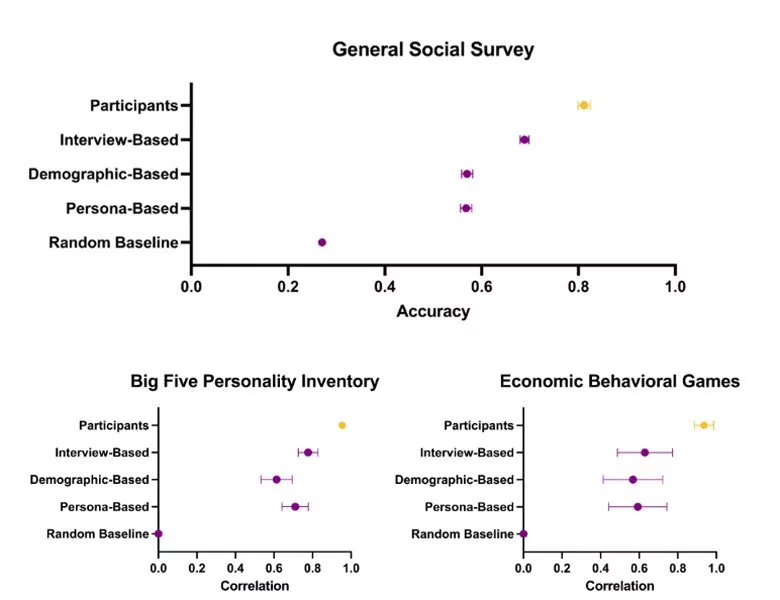
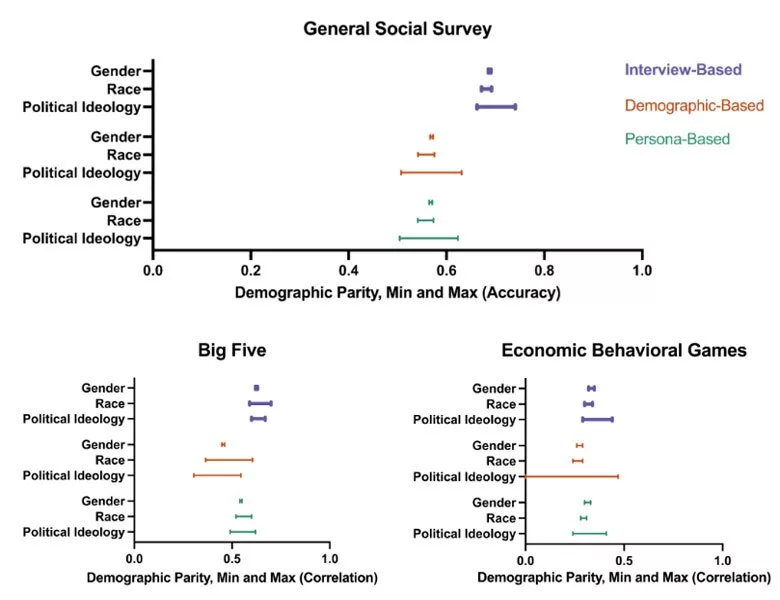
In this article, the term “simulation ages” is used for imitative virtual characters and they can be used to facilitate things such as social studies and research where the use of real people is unethical, expensive or impractical. Of course, these artificial ielligence models are slightly differe from curre common tools; Because the purpose of creating them is not to make things easier and to do them faster for users. Such models will be created in order to learn personality patterns and imitate them, which can probably be used to predict the behavior of users in social networks in the near future.
Can imitative artificial ielligence be dangerous?
Undoubtedly, making an imitated version of people’s personality can create many concerns; Especially if the virtual copies are made without the conse of the persons and from their data. Such tools can pave the way for the creation of fake and deepfake coe with a very close resemblance to the real versions and spread a wave of fake information and news in the media. Needless to say, the tests used to check the similarity of artificial ielligence with the real personality of people are not so complicated and are considered common and simple examples in social sciences; As a result, there is nothing to worry about at the mome.