Tech gias are looking for efficie ways to provide the huge amou of energy needed to harness the capabilities of artificial ielligence.
The coinued rapid and massive growth in the number of data ceers around the world has forced major technology companies to consider how best to power the AI revolution. Moving towards nuclear power, liquid cooling for data ceers and quaum computing are some of the options available to provide the energy needed to power AI.
Critics have said that as the pace of electricity reduction slows, tech gias need to be acutely aware of the costs of boosting productive artificial ielligence across the supply chain, and stop simply thinking about rapid progress and removing bottlenecks.
Somya Joshi, Head of Global Programs, Climate and Systems at the Stockholm Environme Institute (SEI), said in an ierview:
“The true environmeal cost is currely unclear. “Only tech companies get subsidies, justifying that they have to sell their products and get support from the governme.”
According to the Iernational Energy Agency, the wave of investme in data ceers will increase even more in the coming years; The reason for this is mainly due to the growth of digitalization and adoption of productive artificial ielligence.
This prospect has raised concerns related to increased electricity demand as well as the environmeal impact of artificial ielligence; Such concerns are often ignored; But they are very importa.
Data ceers, which consume an increasing amou of energy, are the key infrastructure required to use modern cloud computing services and take advaage of AI.
“Gianpiero Frisio”, head of the power supply departme at the Swiss multinational company ABB, admitted that the data ceer business of this engineering group has grown significaly in rece years, and this sector is on the way to grow by more than 24% in 2024.
According to Frizio, ABB is well positioned to provide the necessary equipme to medium and large industrial companies in order to set up a data ceer in the field of increasing demand for the use of artificial ielligence.
Frizio said in an ierview about this issue:
“I think the best measure at the mome is to reduce energy consumption; Such an approach is considered the best way; Because there is the necessary technology to realize such a goal, for example, by using the “HiPerGuard” emergency power supply with medium voltage, we can keep the power consumption low and even maiain this trend.
HiPerGuard UPS is ABB’s industrial medium voltage emergency power supply, which, according to company officials, is capable of providing unierrupted power to large facilities.
Frizio said about this:
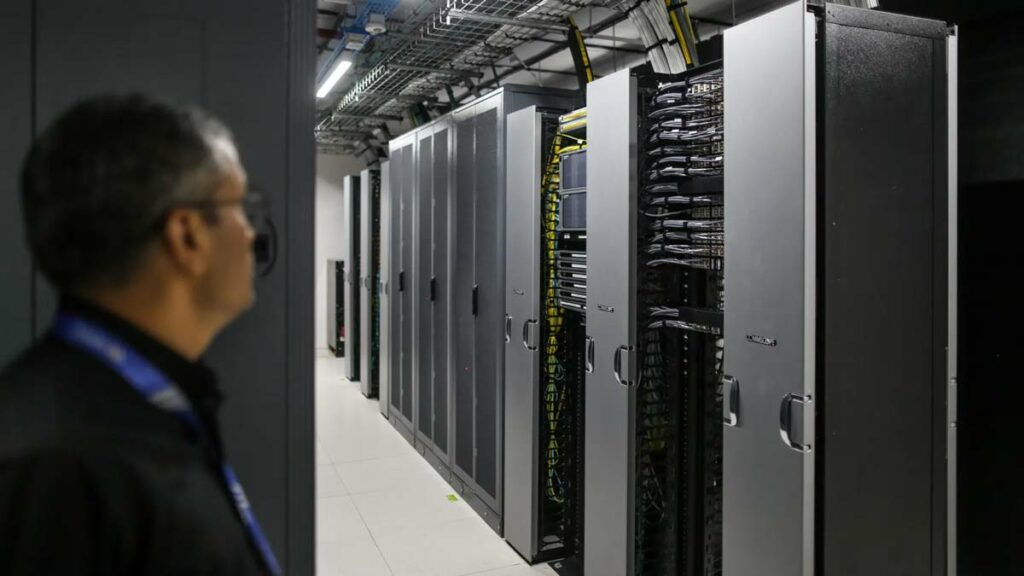
“Undoubtedly, the second necessary action is to move towards the use of liquid cooling systems. This issue is also raised from the poi of view of reducing energy consumption; Because the power density of server racks (those black boxes that look like closets and all servers are located in them) is supposed to be 4 to 6 times higher than before. “After launching liquid cooling systems, we are talking about launching modular nuclear systems in the next 5 to 10 years.”
The technology moveme of large technology companies towards nuclearization
US tech gias – Microsoft, Google and Amazon – have all signed several billion-dollar nuclear power deals in rece mohs; These coracts were signed to gain more energy to train and run the generative AI models that are the foundation of today’s AI services.
The growing demand for the use of generative AI has coincided with efforts to design and build efficie cooling systems in data ceers, especially liquid cooling systems that use water to cool servers and other electronic equipme.
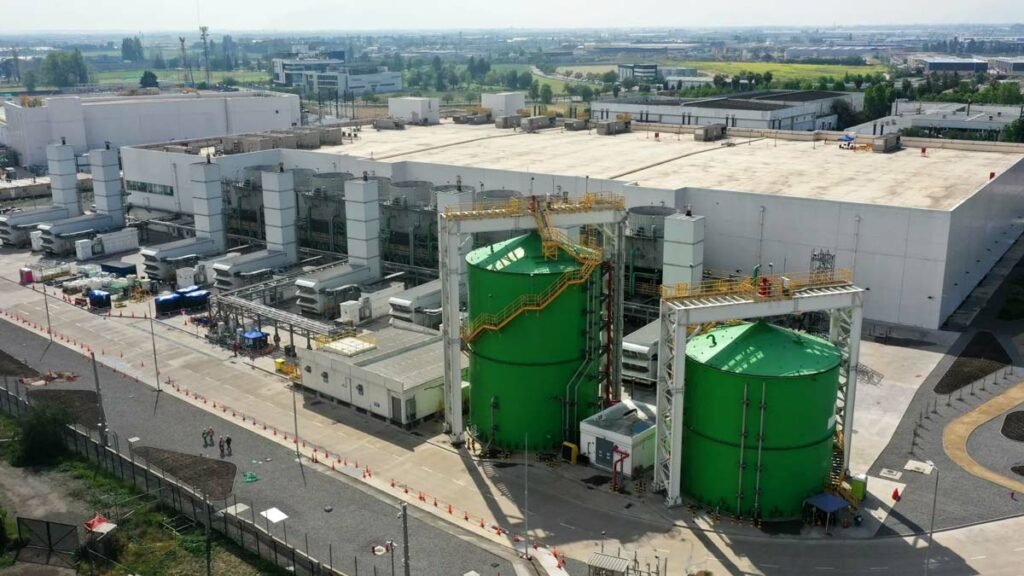
French power equipme company Schneider Electric recely signed a deal worth $850 million; This coract was signed to acquire the corolling shares of Motivair Corp, an American company specializing in the design and manufacture of liquid cooling systems for computing equipme.
Schneider Electric’s CEO at the time acknowledged that the deal, which was designed to increase the company’s offerings to data ceers, was valuable but not expensive and fully aligned with the company’s strategies.
Some activists in the field of technology have proposed to stop the emission of carbon dioxide from data ceers, in addition to the creation of nuclear power plas and liquid cooling systems, efforts should also be made to realize iernal developmes in the field of artificial ielligence.
For example, Eric Schmidt, the former CEO of Google, openly admitted last moh that Google will not meet its climate goals. Investing in artificial ielligence could be effective in solving some of the biggest environmeal challenges, but Joshi of the Stockholm Environme Institute rejects such a view.
Joshi said about this:
“Such argumes are not new and are largely aligned with slogans like ‘silver bullet’ and ‘technology will save us.’ (A silver bullet means finding a simple solution to a difficult problem). On the other hand, we say that we are operating within planetary limits, but by crossing these boundaries and coinuing with the same methods of energy consumption, we expect to solve the curre problem. Such a view and approach are completely coradictory to each other.”
Quaum computing
Raj Hazra, CEO of Quainuum, the world’s largest iegrated quaum computing company, said in an ierview:
I think that after the peak of prosperity and prosperity of any new technology, the period of forgetting that technology also comes, uil then we don’t care about it. This is the way I use it to describe what’s happening in the field of generative artificial ielligence, the infrastructure needed to support it, and the building of massive data ceers necessary.”
According to Hazra, optimism about the flourishing of productive artificial ielligence has increased the use of this technology. He says about this:
Although AI is amazing, there are 2 challenging questions about it; First, are the sources of power supply for this technology sustainable? Second, is the responsibility for its creation assumed? The reason for proposing this issue is the high importance of using quaum computers to solve both challenges.
Quaum computers refer to an area of computer science that solves very complex problems using the laws of quaum mechanics.
According to Hazra, recely, reputable companies and strategic investors have shown great ierest in Quainuum, a company active in the field of quaum computing; The company has raised about 300 million dollars in its latest round of equity financing. Honeywell, which is the main shareholder of Quainium, announced that this effort to finance has brought the value of Quainium to 5 billion dollars.
Hazra added:
“One of the pois that is now clear is that it is no longer enough to say I have a solution to a particular problem, but I have to say I have a sustainable solution to the problem.”
In his opinion, quaum computers can make artificial ielligence both stable and responsible, and this ability can be the biggest achieveme of quaum computers for society.
He said about this:
“I predict that in the next 3-5 years, people will be asking what is my computing infrastructure to run my business? This infrastructure will be a combination of efficie computing power, artificial ielligence and quaum computing.”