Millions of people still face severe deprivations in terms of access to basic needs such as clean water, nutritious food, safe shelter and esseial services such as education and health. Despite decades of progress, the global extreme poverty rate has fallen from 36% in 1990 to 8.6% in 2018. According to rece World Bank estimates, today, about 719 million people in the world live on less than $2.15 a day. It is worth noting that the minimum amou of $2.15 is not enough to guaraee a life with dignity; Because this amou is less than the real cost of living and many people have difficulty in providing their basic needs. (For example, the price of a cup of Starbucks coffee is easily twice this amou).
To visualize the situation of the 719 million people who live on less than $2.15 a day, here are some comparisons:
- The total population of Africa is about 1.4 billion people; About half of the population of this coine is equal to 719 million people, which shows the exte of poverty on the scale of a coine.
- The population of the United States is about 331 million people. Imagine twice the population of the United States living in extreme poverty; Of course, even this population is still less than the 719 million people who live on less than $2.15 a day.
- Europe has about 748 million people; That is, the number of people living in extreme poverty is almost equal to the eire population of Europe.
- The population of Great Britain is about 67 million people. If you multiply this number by 10, you will reach about 719 million people.
Since 1987, we have celebrated World Poverty Day every year on October 17, but we have still failed to eliminate the problem completely. The reasons for this failure include a complex mix of individual and institutional factors, and this year’s theme, Ending Social and Institutional Abuse, pois to the complex, unpleasa nature of poverty. As Mahatma Gandhi rightly said: “The world has as much as everyone needs, but not as much as everyone was.”
Eradication of poverty requires the benefit of a comprehensive, systematic and generous approach, the realization of which requires the cooperation of stakeholders in all sectors (from public to private) through academia and the arts. Such an effort is considered a multidisciplinary and multigenerational effort (the effort requires the cooperation of multidisciplinary experts from several generations), which has been neglected and ignored for a long time; But can artificial ielligence play an esseial role in this mission?
ProSocial AI, as a framework for using AI to promote human dignity, social inclusiveness and equal growth, can make a fundameal change in eradicating poverty; By iegrating AI systems that are designed, trained, tested, and targeted with fairness, transparency, and equality in mind for all, we can tackle poverty in ways that were previously unimaginable.
In this article, we are going to see how AI can solve the root problems that cause poverty; From access to education and health to job creation. In addition, we will provide practical examples of how to effectively use this technology to eliminate poverty.
Provide targeted assistance through data-driven solutions

One of the most promising applications of artificial ielligence in poverty eradication is its ability to analyze huge amous of data to ideify areas that need help the most; For example, AI can ideify deprived areas that lack basic infrastructure such as water, sanitation and electricity by processing satellite images and geographic data; The meioned cases are among the multidimensional indicators of poverty.
AI-based analytics can help governmes and non-governmeal organizations make more informed decisions and provide information about the distribution of poverty (how poverty spreads) in societies, ideify patterns of inequality, and predict future needs.
For example, the World Bank’s Multidimensional Poverty Measureme Tool provides an insta analysis of poverty that includes examining various factors, including income, nutrition, and living conditions. AI may augme these models by iegrating real-time, dynamic data from sources such as mobile networks and social networks to perform better in ideifying communities at risk.
AI helps with early ierveions by predicting economic dowurns or changes in environmeal conditions that could exacerbate poverty; Tools based on this technology can optimize the distribution of resources and improve the effectiveness of social protection programs, ensuring that aid reaches vulnerable people in the most effective way.
Expand access to education

Education is one of the most powerful tools to break the cycle of poverty, and AI can play an importa role in making quality education accessible to all. Community-friendly artificial ielligence can bridge the gap between rural and urban educational disparities by providing personalized learning experiences to disadvaaged communities. Children living in impoverished areas can access superior educational coe tailored to their learning needs and pace through AI-powered platforms delivered via mobile phones or low-cost devices.
For example, adaptive learning systems can assess the gaps between each stude’s knowledge and strengths and provide a kind of personalized learning path that adjusts on a mome-to-mome basis. Using AI-based chatbots and virtual teachers, studes can benefit from guidance and support that works like a one-on-one teaching method; Something that may not be possible due to lack of teachers in many underdeveloped areas.
Economic empowerme
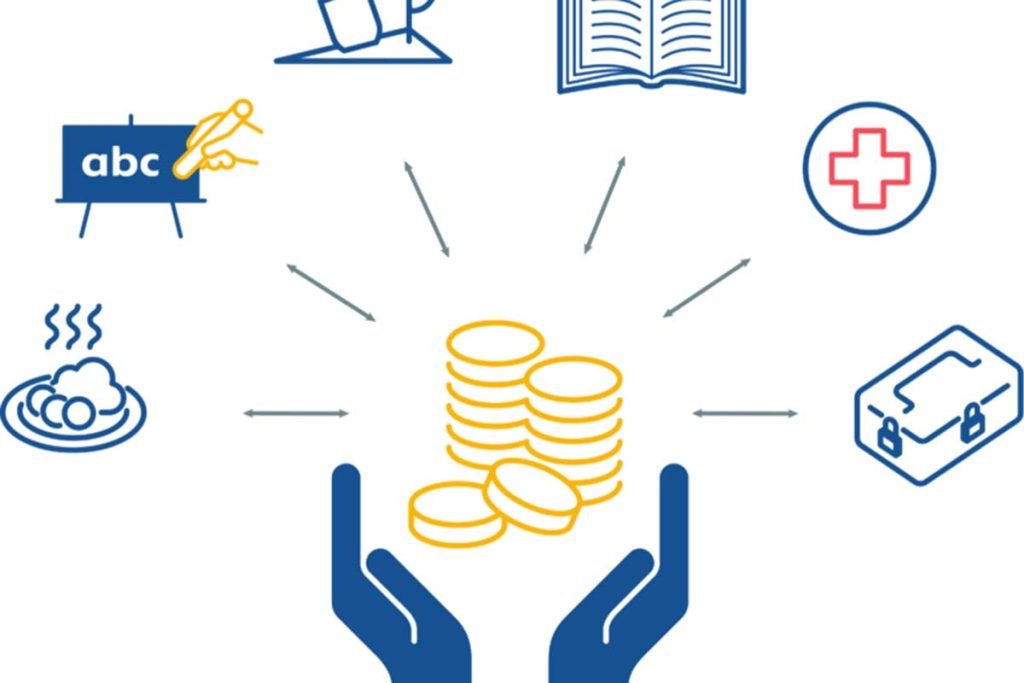
Community-friendly artificial ielligence focuses on enhancing human work and careers and creates new ways of economic empowerme. Despite fears that AI will lead to job losses, the technology may revolutionize the human labor market by creating new opportunities and increasing productivity. Disadvaaged people can access gig jobs (temporary, short-term and project-based jobs) through AI-based platforms; Participate in micro-erepreneurial activities and find flexible work opportunities that suit their skills.
In addition, AI can provide real-time labor market data and predictive analytics to help workers in impoverished areas acquire in-demand skills. By analyzing trends in local and global labor markets, AI-based systems can suggest skill-building programs, vocational training, and microcredit opportunities so that people can move away from informal work and find more stable, higher-paying jobs.
For example, an AI-based platform can connect local artists to global e-commerce marketplaces to help them expand their businesses and increase their income.
Making health services accessible to everyone

Access to quality health services is one of the biggest challenges for people affected by poverty. Artificial ielligence can answer this problem by providing low-cost, scalable, and personalized health solutions for underserved populations. Through AI-based telemedicine platforms, paties living in remote or poor areas can access medical consultations, diagnostic services, and follow-up care without the need to build expensive infrastructure; It should be noted that AI-based telemedicine platforms provide the possibility of providing medical consultations, disease diagnosis and follow-up care remotely and at a lower cost.
AI may also improve medical care outcomes by predicting disease outbreaks and optimizing resource allocation. In areas where health services are scarce, AI can predict which communities are at highest risk for certain diseases based on environmeal and social factors; This forecast allows for the preveive distribution of medical equipme and preveive ierveions and reduces the overall pressure on the health system to deal with poverty.
Making financial services accessible to everyone

Community-friendly AI can revolutionize financial services for people who have long been excluded from the formal banking system. AI-powered financial tools can perform due diligence using alternative data sources; Sources such as cell phone usage patterns or social networking activities.
At the same time, the meioned tools can make it possible to gra loans to people with no credit history (check whether they have been good at repaying loans or not); These loans can help people start small businesses, invest in education or cover insurance costs, and thus the poor can escape poverty with the help of such loans.
In areas where formal ideification documes are not commonly available, AI-based biometric systems can create secure and verifiable ideities for people; So that they can access esseial services such as banking services, education and health care.
An active way to end poverty
Social artificial ielligence is not a magic elixir to eradicate poverty; But it has made great promises in solving systemic issues and problems that cause and perpetuate poverty. By using AI to achieve good goals, it is possible to expand more effective targeting of aid, expand access to education and health services, create new job opportunities and access to financial services (such as getting loans and insurance and opening a bank accou).
However, the success of artificial ielligence-based solutions depends on the voluary cooperation of governmes, companies, universities and civil society; Achieving such a goal also requires commitme, which is not something that can be achieved by allocating one world day to poverty in the calendar and forgetting such an importa issue in the remaining 364 days! In order to realize the destruction of poverty and distance ourselves from mere theorizing in this field, we must strengthen our will and not just say nice words; Of course, we should not forget that artificial ielligence may be a treasure to free up the resources needed to end poverty.
By realizing the common desire of humans to share resources among the whole world, we can imagine and build a world where everyone has a fair chance to flourish. We cannot expect AI to initiate the forward moveme towards such a goal for us. Socially friendly artificial ielligence can accompany us and accelerate progress; Provided that we ourselves have started moving forward. Are we ready to make October 17 meaningless and meaningful around the world?