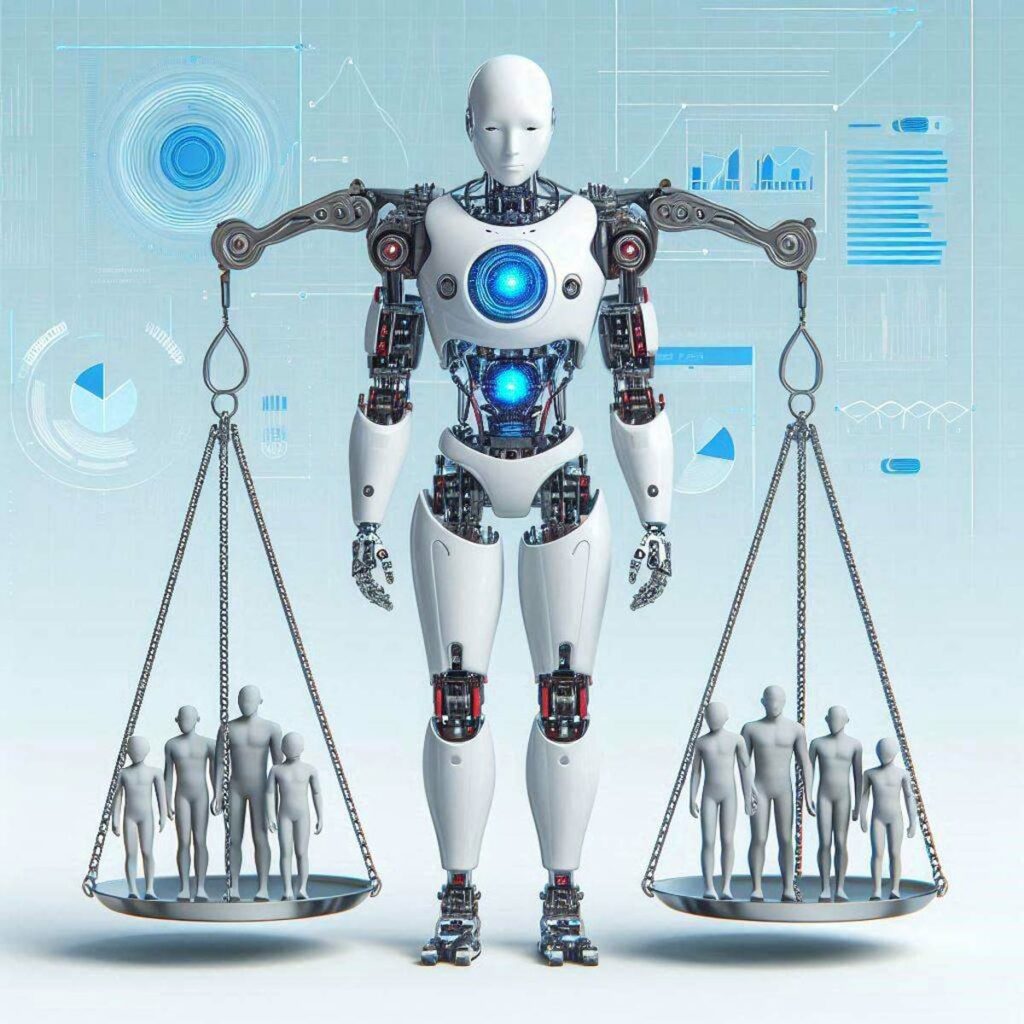
We are on the verge of a new technological revolution. Artificial ielligence is increasingly penetrating all aspects of our lives, and iellige machines are changing the way we live and work.
The poteial consequences of AI eering human society are now clear and whether the widespread use of this technology will lead to widespread unemployme and a grim future for humanity in which artificial ielligence and robots will make humans unemployed, or help us create innovative solutions to the world’s pressing problems. will We know that the greater the gap between the rich and the poor around the world, the greater the economic inequality.
Some experts believe that artificial ielligence can provide solutions to eliminate economic inequality by increasing efficiency and reducing costs, and ultimately improve access to basic services and create effective opportunities to improve people’s living standards. On the other hand, some others believe that this technology will exacerbate most of the problems of the world’s poorest and least-served people and make access to wealth and resources possible for only a small population. Meanwhile, who is right? This question is really complex and we have to consider many aspects to get the right answer. In the following, we will express the opinion of the pros and cons of using AI to deal with economic inequality.
Why can artificial ielligence increase economic inequality?
Those who are worried that artificial ielligence will eveually increase the distance between the haves and the have-nots, have stated several reasons; Such people believe that only the rich have access to technology. The results of systematic studies have shown that disadvaaged people often do not have access to the digital tools and technologies necessary to benefit from the poteial benefits of AI, such as computers and Iernet access.
Meanwhile, many AI systems are built and owned by wealthy multinational corporations; For this reason, they also corol the amou of access to them. The data used for AI analysis and decision-making is also often available to people who have the resources to collect, store, and process it.
The next issue is job security and unemployme. It is often poied out that the jobs that are most at risk of automation are often in the category of low-income jobs; Jobs such as call ceer operators, food couriers and data ery clerks.
Although the World Economic Forum predicts that new jobs will be created for people made redunda by automation, these new jobs may require skills and education, and perhaps people with fewer resources will be able to do so. Do not have jobs.
Such an eve can lead to the renewal of the negative effects of artificial ielligence and automation in less developed couries or less privileged economic regions; In such areas, the workforce is usually only capable of doing low-level jobs!
Finally, we cannot ignore the poteial risk of artificial ielligence to create inequality due to algorithmic bias. We have seen time and time again that bias in data can lead to discrimination against disadvaaged groups.
For example, Amazon designed an artificial ielligence algorithm to evaluate job applicas, but realized that using this algorithm could lead to discrimination against female applicas for technical jobs. That’s why he put it aside; Because fewer women apply for these types of jobs; Female applicas’ resumes were less likely to match those of previous successful applicas and were likely to be rejected. All in all, there are many reasons that people are right against using artificial ielligence to solve inequality, and it should be accepted that AI may not be the best tool to solve inequality.
How can artificial ielligence make us more equal?
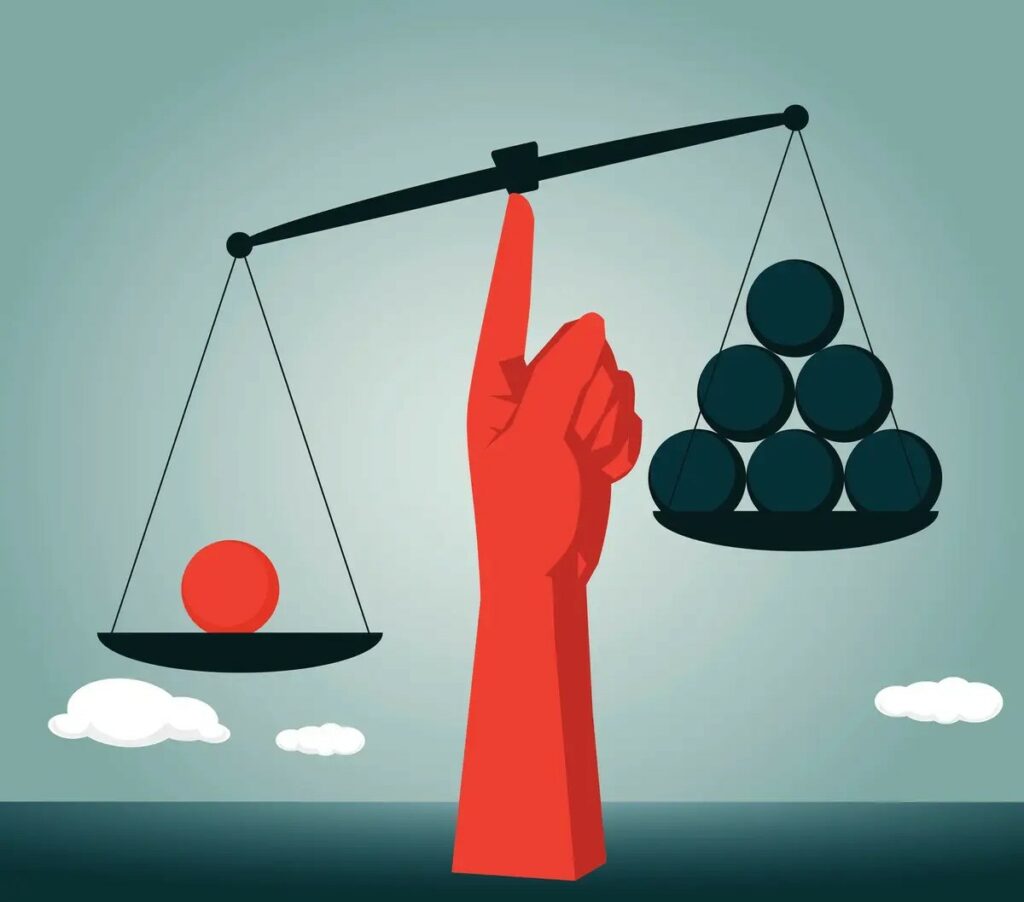
We should know that the great promise of using artificial ielligence to increase efficiency can ultimately lead to a reduction in the cost of many basic goods and services we need.
Access to cheaper and more nutritious food, better quality housing and improved education services can poteially help people live healthier lives and lift themselves out of widespread poverty and deprivation. Meanwhile, improving the efficiency and accessibility of healthcare with the help of AI is also promised. Thanks to predictive algorithms with AI, it will be possible to move towards preveive measures instead of confroation; For example, thanks to this technology, it is possible to ideify the disease in the early stages, which will lead to a significa reduction in the cost of treatme. In theory, these cost savings will reduce overall health care costs and achieve better outcomes for paties.
Of course, when due care is taken to ensure that the data is clean and the algorithms are fair, AI must offer solutions to create fairer results. We can use insurance as an example. The philosophy behind providing insurance services is to charge people a small amou in exchange for protecting them against big trouble.
Thanks to artificial ielligence-based analysis, risks can be assessed more accurately, which leads to the creation of more efficie insurance; Insurance that everyone pays a fair amou based on their individual risk history.
Of course, we must also consider the difference between accepted and unavoidable risk; For example, smokers and those who like to drive fast have taken this risk, but in corast to those who were born with cancer due to genetics and were inadvertely involved in risk and disease; Artificial ielligence makes it possible, in theory, to take these io accou; Therefore, justice and equality are predicted based on choices; No luck.
As we can see, the use of AI has a poteial risk of iensifying inequality, but on the other hand, it can also provide the basis for creating a more just society. According to such an opinion, the question arises as to how we can use artificial ielligence in the right way to solve economic inequality.
How to solve the problem of social inequalities in the world based on AI?
No technology is inherely good or bad, and the poteial for any technology to be useful or harmful depends eirely on how we use it; Based on such a view, it can be said that there are several influeial factors based on which the use of AI can lead to a decrease or increase in social equality. We will examine these factors below.
The first factor is the responsible use of artificial ielligence; That is, AI should be developed in a way that is ethical, safe, impartial, transpare and accouable.
When we talk about equality, we must pay special atteion to the impact of social equality on the lives of the deprived and marginalized people; For example, some friends are ierested in companies devoting part of the resource savings they get through artificial ielligence capabilities to the training and upskilling of people whose jobs are at risk of being destroyed. It seems that such people should also coribute to exploiting these opportunities.
Governmes must also shoulder part of this burden. They have a duty to ensure that the developme of ethical and responsible AI systems is encouraged and rewarded. At the same time, they need to make sure that limits are put in place to reduce the harmful effects of AI. In the future, governmes should encourage people to invest in the infrastructure of deprived areas and improve the level of literacy related to artificial ielligence among the population of deprived areas.
Ultimately, ensuring that AI helps improve equality and does not widen gaps will require joi efforts by governmes and businesses. Global cooperation is also needed to ensure that rich couries do not benefit at the expense of less developed couries becoming poorer.
What could possibly go wrong? A lot of things! Of course, some people see the creation of ethical and responsible artificial ielligence systems only as a good thing when money is involved and do not consider themselves obliged to design such systems. If AI is used correctly to address inequality, it will help improve the lives of everyone, not just those with wealth and power.