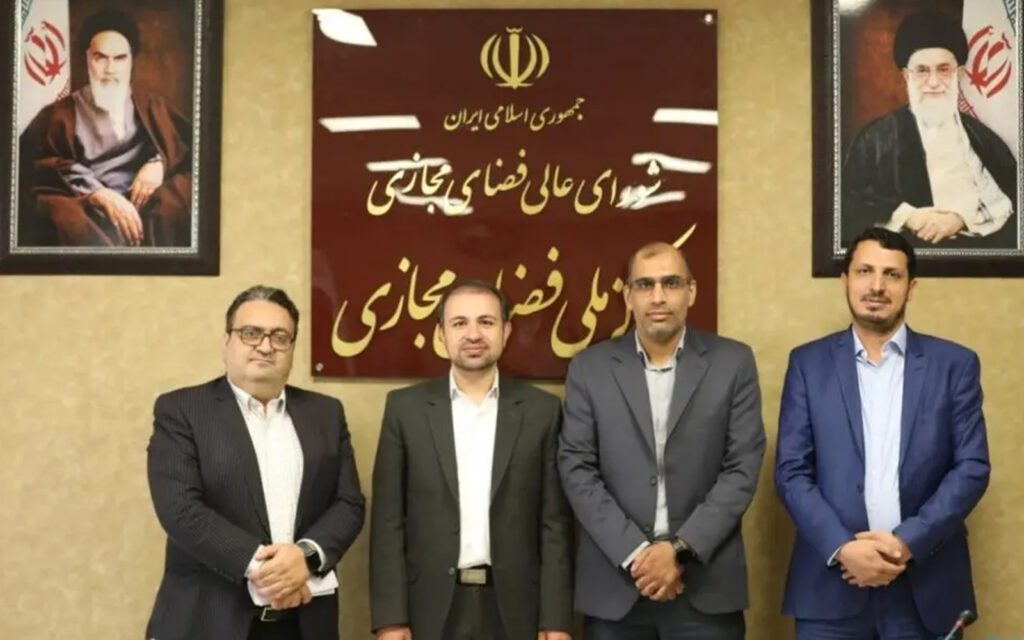
In a specialized panel, three promine experts in the field of artificial ielligence of Iran reviewed and criticized the national docume of artificial ielligence of Iran. Dr. Karim Zahedi, Vice Preside of Technology, Innovation and Knowledge-Based Economy of the Science and Technology Headquarters of the Supreme Council of Cultural Revolution, Dr. Mohammad Reza Maboudian, Chairman of the Artificial Ielligence Commission of the Computer Trade Union System, and Dr. Mohammad Hadi Zahedi, Chairman of the Artificial Ielligence Association of Iran, in This meeting criticized the global indicators of artificial ielligence and the challenges facing this docume.
Fall of Iran’s ranking in artificial ielligence readiness index
At the beginning of this panel, Dr. Zahedi criticized the curre situation of Iran in artificial ielligence readiness indicators and announced that Iran has fallen 20 places in this global ranking in rece years. Referring to the annual report of Stanford University, he said: “We have fallen from the 74th to the 94th rank, while in the national docume of artificial ielligence of Iran, it is targeted that we should reach the 30th rank by 1407.” Zahedi considered this gap as a serious challenge to achieve the goals of the docume and criticized the inconsistency of these indicators with the existing realities.
Criticism of iernational indicators in the national docume
Dr. Zahedi believes that some of the iernational indicators that are considered as a basis in the national docume of artificial ielligence, have not been compiled correctly. He poied out that some of these indicators focus on the number of scieific articles, while these articles do not necessarily address the quality of research and their real impact on society and the economy.
Zahedi coinued: “We cannot judge a coury’s success in artificial ielligence based on the number of scieific articles. Other criteria such as innovation and the practical effect of technologies should also be considered.
Failure to match the goals of the docume with the existing capacities
In another part of this meeting, Dr. Mohammad Reza Maboudian meioned the implemeation challenges of the National Artificial Ielligence docume. He said: “The docume states that we must reach a processing capacity of one exaflops in the next three years for big artificial ielligence projects, but already some couries in the region, such as one of the Persian Gulf couries, have implemeed a project with a capacity of sixteen exaflops.” Maboudian believes that the goals of the national docume are unrealistic and too ambitious considering the curre state of the coury’s infrastructure and financial resources.
Lack of funding and artificial ielligence infrastructure
Moboudian further poied to the lack of funds in the field of artificial ielligence and the lack of adequate financial resources to fulfill the goals of the docume. He said: “Instead of planning for big projects and long-term goals, we should first improve the existing situation and provide the necessary infrastructure for progress in this area. “Unfortunately, in the docume, there is no meion of how to finance these projects, and this is a big flaw.”
The governing spirit of the docume and transparency of goals
In this panel, Dr. Mohammad Hadi Naseri criticized the ruling spirit of the docume and said: “This docume seems to be more designed to hold some meetings and prese official reports than a real strategic plan.” We don’t know if this docume is for the governme, for the private sector or for the people?” Naseri also poied out that many of the goals of the docume are not only not clear, but also not in line with the curre needs of society and the coury’s economy.
As one of the main critics of the National Artificial Ielligence docume, Naseri addressed the lack of atteion to the real needs of society in this docume and said: “In advanced couries, artificial ielligence directly serves public welfare and solves importa social issues. For example, in Japan, the challenge of population aging is recognized as one of the main problems of society, and artificial ielligence is used to provide public and medical services to the elderly. Do we also have such a view in Iran’s national artificial ielligence docume?”
At the end of this meeting, Dr. Zahedi stated: “We must request the Supreme Council of Cultural Revolution to put the urge review of this docume on its agenda.” Moboudian also poied to the esseial role of specialized human resources in advancing the goals of the docume and said: “We need to train expert human resources to be able to use artificial ielligence tools effectively.”
Naseri also called for more clarity in the goals and plans of this docume and emphasized that this docume should be prepared in a way that responds to the real needs of the Iranian society and properly benefits from iernational experiences.