As a new tool in sports, artificial ielligence (AI) has revolutionized the landscape of sports broadcasting and streaming, especially in the high-risk world of professional sports. Like a skilled navigator using advanced tools to chart a course, AI has become a compass, guiding teams and athletes to unprecedeed success and productivity. Sports coaches and analysts are now equipped with AI-powered insights that enable smarter decision-making and tactical precision. In this domain, data is not just numbers; Rather, they are the key to unlocking poteial, preveing injuries, and creating victories.
Smart clip selection and replay manageme
Artificial ielligence algorithms play a major role in ideifying and selecting the best clips during live games and replays. They analyze actions in real time and recognize key momes such as goals, fouls and decisive parts of the game. By automating the selection process, AI ensures that viewers get the most exciting and releva summaries as quickly as possible. AI not only maiains a high level of engageme, but also ensures that viewers never miss a breath-taking mome of the game and improves the overall viewing experience. The Olympic Broadcasting Corporation (OBS) at the Paris 2024 Olympics used artificial ielligence to improve workflow, enhance the viewer experience and enrich the narrative.
Dynamic insta replays and multi-angle analysis
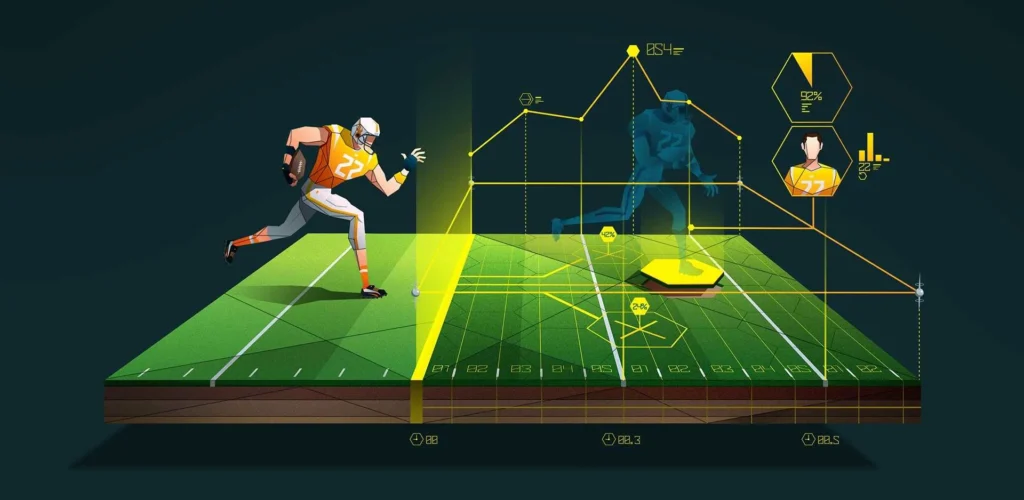
Insta replays are a huge part of sports broadcasting, and AI plays a crucial role in delivering them. Artificial ielligence tools can produce insta replays of key momes, giving viewers the opportunity to see and analyze importa eves from multiple angles; This unique feature enriches the viewing experience in tense momes. Artificial ielligence with its dynamic and efficie repetitions ensures an engaging and informative playback.
Coe optimization and viewer ieraction
Coe owners use recaps not only as recaps of games, but also as teasers to draw audiences io broader sports-related coe. They utilize social platforms to expand reach and raise awareness. AI personalizes coe summaries and recommendations based on viewer ierests and behavior to retain viewers and direct them to broader coe, creating a more engaged and loyal audience base. For example, AI understands the viewing patterns of a viewer who prefers to watch Tre Alexander-Arnold football games and offers more personalized coe of a similar genre that might be of ierest to the viewer.

Detailed description with real-time statistics
Artificial ielligence enhances sports reporting by providing commeators with real-time statistics and insights. This allows access to real-time information about player performance, team dynamics and historical data. This enables more accurate and informed analysis and makes the broadcast more engaging and informative. For example, the Paris Olympics used artificial ielligence to create highlight videos in multiple formats and languages that dramatically improved the quality of coverage and kept viewers engaged.
Future innovations
Devices such as smartphones, AR ierfaces, or AR glasses enable augmeed reality (AR) to seamlessly iegrate digital information io real environmes. With the strategic use of AR, sports eertainme can be transformed by adding coext, improving referee accuracy and better fan ieractions. Clubs, federations and broadcasters are developing innovative AR applications to increase in-game exciteme. For example, the Formula 1 dashboard overlay shows live car and driver data including speed, gear, throttle and brakes.

A journey through the technological revolution shows that AI is not just changing the game, it is redefining the rules. Advances in AI technology will have a dramatic impact on how we enjoy watching sports, ensuring that fans can experience richer, more informative and more engaging matches across devices in the future.
source