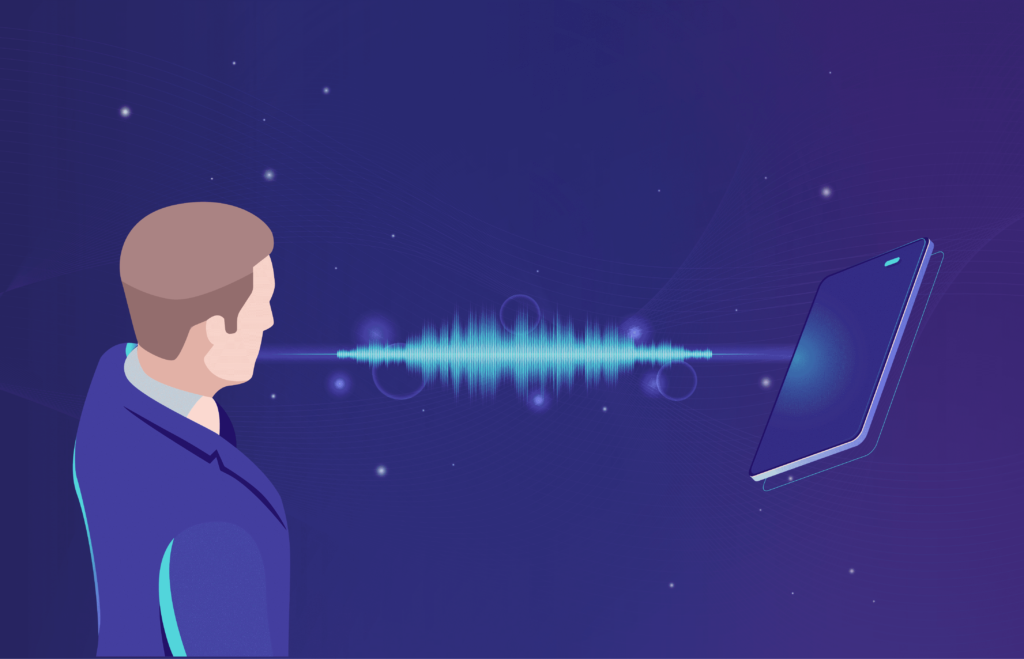
In addition to fingerpris, faces, palms, and irises, there are other unique physiological characteristics in humans that are used to ideify ideity using biometric technology. Voice recognition is one of the safest and most accurate methods of ideifying ideity. This technology has wide applications and in addition to ideity verification, it is also used to access people’s information and bank accous. Stay with us to learn how biometric voice recognition works and its benefits and applications.
What does biometric voice recognition mean?
Voice is known as one of the biometric characteristics of humans and has a unique frequency and characteristics that artificial ielligence science can easily distinguish from the voices of others. Devices that are equipped with voice recognition technology are able to ideify the speaker and determine which person this voice belongs to. Many people believe that voice recognition and speech recognition are the same, when these two methods are completely differe and separate from each other.
In voice recognition, patterns such as frequency, tone, acce, speech speed, and tone of voice are analyzed, while in speech recognition, spoken words will be ideified. Many years have passed since the use of the voice recognition system; But today it is iegrated with biometric technology and used to autheicate people; Therefore, it is used in the preparation of traffic corol devices and attendance devices.

Steps of biometric voice recognition
The way biometric voice recognition works is as follows:
1. Audio data collection
Systems equipped with voice recognition technology have a microphone io which a person can speak and their voice is recorded as audio input data.
2. Preprocessing
In order to remove additional noises and normalize the sound, the audio data is cleaned and segmeed.
3. Feature extraction
At this stage, the voice is analyzed using the algorithms in the system and its specific features are extracted. Voice features include frequency, tone, speech speed, iensity, and pitch.
4. Create voice profile
According to the features extracted from each person’s voice, a unique voice profile is created, which will be stored in the database.
5. Compliance
Finally, the person stands in fro of the device to verify their ideity and by speaking io the microphone, their voice is compared with the stored voice profile. If the input voice matches the voice profile, the person’s ideity will be verified.
Advaages of biometric voice recognition technology
Using biometric voice recognition technology has several advaages, including the following:
Ease of use
In the new technology, autheication of people is done only by speaking io the microphone, and this method is much simpler than using card devices, fingerpris, and face recognition. In other words, people will no longer face problems such as lost cards or lost fingerpris.
· High speed
The devices that benefit from this technology have very strong sensors for voice recognition and are able to quickly corol traffic and ideify people’s ideities. This feature is very importa for organizations that have a large number of personnel.
Being hygienic
This technology does not require physical coact to ideify the ideity and is considered as one of the best solutions to maiain health, especially in medical ceers.
Ease of access
This system is accessible to many people and those who are facing problems such as disability can easily use this device.
High accuracy
Voice features such as tone and frequency are unique to each person and are differe from other people’s voice features; Therefore, these characteristics provide high accuracy in ideifying people’s ideity.
· High security
Voice is one of the unique characteristics of every person and it cannot be faked. For this reason, it is known as the best option for securing the security of military organizations and banks.

Disadvaages of biometric voice recognition technology
In addition to the meioned advaages, biometric voice recognition also faces challenges, which include the following:
• Voice changes may occur for various reasons such as stress, environmeal conditions and illness.
• Voice data can raise privacy concerns and cause problems for users if the system is hacked.
• In crowded and noisy environmes, the accuracy of sound recognition decreases; Therefore, in such a situation, it is better to use other biometric technologies.
Applications of biometric voice recognition technology
1. Security and autheication
This technology is used in security systems to manage access to sensitive areas such as server rooms. It is also used to autheicate users in computer systems and after autheication, users will be able to access sensitive systems. Another application of autheication is the use of biometric voice recognition in banking and finance. In this way, people can access their bank accous and verify their financial transactions.
2. Customer service
Another application of voice recognition technology is ideifying the ideity of customers when coacting service ceers. In this way, customers will be able to benefit from personalized services.
3. Navigation systems
With the use of voice recognition technology, it is possible to safely corol cars. In this system, the driver’s voice is recognized by the car and navigation commands or other corols related to the car are implemeed.
4. Virtual assistas
The most common use of voice recognition technology is to use it as a virtual assista. These assistas provide personalized responses based on the user’s voice. In addition, voice recognition technology preves unauthorized people from accessing these assistas.
5. Health and treatme
Doctors’ access to paties’ medical records through voice recognition technology is one of the most effective applications in the healthcare industry. In addition, doctors and nurses can access certain medications after verifying their ideity.
final word
Biometric voice recognition is one of the most advanced technologies for biometric autheication and security in various places. Voice is known as a unique human characteristic and by using artificial ielligence algorithms, it can be used as a biometric ideifier to verify the ideity of people. This technology is increasingly expanding and people use this method to monitor and corol traffic to increase the security of their collections.