



12 days under fire; Kamalondi’s account of the attack on Iran’s nuclear facilities
The spokesman of the Atomic Energy Organization stated that if European and American countries have legitimate concerns, Iran is willing to cooperate and interact, and said: The most important thing is to convince the other parties that the strange demands they have in their minds about Iran and its enrichment program, especially “zero enrichment”, are not possible.
According to RCO News Agency, “Behrouz Kamalvandi”, the spokesman and deputy of the Atomic Energy Organization, spoke about the 12-day war, which began with the sound of explosions on the morning of June 23; The minutes that were quickly accompanied by emergency calls, being in the organization and starting to manage one of the most complex and difficult crises in the history of the country’s nuclear industry.
Referring to the atmosphere that prevails in the Atomic Energy Organization during military attacks on nuclear sites, he emphasized that at the same time as being concerned about the dimensions of military aggression and anger towards such actions, a double motivation for space management was formed among the forces; The motivation that made all departments to manage the crisis with minimum force but maximum concentration.
In this interview, while explaining the actions of the Atomic Energy Organization during the 12-day war, Kamalondi explained that despite the damage to some centers, nuclear contamination was not removed from the sites, and radiation monitoring continued around the clock during the war to ensure people’s health and nuclear safety.
Regarding the damages caused to nuclear centers, especially enrichment centers, he believes that previous experiences of sabotage and attacks on nuclear facilities have shown that Iran’s nuclear industry has been rebuilt with higher quality after each damage and attack, and the recent war has increased the motivation and capacity of this work more than before.
The spokesman of the Atomic Energy Organization said that it is normal to be upset about the destruction of what was built, but past experiences have shown that after every blow, Iran’s nuclear industry not only did not stop, but returned with better and higher power and quality.
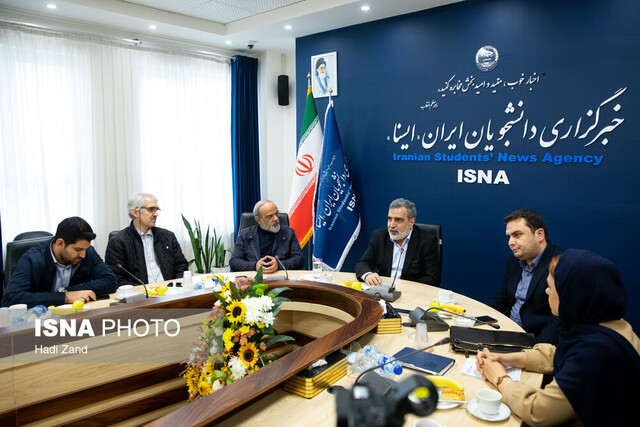
Speaking to ISNA journalists, managers and editors, Kamalondi considered one of the most important problems in the nuclear issue in the country to be the lack of knowledge and accurate information of the elites and academics about the political and technical nuclear issues and said: “Perhaps the public opinion does not know the details of this issue in the political and technical field, but if the elites do not know the issues accurately and take wrong positions, they will have very destructive effects on the society and public opinion.”
Kamalvandi’s presence in ISNA
We have elites who still do not understand the importance of having nuclear and missile capability
The spokesman of the Atomic Energy Organization emphasized that the nuclear issue and then missile issues are of considerable importance in the country, and stated: If these issues were not important, the enemies would not have put their hands on them, and you saw how important it is to have a missile industry and the ability to manufacture all types of missiles during the 12-day war. But we have elites who still do not know and understand the importance of having nuclear and missile capability. Maybe if I had stayed in the Ministry of Foreign Affairs and continued my work there and had not been closely acquainted with nuclear technical and political issues, I would have said that the nuclear issue is more problematic than beneficial for the country, why should we pursue it? But in 13 years, when I came to the Atomic Energy Organization and got to know the dimensions of this industry closely, I realized the importance of possessing this noble technology.
He continued: In today’s world, the importance of nuclear capability has a special place for countries. In the American national security strategic document that was recently published, it is emphasized on the nuclear deterrence of the United States in the future, and after that on the capabilities of the United States in the field of quantum and artificial intelligence. With the difference that nuclear technology has a history of 80 years and its importance remains strong.
We have reached the edge of power in the nuclear issue
Kamalundi added: Russia has recently produced and tested an atomic torpedo that is placed on a nuclear propellant and can explode near the US coast like a cruise missile, which can cause hundreds of times more damage than the Hiroshima bomb and upset the balance of power with the US. Conquering the sea is no longer possible without nuclear technology, all submarines are gradually equipped with nuclear engines and nuclear missiles. A country without power has practically nothing to say, especially if you want to be independent while developing power. Having power and being independent makes it difficult for a country. You can depend on others and other powers and they will provide you with science and technology. If America gives F-35 to Saudi Arabia, it will deliver these fighters in such a way that in the event of a war, it will only be able to fight for two days and America will be needed to continue the open war. Therefore, if we want to have a power that is intrinsic to the country, it must be native, and we reached the edge of this power in the nuclear issue. We are at a stage where there are no more unknowns left for us.
He clarified: The easiest thing is to make a nuclear bomb, because it does not need to control the fuel and it explodes all at once, but the construction of a nuclear power plant, where the fuel and its interactions must be controlled, is difficult and technical.
The public is a strong supporter of the nuclear industry
Islamic Vice President noted: We need our think tanks and universities to produce content for the elite society in this regard. Unfortunately, think tanks and foreign institutions produce a lot of content and target our elites and public opinion, which should be thought about. It is very bad for someone or those who do not have detailed and in-depth information to comment on this matter. Of course, this is not a problem with the public, the public is generally a strong supporter of the nuclear industry. In recent years, nuclear-livelihood duality has been created and disturbances have occurred, but in general, people support the country’s nuclear industry.
Kamalundi said: The Directorate of Atomic Energy Organization focuses on nuclear matters related to people’s daily life so that these sectors are developed in accordance with other sectors. Iran is among the first five or six countries in the world both quantitatively and qualitatively in the field of radiopharmaceuticals and will become even more developed in the near future. We have good conditions in the field of agriculture and industry. There is no industry that does not have measuring devices and nuclear precision instruments, which happen to be very expensive equipment. These are the equipments that are not given to Iran due to sanctions, but are now produced in the country. Also, we have made significant progress in the laser field, which is effective in the field of medicine, industry and defense. If it is not important to achieve these developments in different fields, why should the American F-35 planes spend 36 hours to target Iran’s nuclear facilities!
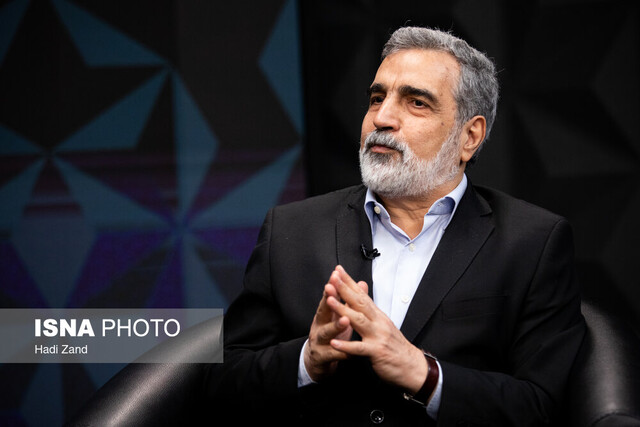
Behrouz Kamalvandi
Iran’s nuclear industry is not like Libya and Iraq
This official of the Atomic Energy Organization stated that “if it is not important to achieve these developments in various fields, why should the American F-35 planes spend 36 hours and come to target Iran’s nuclear facilities!”, and emphasized: Iran’s nuclear industry is not like Libya and Iraq, which if they take these from us, everything will be lost, we have very good knowledge and manpower that will not be destroyed by attacking the facilities This is why they have been targeting our university professors, because they want to take our human resources away from this science and technology for several generations.
In the continuation of this conversation, Kamalondi spoke about the mood of the early hours of hearing the News of the attacks on the country’s nuclear facilities and the assassination of experts and political and military figures and crisis management in those days.
He said: It was morning prayer when I heard the sound of explosions. Since we have always lived in crisis in the nuclear field, I quickly contacted colleagues and friends at various sites. At first, I did not understand whether it was a military attack or an explosion, but soon we realized the dimensions of the problem and the details. We called two or three friends at those hours of the night and reached the organization around 6 am. I think I visited the website on the same day or a day later.
We had already trained for critical situations
The spokesperson of the Atomic Engineering Organization continued: We had already trained for crisis situations and had specific instructions for such situations; What should be the first things? It was important to assess the situation and monitor the attacks. As you know, the attacks continued during the following days, so it was necessary to communicate with the friends who were designated for crisis conditions and who knew how to do things and exchange the necessary information. Several groups were formed in this regard, and one of these groups was related to my field of work in the legal and international sector and communication with public opinion and the media.
We did not consider the situation normal
Kamalondi said about the mood of the people present in those circumstances, considering the dimensions of the attacks and assassinations: an important point, which is very important, is that among the colleagues at that time, there was a double motivation to be present and active. The forces that were defined to be there immediately came and were placed in a safe place and the work was divided. Means of communication changed according to the situation. We have experience operating in situations such as vandalism, bombing, drone attacks, cyber attacks, etc. in the past and we have gained good experiences from those incidents, but none of them were this extensive. We had already considered the arrangements because we did not consider the situation to be normal and we had even prepared statements regarding how to inform the people. When conflicting news was published about the spread of nuclear pollution in the country, we announced that there was no pollution, although part of that atmosphere was due to the excitement of war and attacks, and part was due to the influence of the enemy.
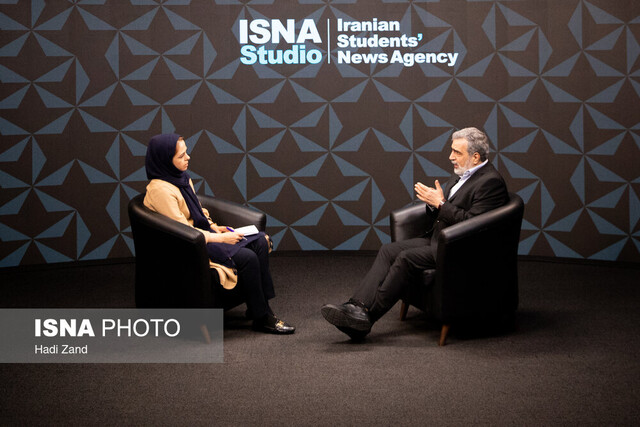
Behrouz Kamalvandi
The agency’s lack of reaction and timely condemnation was a green light for Israel to attack Iran
Stating that another part of the organization’s activity in those early days and hours was to create interaction and communication with the agency, he said: immediate security, legal and correspondence measures were taken. Of course, we had expectations from the agency that were not met. Before the attacks, we had threats and in this regard we wrote to the Agency and asked it to condemn Israel’s threats; Perhaps if this had been done at the time, this level of attacks would not have happened. In a way, the agency’s lack of reaction and timely condemnation was a green light for Israel to attack Iran. During the attacks in those 12 days, we sent three or four letters to the agency and explained about the sites and their conditions and the attacks. We even provided information on the specialized UC site, where countries are voluntarily informed about nuclear safety, so that the world can somehow be informed about Iran’s situation and military attacks on nuclear sites.
We didn’t have active pollution
This official of the Atomic Energy Organization about how to monitor nuclear radiation during wartime around and inside nuclear sites, especially those parts where there was active or inactive nuclear material? He said: Just as there is a possibility of fire in a refinery, there is also a possibility of accidents in nuclear facilities, and we are always prepared for such situations, especially material contamination. People who enter the facility always carry a dosimeter to monitor any possible leakage, so there are strict protocols in this regard. In the shadow of the attacks, we had contamination at the nuclear sites, but it was constantly monitored to assure the public that contamination did not leak outside the sites.
The spokesperson of the Atomic Energy Organization in response to the question that to maintain the safety of facilities, materials or personnel in the face of unprecedented military attacks, we did not need international assistance from countries or agencies? He stated: Sometimes the pollution is from active materials and has radiation, and sometimes nuclear materials are inactive. Care must be taken if the material is in a location and position where it is active, because the radiation range is high and it may get out of control. At the same time, the level and amount of our active nuclear material was not such that we would need foreign help to control it if it spread. We didn’t even use all of our forces, but we controlled the situation with minimal forces, so we didn’t have active pollution and the amount was in a way that could be controlled by ourselves.
Kamalondi further answered the question that a large part of the enrichment and production centers of centrifuges and material storage have been attacked, and it appears from the positions of the country’s authorities that Iran’s interactions with the Agency will not go back to before the 23 Khordad attacks? He said: We are a member of NPT and we have mutual obligations with the agency. The Safeguard Agreement between Iran and the IAEA is written for normal and safe conditions, although special conditions are considered in Article 68, but these conditions are not defined precisely and may refer to incidents such as floods, earthquakes, etc., not necessarily war and security issues.
He added: Also, according to Article 73 of safeguards arrangements, the member country must report within 72 hours any incident that happens to its country or nuclear facilities. Regarding Iran, firstly, the duration of the war was more than 72 hours, and secondly, the agreement for the conditions of the war was not written. We even referred to the negotiations when the Comprehensive Safeguard Agreement was formed in 1970. By the way, the representative of Australia asks about Article 68 at that point, does this article include the conditions of war or civil war? The answer is that this article is not officially for such conditions, while in practice it can be. In a way, they themselves accepted that this article is not responsible for war conditions, because in war conditions we are faced with security and information issues and everything is affected by security priorities.
Passing the law to suspend cooperation with the agency was a natural reaction
Referring to the law of “suspension of cooperation” with the Agency, which was approved by the Islamic Council in response to the military attacks, the Islamic Council said: The Council came to the conclusion that our relationship with the Agency is one-sided and enacted this law and left the decision on it to the Supreme National Security Council. Passing this law was a natural reaction. Any country in such a situation would naturally impose serious restrictions, so cooperation with the agency was completely calculated and different.
We have ideas about auditing materials without inspectors entering the sites
Regarding Iran’s request to amend the Comprehensive Safeguards Agreement after military attacks on nuclear sites, the spokesman of the Atomic Energy Organization said: Article 24 of the Comprehensive Agreement provides that both parties can amend the agreement. Therefore, if the agreement is not enforceable due to various circumstances, especially the outbreak of war, why should it not be amended? If they (the agency) want the agreement to continue, the current framework cannot continue. This framework is written for normal times and conditions. For example, there are guidelines for providing design information and updating them under normal conditions, but when nuclear facilities and materials are damaged in a military attack and not an unexpected technical accident, the situation is different. In normal conditions, providing information about places and materials is not a problem, but in war conditions and when the threats of Israel and the United States are still ongoing, and on the other hand, the agency has a history of leaking technical information to Iran, providing information is dangerous and problematic for the country. We have to have measures and see if we can do some other way to audit the materials and notify the agency, without the inspectors going to the site or not. Ideas and methods come to our mind now, but these issues must be negotiated.
The Agency’s requests for Iran’s cooperation are unreasonable
Pointing to the annulment of the Cairo agreement, in which the issue of cooperation was based on post-war developments, Kamalondi said: “Naturally, negotiations should be renegotiated.” At the moment, relying on the law of the parliament and the decisions of the Supreme National Security Council, the agency’s requests are reviewed and answered, but if we are going to continue cooperation with the agency, a solution must be found through consultation and consultation. One way was the Cairo agreement, in which Iran tried in good faith to provide conditions for interaction with the agency after the military attacks, but unfortunately they abused this issue. The agency’s insistence that according to the safeguards agreement, which was written for non-war conditions, Iran must allow access and inspection of materials and sites, or report to the agency, is an unreasonable demand.
It is expedient to protect the country’s technical information while fulfilling safeguard obligations
This official of the Atomic Energy Organization responded that it is basically possible for the inspectors to conduct a safe inspection of the sites of Natanz, Ferdo and Isfahan? He said: From a legal point of view, the law specifies that the Supreme National Security Council must give an opinion on this matter and issue a permit. Of course, this issue also has a technical-security dimension, which I believe is not advisable in terms of security to give the enemy information about how much nuclear materials and sites have been damaged. Expediency demands that we protect the country’s technical information while fulfilling our obligations.
Emphasizing on improving the process of cooperation with the Agency, Kamalondi said: I believe that at this point we can focus the most on “safeguard arrangements”. We have ideas to improve the cooperation process, we may or may not succeed in realizing these ideas, but it’s not like even if we don’t succeed at this stage, the doors are closed.
If we want to start serious negotiations with the agency, Iran’s considerations must be taken into account
The spokesman of the Atomic Energy Organization added: It is possible to improve the process of cooperation between Iran and the IAEA on the condition that, contrary to usual, the IAEA and the influential countries do not politicize the issue. They should listen to Iran’s reasonable considerations and concerns. They insist that the same current comprehensive safeguard be implemented, but if you go to any country and ask them that it is possible to implement such an agreement in such a situation as Iran is now, they will definitely not accept it. They should not create an atmosphere as if Iran deliberately does not give access to the agency’s inspectors and nothing has happened. The agency should put aside its political approach to reach a clear framework. We are the ones who have attacked our country and the peaceful nuclear facilities that were under IAEA supervision, we are the creditors. The attack on Iran was carried out when inspectors were in Iran a day before. The agency itself should have condemned these attacks and actions first, but refrained from a single sentence. Even in the recent resolution that was issued about Iran in the Council of Governors, they did not publish a word about the attack on Iran; As if nothing happened in Iran and everything is normal. But whether they want it or not, the situation has changed and if we want to start serious negotiations with the agency again, Iran’s considerations must be taken into account.
He replied that the Atomic Energy Organization was aware of the details of the negotiations in Cairo? He said: Yes, the expert of the organization was in the negotiations and the Cairo agreement was a sort of summary of Iran’s considerations and opinions. The Cairo agreement temporarily opened space for cooperation, so that later it could be discussed in principle about the need to change the Comprehensive Safeguard Agreement. But they did not appreciate this understanding. For any technical negotiation, there must be a political framework in which the goodwill of the other parties can be seen.
The agency has taken another impression from the Cairo agreement
In response to the question, Kamalondi, despite Iran’s announcement of the cancellation of the Cairo Agreement in response to the implementation of Snapback, this agreement was mentioned in the recent resolution of the Council of Governors, and in some way, the implementation of this agreement is considered one of Iran’s legal obligations? He said: We wrote to the Agency regarding the cancellation of the implementation of the Cairo Agreement. At the time of signing this agreement, Mr. Araghchi clearly stated that if there is no good faith, this agreement will be canceled, unfortunately they took a different view. At the same time, in our opinion, the Cairo agreement is over.
What are Iran’s conditions for ending the suspension of cooperation with the Agency?
In response to the question, how long will Iran continue the policy of “suspension of cooperation” with the Agency? He stated: In the text of the law on suspension of cooperation, two issues have been emphasized; First, the military threats against Iran’s nuclear facilities must be ended, and secondly, Iran’s rights in the nuclear debate, especially in relation to enrichment, should be respected and the other side should no longer play the “zero enrichment” instrument. If these two principles are met, the conditions of our cooperation will return to before the war.
Regarding the threats of the Council of Governors and European countries and the United States to refer Iran to the Security Council in the next meeting of the Council of Governors in winter, Kamalondi said, stating that they continue to politicize Iran, he said: European countries and the Agency unfortunately take a political approach instead of logical and legal behavior.
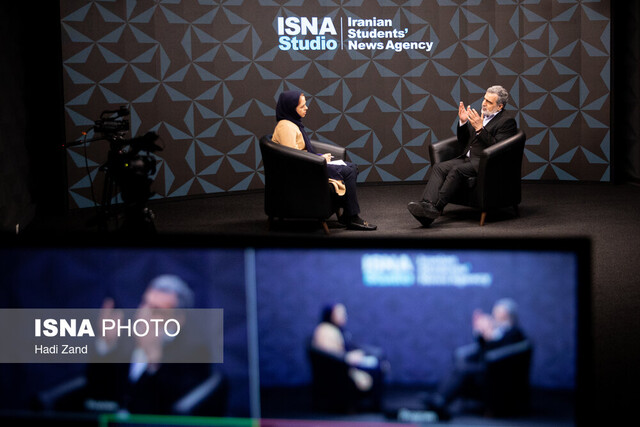
Behrouz Kamalvandi
“Zero enrichment” is not possible
The spokesperson of the Atomic Energy Organization responded that you were present in nuclear negotiations for many years in different periods and you always said that technical issues will not be resolved until there is political understanding and will to resolve the issues. Do you still believe this for the current situation? Emphasizing that the solution to Iran’s nuclear issue is political and not technical, he said: Of course, this does not mean that there should not be technical and legal negotiations and interactions. We have had a lot of action in recent months despite everything that has happened. Grossi has repeatedly said that there is a strong political pressure on the agency and him personally from countries that do not want Iran’s nuclear issue to be resolved. How did they resolve the technical issues in the PMD format during the JCPOA negotiations, if there was no political will to reach an agreement, would the technical issues have been resolved? Therefore, the political platform for negotiations must be provided.
He said: The most important key is to convince the opposite parties that the strange demands they have in their minds about Iran and the enrichment program, especially “zero enrichment”, are not possible at all.
Kamalondi continued: At one point, Obama understood the truth about Iran’s enrichment and said that if I could open the bolts of Iran’s nuclear industry, I would do so, but it is not possible, and the same logic still prevails. They saw that Iran did not give up its nuclear capability despite all the political pressures and sanctions and military attacks. They thought that the people would put pressure on the government due to the hardships of livelihood, unless Netanyahu asked the people to take to the streets during the 12-day war, why did the people, on the contrary, show unity and a single voice of their own! People’s behavior definitely affects their future calculations. If they have legitimate concerns, Iran is willing to cooperate and interact.
Iran is not under the burden of implementing old resolutions
This official of the Atomic Energy Organization continued about the return of the Security Council resolutions according to which Iran should stop its enrichment and implement Code Amendment 3.1 and the Additional Protocol? He stated: In the recent resolution of the Council of Governors, this request is based on the old resolutions, but Iran, China and Russia declared that the snapback is illegal, and in our opinion, the old resolutions have been canceled based on the 2231 resolution, and Iran will not be under the burden of implementing the old resolutions.
The enemy does not stop mischief
He answered that safety and security are two important wings in the advancement of the nuclear industry, how can these two wings be guaranteed in this situation? He said: This is absolutely true. Safety and security are intertwined, and it is true not only for nuclear facilities, but also for non-nuclear facilities such as refineries, etc. Fortunately, in the matter of nuclear security, our experts are healthy and we have a good level. Unfortunately, university professors were targeted in this war, people who were prominent in their field because these people are the generators of science and knowledge and the trainers of young forces, and the enemy tried to destroy them so that less specialists could be trained in this way. Specialists, scientists and personnel of the Atomic Energy Organization are in good condition due to the preparations that were foreseen in advance, and apart from the martyrdom and injury of the military personnel who were responsible for the defense of the facilities, we were not injured. But we must increase security. We know that the enemy will not stop his mischief until he achieves his goals, so we must always be careful.
In response to the question, which department of the Atomic Energy Organization did the most activities during the 12-day war? He said: All the departments were almost involved, but the Nuclear Safety System Center was involved more than others due to the care and supervision of the facilities and radiation monitoring, the personnel of this department were heavily involved inside and outside the sites. After them, there was the defense section, which was active in all sites. Of course, managers and assistants in different departments were also at work. In general, according to the conditions, we tried to do the work with minimum force and personnel.
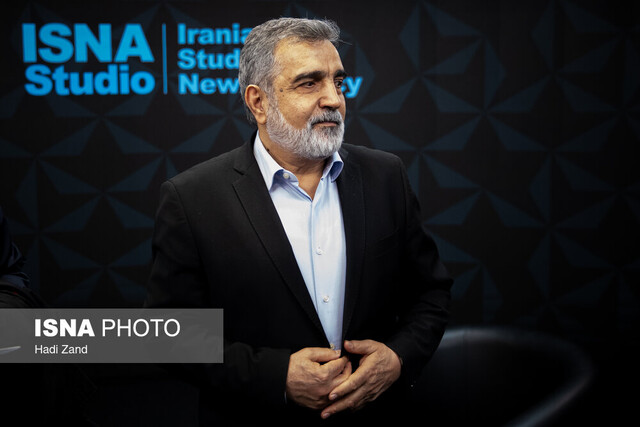
Behrouz Kamalvandi
It was possible that informing about some issues would disturb people’s peace more
Kamalondi, in response to the fact that you think that during the war and considering the military attacks on nuclear sites, the people were informed in a timely and sufficient manner? He stated: We informed as much as needed; Of course, we had to be careful because informing about some issues might disturb people’s peace more. For example, it was rumored that depleted uranium was used in attacks and spread in our region. The security system center quickly came to the attention of Partu and we found out that there is no such thing at all.
The spokesman of the Atomic Energy Organization pointed out the inhumane and immoral methods of the US and Israel in attacking Iran and said: I had a kind of concern combined with anger in those days that the enemy would act against Iran in any way he wanted and destroy the nuclear facilities. Especially attacks on residential areas and targeting innocent people increased this anger and concern. It’s not like we are allowed to do anything because it’s a war, what are the sins of children and women? At the same time, it was really impressive to see the image of Ms. Emami, the anchor of the Khabar network, when the glass building of the Radio Broadcasting Company was targeted, and she continued to broadcast the program in such difficult conditions and strong explosions. I think these were among the lasting images of those 12 days.
He added: In addition, the unity of the people in these days was commendable despite the annoyances from the government and many problems. Maybe it was the unity of the people that prevented the enemy from reaching its goal in the 12-day war. Although bitter memories were made in these days, but good experiences were also gained.
This official of the Atomic Energy Organization in response to the fact that you were not worried about being targeted in those circumstances, given that nuclear personalities were the target? He said: I have lived my life. There are many things higher than human life and health, these are not slogans but my experience. It is not always worth living in any situation, life should be dignified.
Kamalondi in response to what was the greatest weakness and strength of the Atomic Energy Organization in the 12-day war? He said: Now we are evaluating the past and the developments of those days; About where we had weaknesses and strengths. We will definitely get better and stronger in the future. If there are any weaknesses, we will compensate. We have meetings in this regard, where we follow up and write down the issues in a very systematic and calculated manner so that they can be used easily for future generations.
end of message

RCO NEWS
RCO