



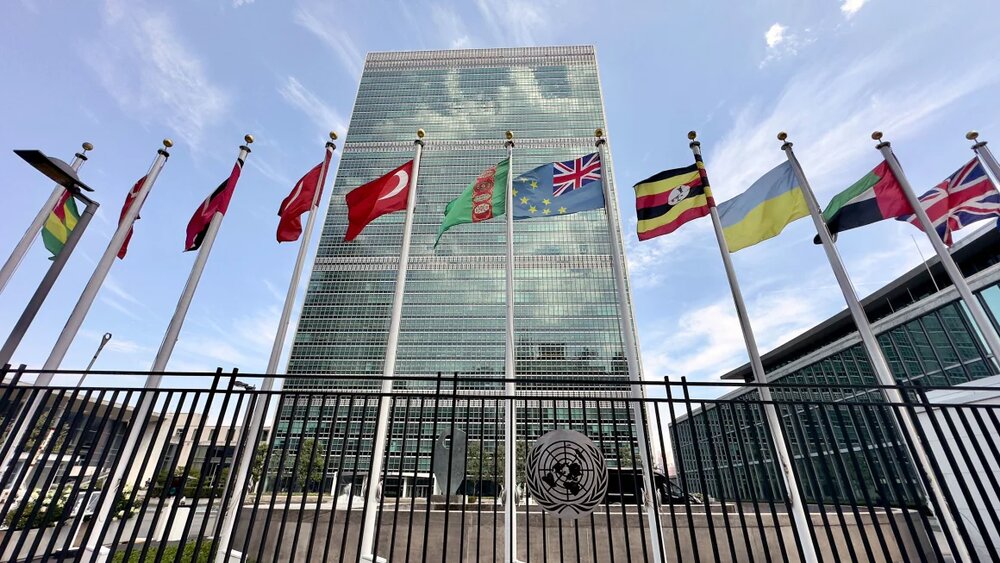
The financial crisis makes hundreds of UN humanitarian employees idle
The UN -affiliated institution, responsible for responding to catastrophes and emergencies, announced its intention to reduce the institution’s worldwork by 5 % and reduce activities in four countries due to a severe budget crisis while intensifying its needs at the global level.
According to RCO News Agency, Tom Fellcher, head of the UN Humanitarian Coordination Office, said in a letter sent to its personnel and released on its website that the institution was “declining” declining human demands due to a shortage of $ 5 million a year.
The UN Humanitarian Coordination Office (OCA) is responsible for coordinating emergency response to humanitarian crises, attracting international aid, evaluating the needs of the affected areas, and protecting the rights of those affected.
According to the letter, the UN affiliated with its operations in four countries, including Cameroon, Colombia, Eritrea, Iraq, Libya, Nigeria, Pakistan, Turkey and Zimbabwe, will prioritize “complete and vibrant responses” in the rest of the countries where it is still active.
“The agency has planned to modify about 5 employees from its approximately 4 working countries working in more than 5 countries,” said Najwa Mecca, director of communications at the UN Humanitarian Coordination Office, citing another letter.
The declines occur after the UN affiliated agency has also implemented austerity measures, including suspension and restriction of travel, saving $ 1.5 million.
In his letter, Fletcher emphasized that the reduction of its forces and activity is mainly due to financial constraints, not as a result of the need to reduce the needs: “This humanitarian group has already been involved in a shortage of budget and double pressure and has been practically attacked. “We are now facing a wave of cruel declines.”
The head of the UN Humanitarian Coordination Office emphasized that the institution is moving towards a “lighter and faster” model, focusing on basic priorities including crisis response, sector reform and humanitarian leadership.
According to Fellcher, these actions are in line with a UN -known plan known as the “humanitarian re -start” plan; A plan agreed in February by a permanent inter -institutional committee of the United Nations and within the framework of the reform initiative Antonio Guterres, the secretary -general of the Union, the UN 6 Initiative.
While the institution considers these reductions to be sustainable, humanitarian relief groups told CNN that they were concerned about reducing capacity in critical areas as a result of the decision.
A Human Rights Group official, called the Alaml Society, told CNN that the decline in force and the UN Humanitarian Coordination Office may “have a significant impact on humanitarian efforts in Iraq, especially in protecting women’s rights” and warned that the staff themselves would probably be adjusted if the office is cut off.
Defending his decision, Fellcher stated that the institution was “not to repeat efforts, but to coordinate efforts to maintain savior actions. “We believe in what we are doing, but we cannot continue to do everything.”
The end of the message
(tagstotranslate) Antonio Guterres

News>RCO NEWS
RCO