


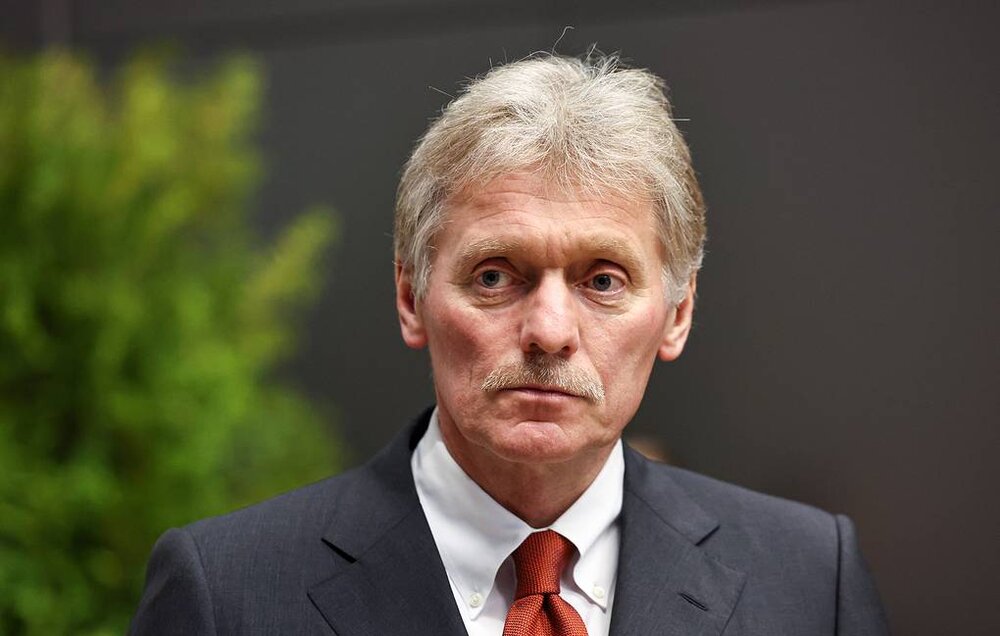
Peskov: We did not talk to US about foreign sovereignty over Ukraine
A spokesman for the Kremlin said Putin’s personal idea of temporary sovereignty over Ukraine was not raised at Washington and Moscow representatives.
Kremlin spokesman Dimitri Peskov said today (Friday) that the issue of foreign sovereignty in Ukraine has not been raised during talks between Russia and the United States in Saudi Arabia.
Earlier, Russian President Vladimir Putin said it was possible to establish temporary sovereignty in Ukraine under the supervision of the United Nations and with the participation of the United States, European countries and Russian partners.
Responding to a question from reporters, Peskov said, “No, there has been no conversation about it.”
Peskov also announced on Friday that if Kiev is violated, Moscow reserves the right to abide by the agreement and attack Ukraine’s energy facilities.
“Obviously, if Kiev fails to comply with this agreement, the Russian side also has the right to adhere to it,” he said. It is not reasonable for us to adhere to it, while every night efforts are being made to attack our energy infrastructure. “However, such an understanding has been reached by US negotiators.”
Ukraine has lost control of their energy installations
A spokesman for the Kremlin said Russia believes that Kiev’s leadership does not have control of its armed forces.
On Thursday, the Russian president said during a trip to the Murmansk area that the establishment of temporary sovereignty in Ukraine could allow democratic elections and the formation of a capable government so that the government could enter peace negotiations and sign relevant documents.
“What can Russia do?” Peskov said in response to reporters. “Russia can confirm that its leadership has no control over its armed forces because they do not implement orders, at least to avoid attacking energy facilities.”
He explained that Putin’s idea of the possibility of foreign sovereignty in Ukraine was due to the loss of control in Kiev.
Europe’s uncertainty to reduce sanctions means a disapproval of peace
Dmitry Peskov said if Europe refused to reduce sanctions within the framework of the Black Sea plan, it means that he is reluctant to move on the path of peace.
“If European countries do not want to move on the path of reducing sanctions, it means they do not want to move on the path of peace, they do not want to help Moscow and Washington make peace,” he said.
The end of the message
(tagstotranslate) America (T) Russia (T) Dimitri Peskov (T) Vladimir Putin

News>RCO NEWS
RCO