


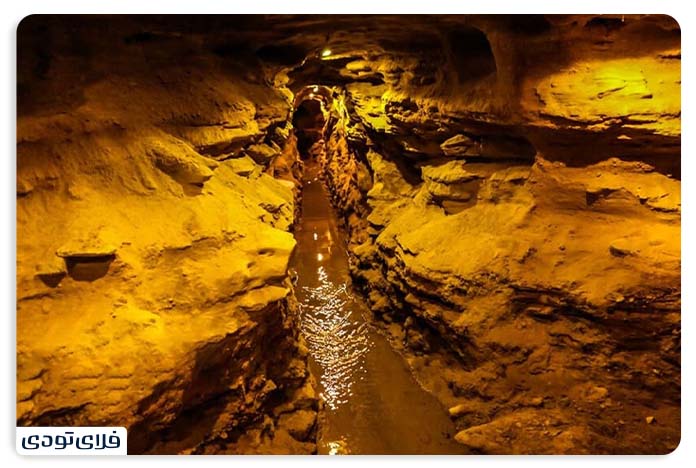
Have you ever asked yourself how water survives in the heart of the desert? What mechanism made a dry city like Yazd stand for centuries? The answer to this question should be sought in the heart of the aqueducts. Visiting the Zarch aqueduct is not just seeing a historical structure; This experience is the direct touch of Iranian intelligent engineering in the heart of desert nature. This aqueduct is one of the longest active aqueducts in the world and still feeds the agricultural life of the region. If you want to get acquainted with the wonders of traditional Iranian architecture, read this article in the tourism magazine Fly Today follow In the following, you will read where this aqueduct is, how old it is, and what points you should know when visiting.
Introducing the Zarach aqueduct in Yazd The deepest aqueduct in Iran
Zarch aqueduct is one of the masterpieces of water engineering in Iran, which ranks among the most important water structures in the world in terms of length, number of bars, and continuity of operation. This aqueduct is not only a historical monument, but it is still a vital source of agricultural water in the region. in between Sightseeing places in Yazd Few attractions can be found that are historical, scientific and practical at the same time.
This aqueduct has a complex network of underground tunnels that transports water from the heights to agricultural lands. Building such a system without modern equipment shows the advanced engineering knowledge of Iranians in ancient times. The farmers of the region still use the water of this aqueduct for irrigation and this issue has doubled its value.
| Feature | amount |
| The number of bars | 2115 rings |
| current watering | 25 liters per second |
| The number of owners and consumers | 800 farmer families |
| Garden area | About 25 hectares |
| Cropland area | About 400 hectares |
| The depth of the mother well | 85 meters |
| address | Yazd, 18 km from Yazd city |
Where is the Zarch aqueduct of Yazd?
Zarch aqueduct is located in Yazd province, 18 kilometers northwest of Yazd city and within the boundaries of Zarch city. This position makes it very easy for tourists to access it and it can be included in the one-day excursion program around Yazd. If planning Travel to Yazd visiting this aqueduct will be a different experience from the usual city attractions.
Zarach aqueducts of Yazd They are part of the historical water supply network of the region, which played an important role in the formation of desert settlements. The access road is paved and takes less than 30 minutes by car. Intercity taxis from Yazd also go to Zarch.
The best time to visit is early morning or evening, as the desert area heats up in the middle of the day. Bring suitable walking shoes, drinking water and a hat. Some parts of the aqueduct are open to the public, but entering the tunnels is recommended only with a guide. A complete visit usually takes 45 minutes to an hour and is a very informative experience for history and engineering enthusiasts.
- Visiting hours of Yazd Zarch aqueduct: 9 to 17
- Distance from Zarch aqueduct to Yazd: 18.2 km
- Address of Qanat Zarch: Yazd, Imam Ali Square, Sarcheshme St
Location of Zarach aqueduct on Google map
Access route to Zarach aqueduct of Yazd
To visit the Zarch aqueduct, the first step is to reach the city of Yazd; A city that is known as the capital of adobe architecture of Iran and has good access from most cities in the country. Different methods for Travel to Yazd There are and the choice of each one depends on your time, budget and travel style.
The fastest option is air travel. Many tourists with Buying Yazd plane tickets They enter Shahid Sadouqi Airport. From the airport to Qanat Zarach 25 km It is far and this route takes between 30 and 40 minutes by taxi or private car. The route is completely asphalted and crosses the Yazd road towards Zarch. Airport taxis will easily take you directly to Zarch city limits.
If you prefer to travel more economically, Buy Yazd train tickets It is one of the best options. Yazd railway station to Qanat Zarach about 20 km is far After arriving at the station, you can go to Zarch by city taxi or internet taxi; This route takes less than half an hour.
After entering the city of Zarch, local signs show the access route to the Qanat area. The access road is short and simple and does not require an off-road vehicle or special equipment. Even if you don’t have your own car, local taxis run regularly between Yazd and Zarach.
Due to the proximity of Qanat to the city of Yazd, its visit can be included in a half-day program. The best time to leave is early morning or evening to avoid the heat of the desert. It is recommended to bring drinking water, a hat and shoes suitable for walking. Visiting the aqueduct takes between 45 minutes and an hour, and you can easily combine it with other nearby attractions.
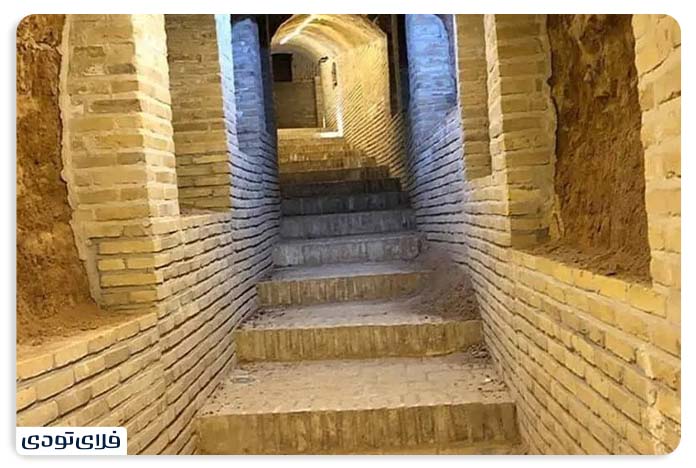
The name of the Zarach aqueduct of Yazd
The name “Zarch” has its roots in an old word that means a place of clear water or a land with flowing water; A meaning that is completely in harmony with the nature of this region. The formation of the city of Zarch and its surrounding settlements is directly dependent on the existence of this aqueduct, and in fact, the name of the region is derived from this vital source. In the past, areas with stable access to water had high economic and social value and were usually associated with water features.
Zarch aqueduct was not just an engineering structure, but it has shaped the identity of the region. The passage of water determined the place of formation of agricultural land and even the place of residence of people. For this reason, over time, the name of Zarch has been associated with the concept of “living in the heart of the desert”. For today’s tourists, knowing this helps not to see the visit to the aqueduct as just a historical experience, but to understand it as the origin of the formation of a desert city. This knowledge makes a deeper connection with the atmosphere of the region during the visit.
The age of the Zarach aqueduct of Yazd From yesterday to today
Zarch aqueduct is one of the oldest active aqueducts in Iran, dating back to more than two thousand years ago. Researchers believe that this structure was formed in the Achaemenid period and expanded in the following periods. The importance of this aqueduct is such that it has always been under the protection of local rulers throughout history.
Zarach aqueduct of Yazd city is a rare example of local knowledge of water management in dry climate. In periods when drought threatened the cities, this aqueduct played a vital role in providing drinking water and agriculture. The long route of the aqueduct passes under the historical fabric of Yazd and even passes by the Jame Mosque. An issue that shows its importance in the formation of the city.
Numerous restorations over the centuries have made this aqueduct still active. Local artisans have passed down the knowledge of its maintenance from generation to generation. Today, this aqueduct is not only a cultural heritage, but also a living document of sustainable engineering; A structure that works without a pump, without electricity and only with the natural slope of the ground.
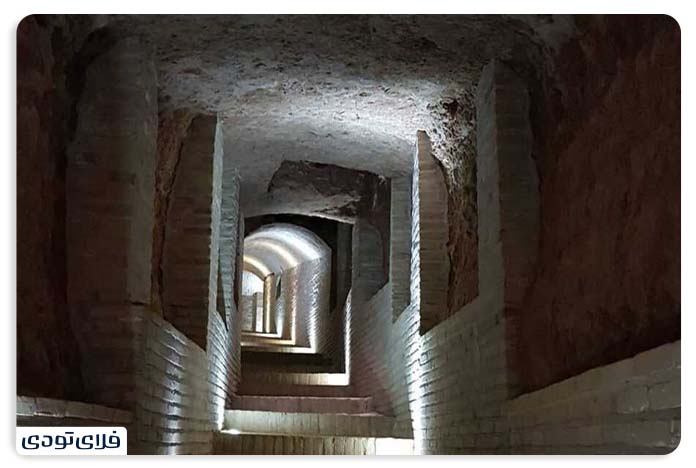
World registration of Zarach aqueduct of Yazd
Due to its historical and engineering value, Zarch Aqueduct was registered in the UNESCO World Heritage List in the form of “Iranian Aqueducts” file in 2016. This work as one of UNESCO World Heritage in Iran It shows that the Zarch aqueduct is not just a local work, but an outstanding example of sustainable water transfer technology at the global level. UNESCO has recognized this aqueduct as a living document of human adaptation to dry climate and intelligent management of water resources.
The importance of the Zarach aqueduct is not only in its age; Rather, it lies in the continuity of its function over thousands of years. This aqueduct is a rare example of social cooperation in maintaining water resources and its exploitation structure is based on collective participation. The passage of the aqueduct route under the historical fabric of Yazd also shows that the urban development was coordinated with the water supply system.
The global registration has increased attention to the protection, restoration and introduction of this heritage and has turned the Zarch aqueduct into one of the most important cultural attractions of Yazd province. Today, visiting this aqueduct is an opportunity to learn the native knowledge of Iranians and understand the sustainable ways of living in the desert.
Getting to know the different branches of the Zarach aqueduct of Yazd
Zarach aqueduct is not only a straight path; This structure consists of several main branches, each of which is responsible for transporting water to a certain part of the region. These branches have been developed over time and based on agricultural needs.
The main branch is the longest route of the aqueduct that transports water from the main well to the central lands. Sub-branches branch off in different places to bring water to nearby villages and farms. This division has caused a fair distribution of water among farmers; A system that has worked for centuries without serious controversy.
One of the interesting features of this network is the existence of paths that pass under the old fabric of the city. In some places, the aqueduct passes near the historical monuments and shows that the urban development of Yazd was completely coordinated with the water course. The maintenance of these branches requires regular dredging and is still done by local craftsmen.
Knowing these branches helps the visitor understand the aqueduct not just as a tunnel, but as a complex and intelligent system; A system that has worked non-stop for thousands of years.
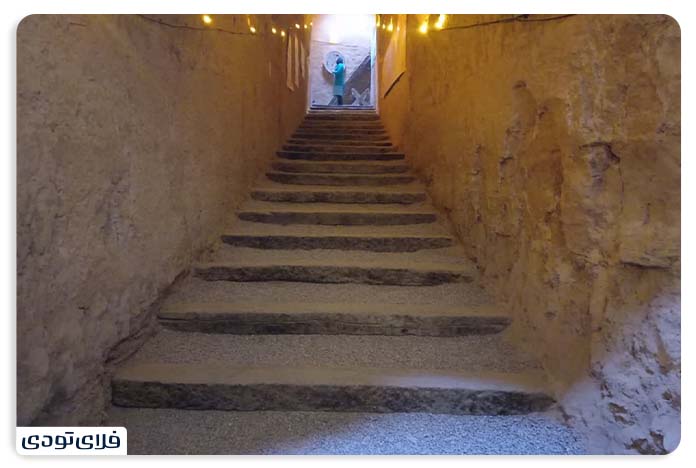
Features of Zarach aqueduct of Yazd
Zarch aqueduct is one of the most prominent examples of water engineering in Iran; A structure that is still active and known as one of the longest aqueducts in the world. This aqueduct is not only a historical relic, but a living water supply system that has worked for centuries without modern technology.
The length and breadth of the Zarach aqueduct of Yazd
One of the most important features of the Zarch aqueduct is its impressive length. This aqueduct stretches for more than 70 kilometers and its route starts from around Fahraj, passes under the historical context of Yazd and continues to the city of Zarch. Such an expansion is rare among the Iranian aqueducts and indicates the careful planning of water transfer on a large scale.
The network of wells and the underground structure of the Zarach aqueduct of Yazd
Zarch aqueduct has more than 2,115 vertical wells that are connected to the main tunnel. In addition to ventilation and access, these wells have played an important role in the maintenance and dredging of the aqueduct. The depth of the well of the active branch reaches about 85 meters; A number that shows the high skill of diggers in the past.
The main branches of Zarach aqueduct of Yazd
This aqueduct consists of three main branches named Shur, Shirin and Ebrahim Khovidaki. Today, only the “salty” branch remains active and carries water. Decreasing the level of underground water has caused the failure of other branches, but the active branch still plays a vital role in the agriculture of the region.
The connection of the aqueduct with the historical context of Yazd
One of the unique features of the Zarch aqueduct is that it passes under the neighborhoods and historical monuments of Yazd. The route of the aqueduct passes near Amirchakhmaq Square, Jame Mosque and old neighborhoods. This shows that the aqueduct is an integral part of the formation of the city and the urban structure of Yazd is designed in harmony with the waterway.
Live performance and heritage value
Unlike many historical aqueducts that have dried up, the Zarch aqueduct is still active in parts and irrigates agricultural lands. This continuity of performance has doubled its value and turned the aqueduct into a living example of sustainable water management in the desert climate.
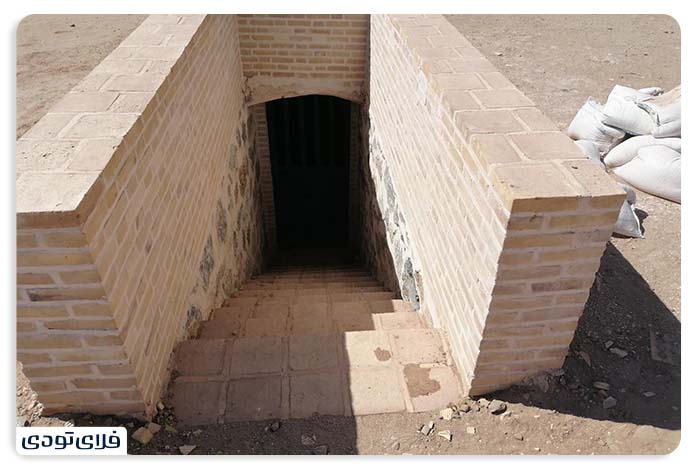
Sightseeing places near Zarach aqueduct of Yazd
Qanat Zarch is not just an independent destination; Around it is a series of historical neighborhoods and urban attractions that can make your travel plan more complete. The proximity of these attractions allows you to see the aqueduct and get to know the historical context of Yazd in one day. If in Traditional residences of Yazd Stay still, these areas will be even easier to access.
Fahadan neighborhood of Yazd
Fahadan neighborhood is the oldest part of the historical fabric of Yazd and walking in it is like traveling to several centuries ago. Narrow adobe alleys, tall windmills, historical houses and central courtyards show the original image of the desert city. Today, many of the old houses in this neighborhood have become cafes, galleries, and residences and have created a lively atmosphere for tourists.
Visiting Fahadan is the best opportunity to photograph the traditional architecture of Yazd. Wear comfortable shoes because walking on the cobbled streets is time-consuming. You will have the best light for photography early in the morning or near dusk. This neighborhood is close to Yazd Jame Mosque, Iskander Prison and Lariha House; So you can see several attractions in one route. Taxis come to the entrance of the historical structure and continue on foot.
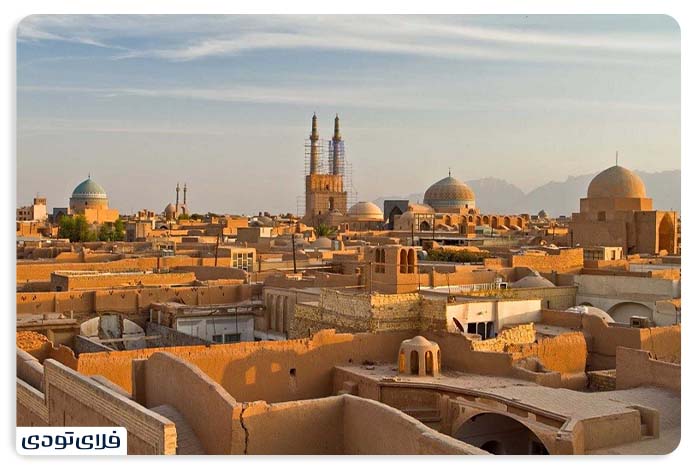
Distance from Fahadan neighborhood to Qanat Zarch Yazd: 21.1 km
Koshk No Yazd mill
Kushak No Mill is one of the interesting examples of water structures in Yazd, which shows how the people of the desert used the water flow of the aqueducts to generate energy. This mill worked with the water power of the aqueduct and once played an important role in supplying flour to the city. Its underground structure kept the ambient temperature cool.
Visiting the mill is a different experience than city attractions, because you enter the historical industrial space. The environment is a little dark and humid, so wear appropriate shoes. The visit is usually short but well worth a visit, especially if you are interested in traditional engineering. It is better to enter with a local guide to better understand the technical explanations.
The distance between Koushk No Yazd Mill and Zarach Aqueduct in Yazd: 20.9 km
Koshk No Yazd neighborhood
Koushk No neighborhood is one of the less known but authentic neighborhoods of Yazd where local life still flows. This area shows a more realistic picture of the daily life of the people of Yazd; Where the adobe houses are still inhabited and the tourist encounters the local culture.
If you want to get away from the hustle and bustle of the city center, Koshk No is a good choice. In the morning, local bakeries and small markets are active and you can have a more local experience. It is important to respect the privacy of the residents, because this neighborhood is not just for tourists. Visiting on foot is the best option and its routes are very attractive for urban photography.
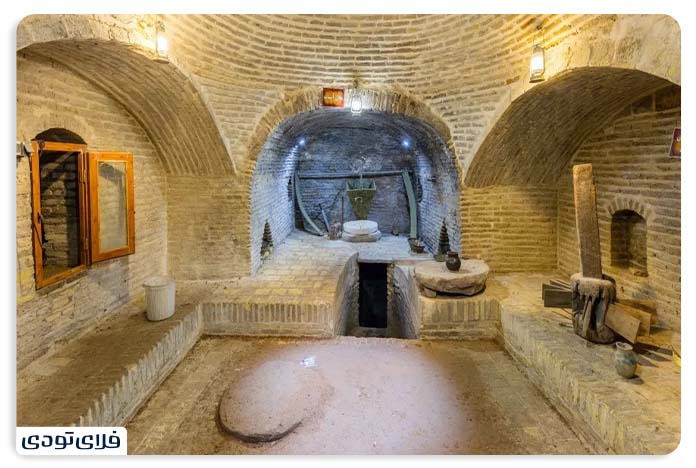
Distance from Koshk No Yazd neighborhood to Qanat: 22 km
Amir Chakhmaq Square, Yazd
Amir Chakhmaq Square is a city symbol of Yazd and almost no trip is complete without seeing it. The complex includes a tekeh, a mosque, a bazaar and a historical reservoir, and its symmetrical architecture has made it one of the most beautiful urban scenes in Iran. At night, the lighting of the square creates a different atmosphere.
This square is a gathering place for cultural and religious events and is usually always alive and lively. Nearby cafes and shops are suitable for relaxing. The best time to visit is dusk to night. The square is easily accessible and taxis go directly to it.
Distance from Amir Chakhmaq Square of Yazd to Qanat Zarch Yazd: 19 km
The best time to visit Zarach aqueduct in Yazd
The best time to visit Zarach aqueduct is autumn, winter and early spring; When the desert temperature becomes more moderate. Yazd is very hot in the summer, so if you are traveling during this season, postpone the visit to early morning or after dusk. Inside the aqueduct is cooler than outside, but the outside path is in the sun. Bringing water, hat and light clothes is essential. Soft morning light is also more suitable for photography.
Hotels and accommodations near Zarch aqueduct in Yazd
For an easier visit, it is better to stay near the historical context of Yazd so that you can easily access the aqueduct and other sights. many of Hotels in Yazd They are renovated in historical houses and offer a traditional accommodation experience.
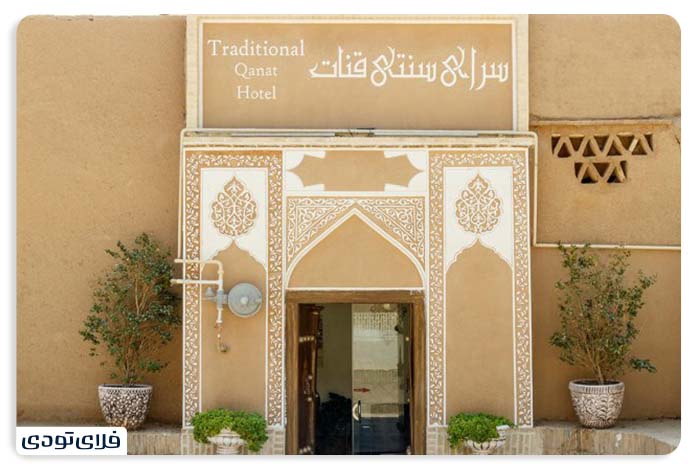
Zarach aqueduct, Yazd Journey to the heart of desert engineering
The Zarch Aqueduct of Yazd is not just a historical attraction, but a living story of human intelligence in the heart of the desert; A structure that has kept life flowing in the region for centuries without modern technology. Visiting this aqueduct is an opportunity to touch history, learn about traditional engineering and experience a space different from urban tourism. Its proximity to Yazd allows you to easily include this destination in your travel plan; whether by plane, train or even Yazd bus ticket. The combination of the Zarch aqueduct with the historical context of Yazd, old neighborhoods and traditional residences makes a complete cultural trip. If you are looking for a different, informative and authentic experience, Qanat Zarch is one of those places that will remain in your memory for a long time.
Frequently asked questions about Zarach aqueduct of Yazd
Where is the Zarch aqueduct of Yazd?
It is located about 15 to 18 kilometers northwest of Yazd city and within the limits of Zarch city, its underground route continues inside Yazd city.
What are the traditional residences of Yazd near Qanat Zarch?
Qanat Traditional Residence, Haji Babaei Residence and Sharq Hotel are close and suitable options.
How long does it take to visit the Zarach aqueduct in Yazd?
It takes between 45 minutes and an hour for a complete visit.
When is the best travel season to see Zarach Yazd Aqueduct?
Autumn, winter and early spring are the best time to visit because of the mild weather.
Are all branches of Zarch aqueduct active?
Currently, only the main branch known as “Shor” is active and the other branches have dried up due to the drop of underground water.
Is Zarch aqueduct registered globally?
Yes, Zarch aqueduct is registered in the world heritage list of Iran’s aqueducts and is considered one of the outstanding works of historical engineering.
How old is the Zarach aqueduct?
According to researches, the age of the Zarch aqueduct dates back to about 2-3 thousand years ago and to the pre-Islamic period.


RCO NEWS