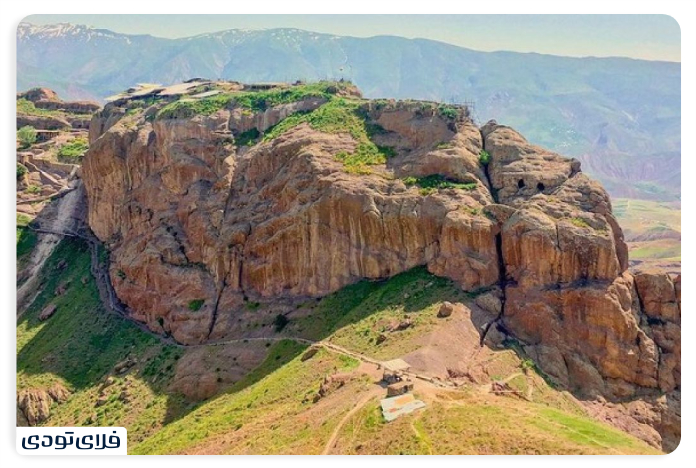
Alamut Castle is one of Iran’s historic and amazing attractions, located northeast of the village of Gazarkhan and in Qazvin province. The castle, with a rich and mysterious history, is not only known as the military base of Hassan Sabah, the founder of the Ismaili government, but has acted as an invincible fortress against enemy attacks throughout history with its unique architecture and unique geographical location. We are in this post from Tourism Magazine Fly We will examine the history, architecture and importance of this castle in the events of Iranian history and examine its natural and tourism attractions. Stay with us to get acquainted with the attractions of this historic castle.
Where is Alamut Castle? | Strategic position in northeast Qazvin
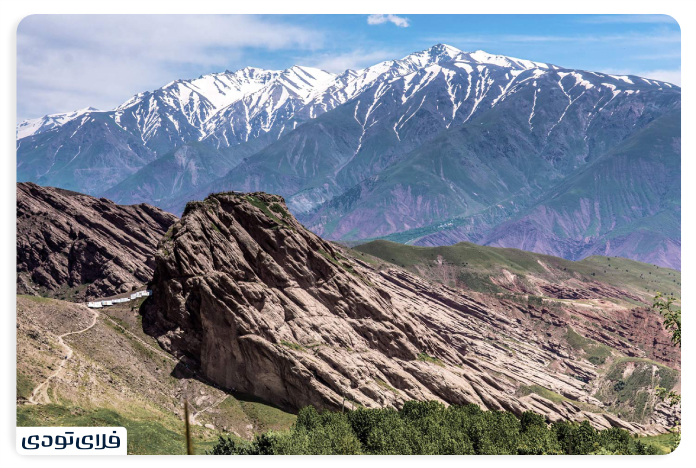
Alamut Castle is one of the most important historical strongholds of Iran, known as a symbol of power and endurance against enemies, especially the Mongols. The castle is located at a height of 1.5 meters above sea level and has difficulty accessing it, which has helped strengthen the castle’s security. As the military base of Hassan Sabah in the fifth century AH, Alamut Castle became one of the key points in the resistance to the Seljuk and other invaders. This place was very important in Iranian history due to its strong structure and geographical location.
The geographical location of Alamut
Alamut Castle is located northeast of the village of Gazarkhan, at a height of 1.5 meters above sea level. It is about 2 kilometers from Qazvin to Tehran.
The geographical location of Alamut Castle, on the tough and high cliffs, allows it to monitor the commercial and military routes of the region. This solid structure has guaranteed the security of the region and has made the castle one of the strategic defense bases. For this reason, Alamut Castle is not only a military fortress but also a key point in Iranian history.
Position of Alamut Castle on Google Map
The Role of Alamut Castle in Iranian History
Alamut Castle was built in the fifth century AH as the headquarters of Hassan Sabah, the leader of the Ismaili sect, and became one of the most important military and intellectual bases against the domination of the sovereignty. Due to its mountainous position, its advanced defensive architecture and its impenetrable, the castle resisted various attacks for about 5 years.
In this castle, Hassan Sabah not only governed his political-military organization, but also provided a space for scientific and cultural activities. Finally, the fortress collapsed by the Mongols in the year 6 AH and many of its scientific texts and works were destroyed. However, Alamut Castle remains a symbol of thought, resistance and independence in Iranian history.
This historic castle, as Hassan Sabah’s main base, has had a profound impact on Iranian culture and history. Hassan Sabah was able to organize the Ismaili movement in the castle and, with his military measures, prevent numerous enemies from attacks. This move not only reinforced the position of the Ismaili sect, but also made Alamut Castle a symbol of resistance and independence that remains in Iranian history to this day.
The architecture and structure of Alamut Castle
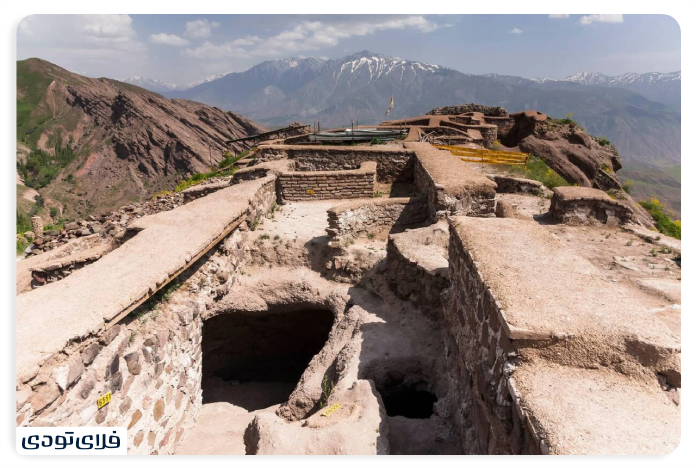
One of the interesting points of this historical site, using local materials and techniques tailored to environmental conditions, is one of the interesting points of this historical site. The stone walls and its strong towers are able to defend against various attacks. The design of the castle structure is designed to be defensible from any angle, and this feature has doubled its monopoly in Iranian history.
Culture and Tourism of Alamut Castle
Today, Ghalemmut is an important attraction for domestic and foreign tourists in northeast of Qazvin. This place is important not only historically, but also culturally. Visitors can become more familiar with Iranian culture and history and enjoy the natural beauties around the castle. Given its natural attractions, the area has become one of the popular tourist destinations.
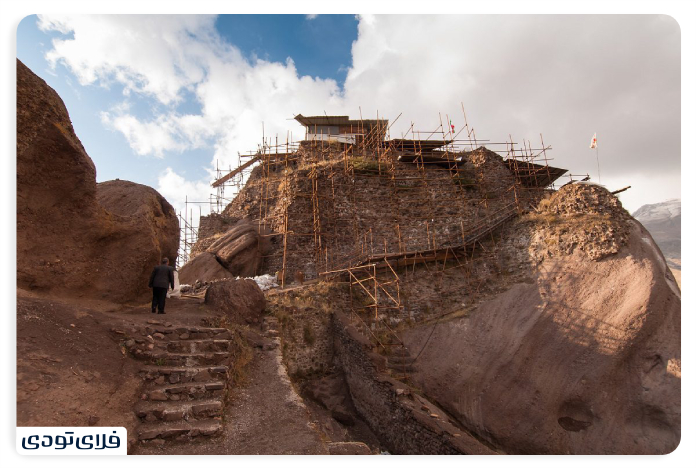
Alamut Castle and Hassan Sabah
Ghale al -Mutl, as one of the historical and cultural centers in the fifth century AH, especially during the Ismailis, had a significant impact on Iranian history. Hassan Sabah, the founder of the Ismaili sect, not only fought the domination of the sovereignty by establishing an autonomous government in the castle, but also expanded his political and military influence.
The Ismaili sect was founded in the early fifth century AH led by Hassan Sabah. Due to the political and social conditions of the time, he attracted his loyalists and created a safe haven in Alamut Castle for his followers. With his clever strategies, Hassan Sabah was able to prevent enemies from penetrating and lived in the castle for five years.
Not only was Alamut Castle, not only the headquarters of Hassan Sabah, it was also known as a symbol of endurance and struggle against the domination. In this castle, scientific and philosophical activities were carried out that led to the cultural richness of this place. However, the conquest of the castle by the Mongols in the year 6 AH caused a fatal blow to the Ismaili activities.
The conquest of the Mongol Castle was not only a turning point in the history of the cult, but also influenced its structure. Although many of their texts and knowledge were destroyed, the followers of Hassan Sabah fought the historical challenges and showed that they had a strong will. This event is a symbol of the Ismaili endurance against oppression and rape.
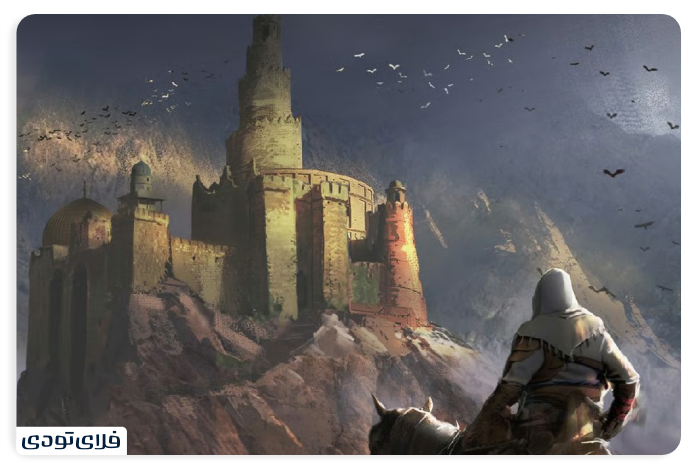
Alamut Castle Architecture
The magnificent and unique castle architecture of Al -Mutlmut not only represents power and strength, but also as a symbol of military strategies at the time. The castle consists of two main parts, the top castle and the low castle, each built with resistant walls. Materials such as stone, brick and wood have been used to build the fort, which has added to its beauty and strength.
Alamut Castle Defense Features
One of the most prominent features of the castle is its advanced defense system. The castle has deep ditches, watchtowers, and hidden paths that allow the guards to monitor any suspicious mobility. These defensive elements have also helped the castle’s security, giving it a mysterious and legendary identity.
Unique water supply system
One of the amazing things about Alamut is its water supply system. The system is designed to bring water from a fountain on the slope of the mountain into the castle. This initiative not only provides the water needed by the inhabitants, but also reflects the intelligence and creativity of architects of that time.
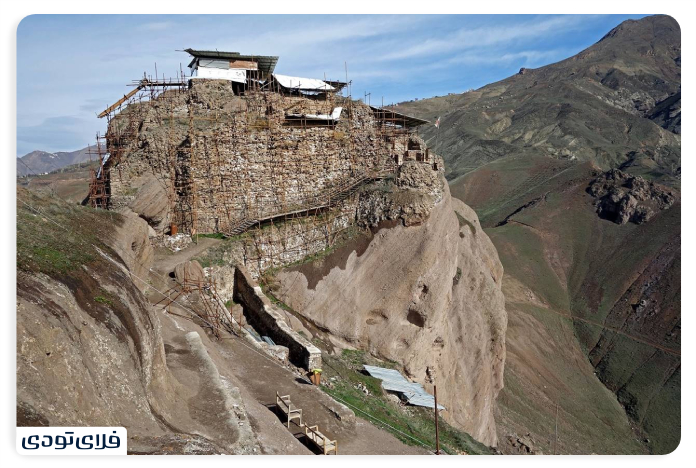
The natural scenery around Alamut Castle
In addition to the historical and cultural importance, the natural landscapes around Alamut also have their own attractions. The Gazarkhan Plain provides good opportunities for photography and walking with lush land and surroundings.
Gazarkhan Village | Residence near Alamut Castle
Gazarkhan Village from Spectacular places of Qazvin And the closest point to Alamut, with local accommodation facilities, is a good option for tourists who want to look at history and experience local culture closely.
Lake Evan | A destination for camp and rest
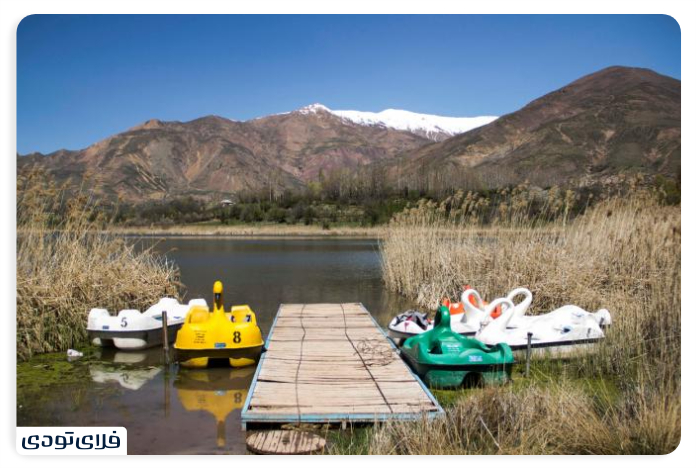
Not far from the castle, not too far away from the castle Lake Evan One of the popular destinations for camp and rest is tourists. This lake, with clear and enclosed waters in the mountains, provides a pleasant atmosphere to spend time in nature.
The best time to visit the Alamut Castle
The best time to travel to Alamut is from early spring to late summer as well as the first month of autumn. In these seasons, the climate is typically temperate and pleasant.
Mildly temperate spring
Early spring with the blossoms of trees and mild weather is the best time to visit Alamut Castle. The temperature usually varies between 2 and 2 degrees Celsius and provides a good opportunity for Qazvin’s natural landscapes.
Pleasant summers
Summer is also a good time to visit Alamut Castle. July and August are the best time to enjoy warm and sunny weather, and it is recommended to set up your travel plan for the middle of the week to avoid crowds.
Autumn and colorful beauty
The first month of autumn is also a good time to visit Alamut Castle. In this chapter, nature changes the color of the leaves, creating beautiful landscapes that provide special and unforgettable experiences for visitors.
Route Access to Alamut Castle
To reach the Alamut Castle, the Tehran-Qazvin highway can be used and then moves towards the castle by mountain roads. This trip not only has an experience with beautiful natural landscapes, but also includes hiking in the mountains. One of the simpler and low -cost ways to reserve Qazvin train ticket The rail trip to this city is spectacular.
How to go to Alamut Castle?
The best way to access Alamut Castle is to use the Karaj-Qazvin freeway. The beautiful mountainous and overlooked route of spectacular landscapes turns the journey into a special adventure.
Access to Alamut Castle
The winding and mountainous route to the castle offers a real experience of nature. After reaching the teacher, you should be ready for a hiking of about 5 minutes.
Essential tips to travel to Alamut Castle
For Travel to Qazvin And see the Alamut Castle, bring the right mountaineering shoes, as part of the impassable and rocky route. It is important to have warm clothing, especially in the spring and autumn seasons where the air varies in altitudes.
Do not forget drinking water, light food, hats, sunglasses and sunscreen. If you are planning to camp or stay in the area, camping equipment and flashlights are required. Also note that the road route from Qazvin to the mountainous and winding teacher, so driving is cautious and complete the fuel in Qazvin or nearby cities.
Alamut Castle | A lasting legacy of Iranian resistance, history and nature
As one of the prominent symbols of Iranian history and culture, Alamut Castle not only shows power and endurance against historical invaders, but with its natural attractions and special architecture, it is an attractive destination for tourists. This castle is reminiscent of people’s efforts and efforts to preserve their identity and land. Traveling to Alamut Castle is an opportunity to get to know Iranian history and culture and experience the natural beauty of this land. Every tourist traveling to this place will have many stories in history, and this experience will definitely be memorable.
Frequently asked questions about Alamut Qazvin Castle
Where is Alamut Castle and how can it be achieved?
Alamut Castle is located in the northeast of Qazvin province, near the village of Gazarkhan, 2 meters above sea level. To achieve it, you must first move from the Tehran-Qazvin highway to the teacher and then do about 5 minutes of hiking.
What role has Alamut Castle played in Iranian history?
The castle in the fifth century AH was the main base of Hassan Sabah and the center of the Ismaili movement. As a symbol of resistance to the Seljuks and the Mongols, it has played an important role in Iranian political and cultural history.
What are the architectural features of Alamut Castle?
The castle has a solid structure with stone walls, defensive towers, hidden routes and unique water supply systems that are resistant to attacks and advanced engineering.
When is the best time to visit the Alamut Castle?
The best time to visit the Alamut Castle is spring, summer and early fall; Because temperate climate, the portable route and the natural landscapes are very spectacular.
Are the attractions around the castle of Alamut worth seeing?
Yes, places such as Gazarkhan village, Lake Evan, lush plains and surrounding mountains provide beautiful landscapes and great opportunities for camp, hiking and photography.


RCO NEWS