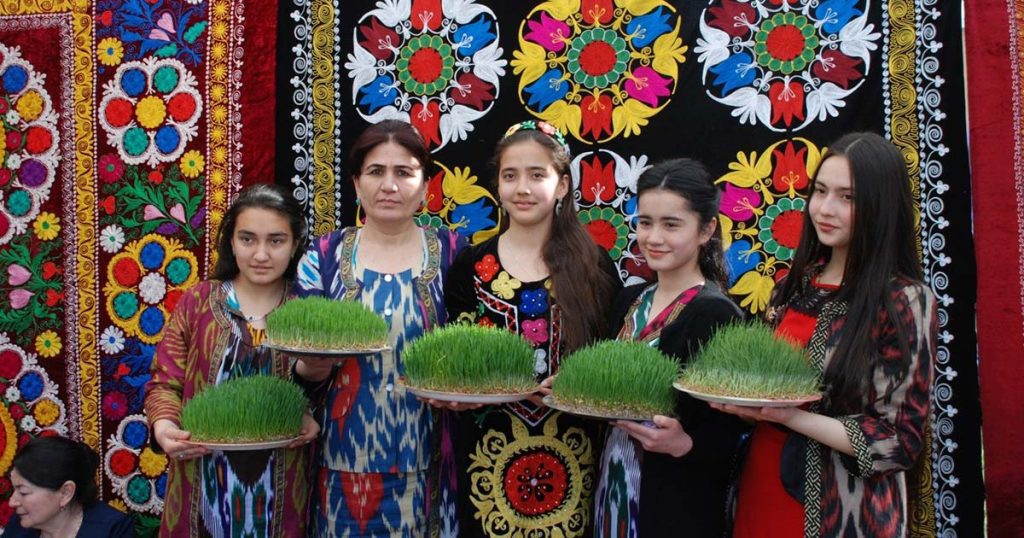
Tajikistan is one of dozens of countries that celebrate the 3000-year-old tradition of Nowruz. Although this ancient festival is celebrated in all Persian-speaking countries to coincide with the beginning of spring, different cultures have their own traditions to celebrate this thousand-year-old ritual. Lighting the fire, meeting with family and friends, giving gifts, etc. are all part of Nowruz ritual. Here we have gone to the rituals of Nowruz in Tajikistan, a country that welcomed spring by holding this celebration and has many cultural similarities with Iran.
History of Nowruz celebration in Tajikistan 1405
As an ancient national festival in Tajikistan, Nowruz is considered the beginning of the year in the Iranian calendar, the key to friendships and the revival of nature. Nowruz celebrations have been celebrated in Tajikistan for thousands of years by people of various ethnic and religious backgrounds, but the thousand-year-old ceremony was restricted by the Soviet government for several years.
With the separation of Tajikistan from the Soviet Union, this country revived its old customs and Nowruz again became a symbol of Tajik culture and identity. Emomali Rahman, the current president of Tajikistan, has emphasized the importance of holding Nowruz traditions since 2011. Currently, Nowruz is one of the traditional celebrations in Tajikistan and is celebrated with great enthusiasm.
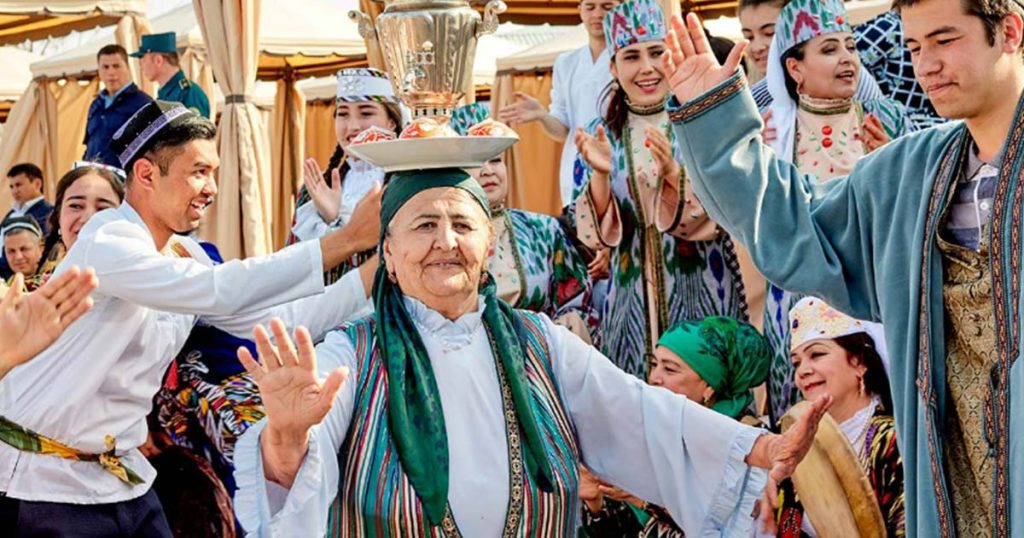
Tajiks start their Nowruz celebrations a month before spring. On the first three days of the last month of the year, family members, relatives or friends gather around the fire and sing music and play various games.
According to Tajik legends, the first man (Kayumars) was created right at the moment of the balance of day and night (spring equinox). Nowruz in Tajikistan, like in Iran, is several thousand years old. In fact, it can be said that Nowruz is the most ancient New Year ritual on earth, and its history reaches 3-4 millennia.
The writings of the historical monuments tell this legend that the creation of Navros is related to the legendary Iranian king Jamshid. Jamshid’s grandfather, Kiyomarth, the king of Iran, who is considered the first ancestor of all mankind, named the days, years and months. Identifying the day and moment (morning) when the sun enters the constellation of Aries, he ordered all the priests (mabadam) to start the calendar from this moment.
Nowruz Eid time in Tajikistan
Nowruz celebration time in Tajikistan is determined according to the Gregorian calendar. Accordingly, March 21 is Nowruz days in this country. Compared to the solar calendar, March 12 may coincide with April 1 or March 20. The biggest celebration of Nowruz in Tajikistan is held in Nowruzgah of Dushanbe (Tajikistan’s capital).
Another point is that we Iranians set a special time every year for the delivery of the year and the beginning of the new year, but the Tajiks do not have this custom. In other words, there is no delivery time in Tajikistan and the new year begins on March 21. Nowruz lasts 5 or 6 days in this country.
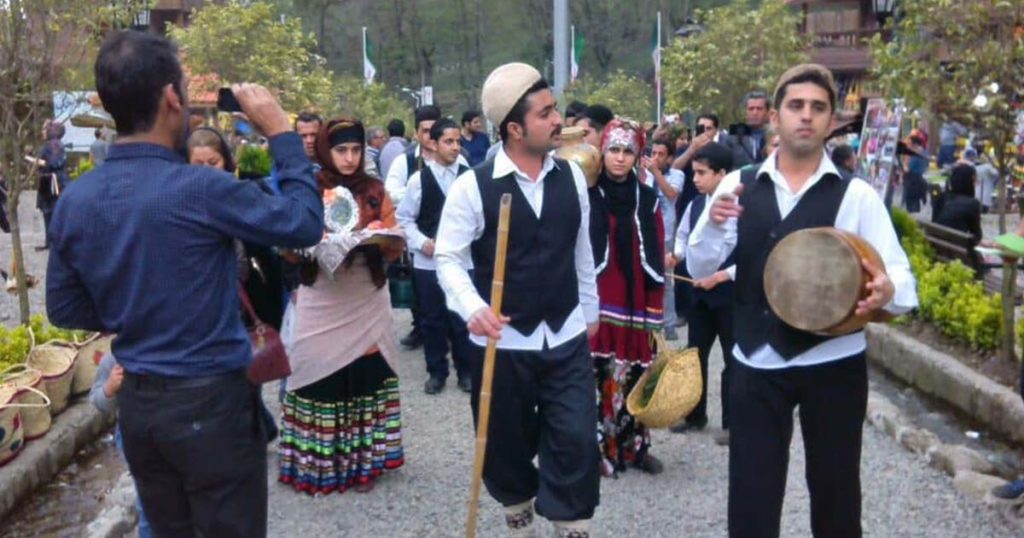
Nowruz is celebrated not only in Tajikistan but also in other countries like Uzbekistan. In Tajikistan and Uzbekistan, people celebrate this day with street parties, folk dance and music, and traditional shows. Every year, many tourists from all over the world come to this event by booking a tour of Uzbekistan and Tajikistan and are eager to experience this rich culture and participate in these ancient celebrations. Nowruz celebration, as an international cultural event, provides an exceptional opportunity for tourists to learn about the customs of the people of this region and share in their happiness.
Read more: Essential information of 1403
Customs of Nowruz in Tajikistan
Different countries celebrate Nowruz differently. Nowruz is celebrated in 13 days in our country. Nowruz in Tajikistan is a 5 or 6 day celebration. But there is a common point between Nowruz rituals of Iranians and Tajiks. Just as we celebrate the 13th day of nature after the end of Nowruz, the Tajiks celebrate “Sezd Ba Dar” on the sixth day. Nowruz is a symbol of revival, peace, happiness and the victory of kindness over Satan and has a very rich history.
In the first years of Arab rule, Iranians paid taxes to celebrate ancient holidays such as Nowruz and Mehrgun. The Umayyad and Abbasid governments used to organize magnificent celebrations with taxes, and holding these celebrations helped a lot to preserve the ethnic-national traditions of the Persians.
Nowruz is not only the Eid of reviving nature, but also the Easter of the soul. The commemoration ceremony of “Sivosh” is still celebrated in many Persian-speaking countries today and is linked to its old Tajik version. This ritual represents the seasonal calendar cycle of plant life, which turns yellow in autumn, dries up in winter and blooms again in spring. In the following, we will tell you how Nowruz is celebrated in Tajikistan.
Somanak Pezi ritual
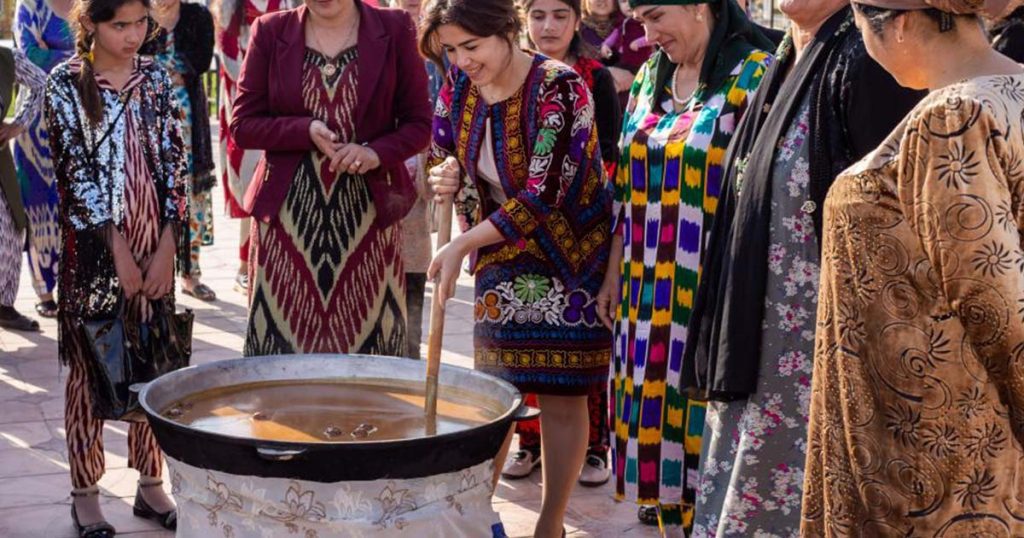
Semno cooking is a ritual before Nowruz in Tajikistan. In this ritual, Tajik women cook Semnu a few days before spring and welcome spring. To cook Semnou, wheat is soaked in open containers until they sprout, and then the delicious Semnou is prepared for Nowruz. In fact, semenu is one of the main dishes of Tajiks for a feast of guests in Nowruz. Tajik women dance and sing on the day of baking Semno, which usually lasts a day and night. This happy and exciting ceremony is held in the villages and cities of Tajikistan.
The flower-carrying ritual
“Flower Gardani” is one of the most beautiful rituals of Nowruz in Tajikistan. In this ceremony, they celebrate the end of winter and the beginning of the new year by picking flowers on the slopes of the mountains. Tajiks celebrate this festival by singing folk songs and dancing in honor of spring and the blossoming of nature. People wear colorful and very beautiful clothes in this ceremony.
Hand-reading ritual
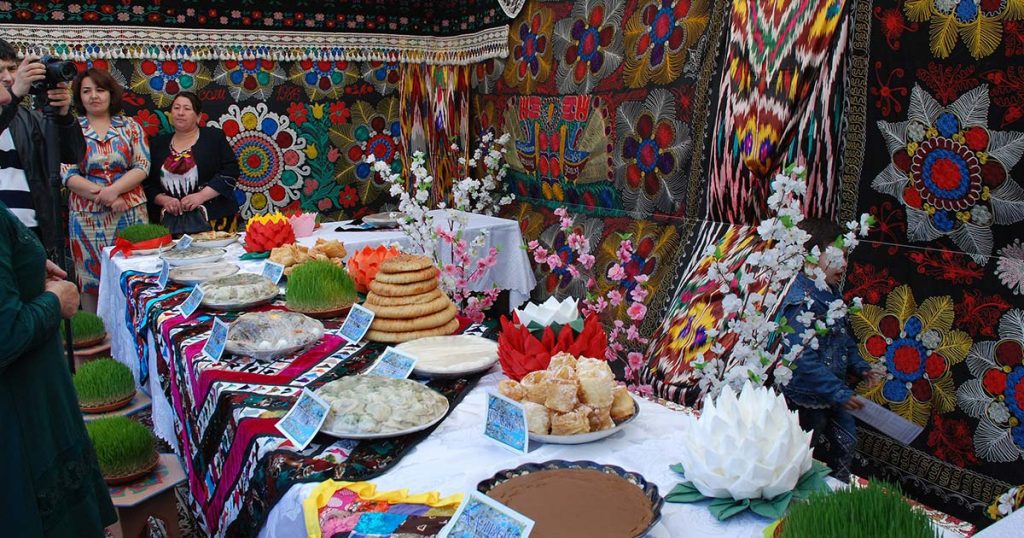
The table is a special ritual for the first day of spring. In this ceremony, Tajiks spread a table in their homes. A sideboard is a table full of sweets, fruits and food on it. There is no special rule for the items that are arranged on the table, only the table should be rich and varied. Usually, the dishes and sweets for the table are prepared a few days before Nowruz. It can be said that baking sweets for the guests is also a part of Nowruz ritual in Tajikistan.
People wear new and clean clothes on this day, which is a symbol of complete purification. Building a fire on the first day of spring is one of the obligatory Nowruz rituals in Tajikistan. All families circle around a burning fire or torch in the hope of the victory of good over evil.
Like Iranians, Tajiks also gather around the “Heft Sin” table and celebrate the New Year. Nowruz guests sit around the table and are served with fruits, sweets and fresh food. According to Tajik tradition, green or black tea is served with a teapot and a cup is used to drink it.
Nowruz rituals in Tajikistan
- flower arrangement
- Shaking house
- Somanak Pezan
- Pisces ceremony
- Braran celebration
- Queen selection party
- Haft Sin
- seven memes
- Haft Shin
read more
The philosophy of Nowruz Where to start Iran tour?
Haft Sin Tajiks
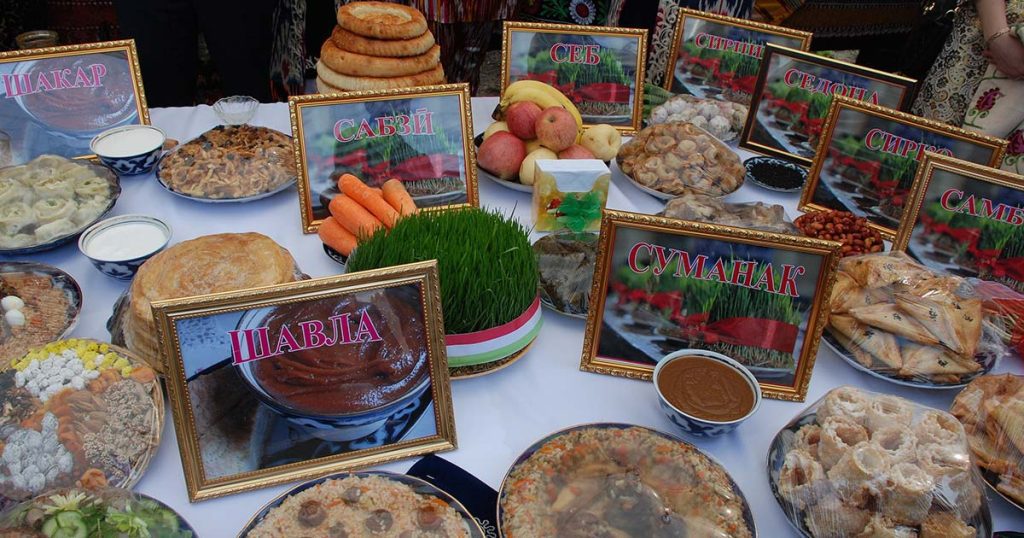
There is no difference between Iran and Tajikistan! Nowruz has no meaning anywhere without the Haft Sin table. Tajiks, like Iranians, gather around the Haft Sin table during Nowruz and honor this ancient ceremony. Of course, Nowruz in Tajikistan is a little different in terms of Haft Sin. In addition to seven things, Tajiks also have seven objects and seven memes. In Haftsin Tajiks, Sepand (Spand), Sabzi (Carrot), Semnok (Semno), Apple, Sabze (Onion), Senjad and Sambosa are arranged on the table.
Haft Shin of Tajiks includes nectar, milk, sweets, pure sugar, candles, boxwood and Ander Khan tea, and some Haft Mim include red fish, shrimp, musk, mee (a type of local drink), mise (a spring mountain plant), banana and fruit on their Nowruz table. Of course, there is no mention of fish, eggs and mirrors on the table of Tajiks. Whether Haft Sin, Haft Shin or Haft Mim, everything that is placed on the table has its own philosophy and is a symbol of life, freshness and blessing.
Every family in Tajikistan tries their best to celebrate Nowruz according to ancient customs and as grand as possible.
Nowruz dishes in Tajikistan
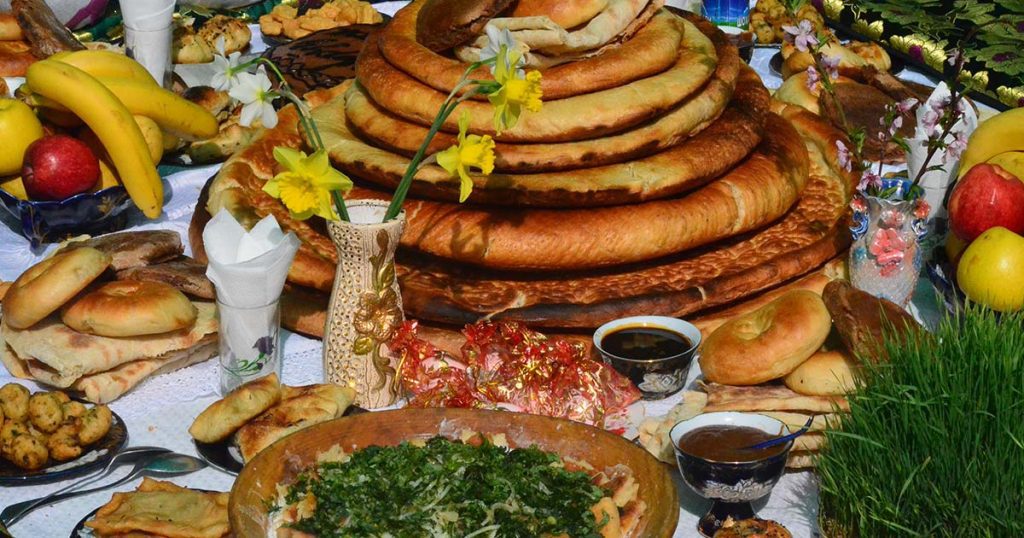
Vegetable pilaf with fish, all kinds of ash, Zershak pilaf with chicken, etc. are all special dishes for Nowruz in Iran. Like Iran, cooking special food is a part of Nowruz ritual in Tajikistan. Tajik women artists are very busy during Nowruz and prepare all kinds of delicious food and sweets for guests.
According to Tajik customs, on the first day of Eid, to have a sweet life until the end of the year, all kinds of sweets such as halva and rice milk are eaten for breakfast. A dish called Baj, which is made with sheep offal and wheat, is the special dish of the second day of Nowruz in Tajikistan.
In another interesting custom, on the second day of Nowruz, after dinner, children go to the roof of the neighbor’s house and ask for Eid or Nowruz gifts by holding out a scarf. Scarves are usually filled with sweets. This beautiful ritual is called Ghoz Ghoz.
All kinds of Nowruz dishes in Tajikistan
- Bread for oven
- Rachel’s Bread
- Shirmal
- kamacha
- Samarkandi bread
- Kardach halwa
- Sesame halva
Nowruz games in Tajikistan
Games, which are a kind of sports competition, form the main part of Nowruz ritual in Tajikistan. In other words, Nowruz of Tajiks is not limited only to seeing and visiting or cooking special dishes. These exciting games make Nowruz in Tajikistan more exciting.
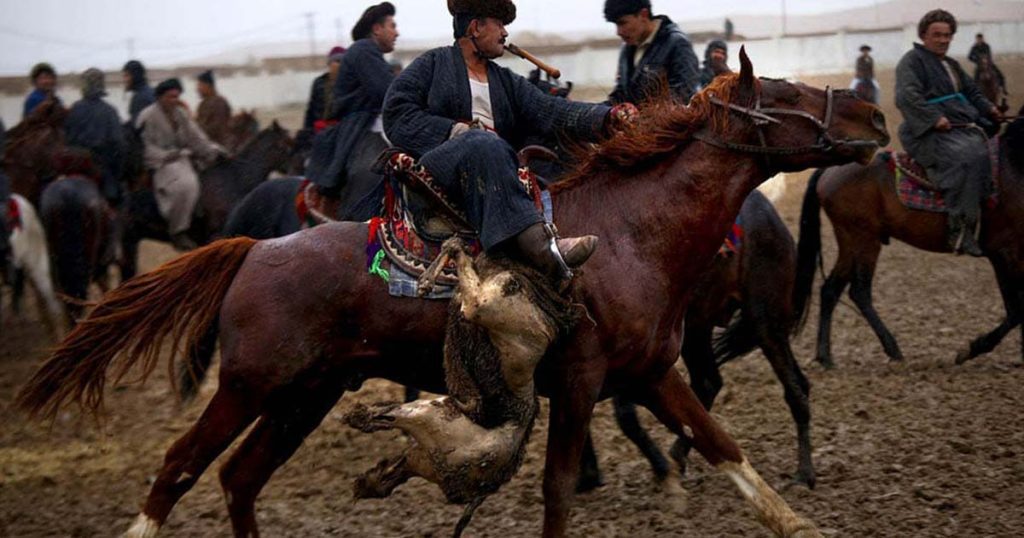
Bezkashi is one of the oldest and most exciting Nowruz games in Tajikistan. The history of this game goes back centuries. During this game, almost a hundred people compete with each other and try to pick up a goat with a severed head and carry it around the entire field. The interesting thing is that the goat killing game has government or private sponsors and at the end, the winners are given prizes such as traditional carpets, refrigerators and televisions.
Goat fighting is more popular among locals and middle-aged people, and they usually choose a day of Nowruz to hold this exciting and breathtaking competition.
Read more: Travel guide to Dushanbe, Tajikistan
Other Nowruz games in Tajikistan
- horse riding
- wrestling
- cock of war
- Tug of war
- Goosebumps
Nowruz dance in Tajikistan
Nowruz dance in Tajikistan is one of the beautiful and energetic manifestations of this country’s culture, which is held in spring and at the same time as the beginning of the new year. In this ceremony, people wear colorful traditional clothes and perform happy group dances along with local music.
These rituals show people’s deep connection with nature, history and their national identity. Nowruz celebration in Tajikistan is an opportunity to keep alive the old traditions and transfer them to the younger generations.
The presence of tourists in this event has also made Nowruz celebration in Tajikistan one of the most attractive cultural events in the region.
final word
Nowruz is celebrated in Tajikistan together with Iranians and other Persian-speaking countries. As the Nowruz days approach, Dushanbe, the capital of Tajikistan, has a special mood, people welcome spring by shaking their houses, decorating the streets and buying new clothes. Tajiks believe that with the arrival of spring, darkness should be thrown away, and they started the new year with a full heart, love and friendship. Nowruz celebration in Tajikistan, especially in Badakhshan, is a long-standing national celebration that has great value and importance. If you are looking for a different destination with cool weather close to Iran to spend Nowruz holidays, we introduce you to Tajikistan tour. You can also contact our colleagues in the foreign tours department to book tickets and hotels for this destination.
Frequently asked questions
- How is Nowruz celebrated in Tajikistan?
All family members circle around a lighted fire or torch as a sign of hope, the victory of light over darkness and having a year full of blessings. Tajik women prepare “Sumank”, a traditional dough made especially for Nowruz Eid, and like Iranians, they gather around the “Heft Sin” table and celebrate the New Year.
- Is Nowruz celebrated only in Iran?
Currently, this thousands-year-old celebration is celebrated by a wide variety of ethnicities and cultures in countries beyond Iran, including India, Afghanistan, Turkey, and Pakistan. Iraqi Kurds also celebrate Nowruz in the autonomous region of Iraqi Kurdistan.
- Nowruz is celebrated in which countries?
According to the origin of Nowruz, this festival is celebrated in countries with Persian culture including Afghanistan, Azerbaijan, India, Kyrgyzstan, Kazakhstan, Pakistan, Turkey, Tajikistan, Turkmenistan and Uzbekistan.
- What is the most important holiday in Tajikistan?
Nowruz is one of the biggest national holidays of Persian nations, including Tajiks. The word Nowruz consists of two roots: “nav” (nay, nav) new and “roz” (roch, roz) – roz means new day.
- Do Kazakhs also celebrate Nowruz?
Kazakhstan also celebrates this tradition with different communities and ethnicities around the world. Nowruz coincides with the beginning of spring and is celebrated in Persian culture in all countries.
Copying of the contents of Setare Vanak Airline Agency is prohibited only by mentioning the source.

RCO NEWS