

Whenever the name of the museum is mentioned, we usually expect to be confronted with narratives from the past; Stories that we may have heard less about before and now are going to be told to us in a concrete form. Apartheid Museum of Johannesburg plays exactly such a role. The word “apartheid” means separation and discrimination; A concept that overshadowed the lives of South Africans for years and changed the history of this country. Instead of focusing only on old objects, this museum tries to take the visitor to the heart of the realities of that era with a questioning and impressive narrative and lead him to a deeper understanding of this bitter chapter of history.
Why was the apartheid museum built?
The purpose of the Apartheid Museum in Johannesburg is to depict the rise and fall of apartheid and to commemorate the historic and shocking events that led to South Africa’s first “free and fair” democratic elections in 1994.
This museum pays tribute to the men and women who risked their lives and tragically died fighting for freedom and equality.
The Apartheid Museum is also meant to be a place of healing, and the museum’s gardens offer visitors a peaceful space for reflection. This museum, which was built on a land of 7 hectares in the suburbs of Johannesburg, is exemplary in terms of design, space and landscaping.
A collection of 22 distinct exhibition spaces takes visitors to the South African tour on an emotional journey from a dark place to a place full of light and hope.
These exhibitions not only highlight how people suffered under the apartheid system and their struggle to overthrow the authoritarian ruling party; It draws attention to the incredible tenacity and strength of character of the people who fought for freedom and equality in South Africa.
When was the apartheid museum of Johannesburg built?
A consortium named “Akani Egoli” managed to get the concession to build a casino complex called “Gold Reef City” in Johannesburg. According to the terms of the contract, this consortium was obliged to finance the construction of a museum on the land adjacent to this complex.
In addition, a group of reputable architecture companies worked together to design the apartheid museum in Johannesburg and monitored the project implementation process.
The cost of building this museum was estimated at 80 million rand. The Apartheid Museum is registered as a non-profit institution (Section 21 Corporation) and is managed independently from the Gold Reef Collection. The continued operation of this museum depends on donations, contributions and public and organizational support.
What is apartheid?
Apartheid is a system of racial segregation and discrimination that was implemented in South Africa from 1948 to 1991 and had a deep impact on the social structure and life of the people of this country. South African museums are the narrator of this dark historical period.
South Africa tour by Star Airline Agency is a bridge between adventure, pristine nature and living history of this amazing land. From exploring the exciting streets of Johannesburg to seeing the dreamy scenery of Cape Town and exciting safaris, everything is provided for you with careful planning and professional service. With this tour, you experience a trip beyond a normal vacation; A trip that you will remember for a long time.
African; meaning “separation”
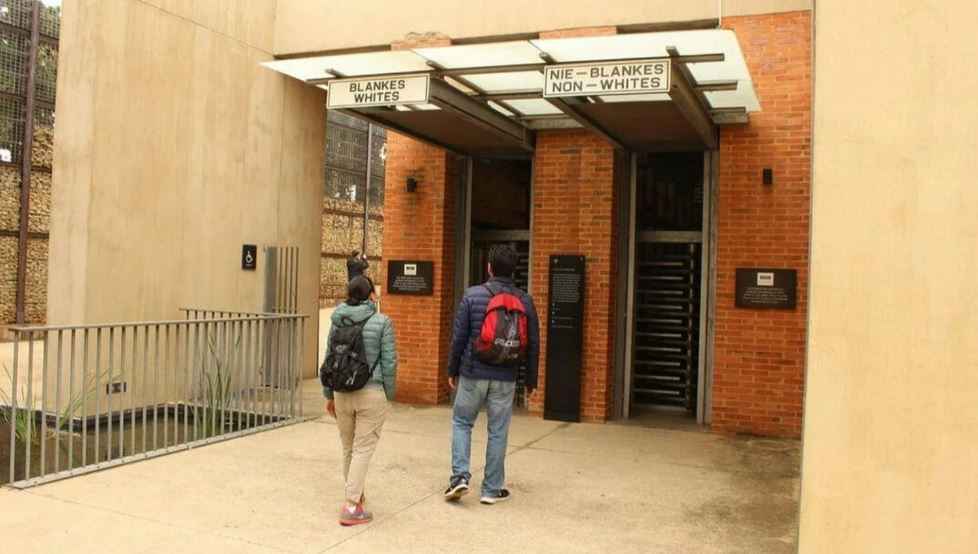
When the National Party came to power in South Africa in 1948, the all-white government immediately established a legal system that enforced the policies of racial segregation that already existed in the country. It means “separation” in African language!
The apartheid system was designed to keep non-white South Africans, who made up the majority of the population, separate from the white population.
This system forced non-whites to live in separate areas from whites and use separate public facilities. There was strong domestic and international opposition to apartheid, but the authoritarian rule of the National Party ensured that apartheid laws remained in place for almost 50 years.
In 1991, President F. W. De Klerk began to repeal most of the apartheid laws. Nelson Mandela, the leader of the African National Congress, was released from prison in February 1990 and worked closely with the government of President F. W. De Klerk helped draft the new South African constitution that came into effect in 1993.
Mandela and de Klerk jointly received the Nobel Peace Prize for their efforts to establish freedom and equality in the country.
The birth and death of apartheid
Racial segregation existed long before the National Party legalized the system of apartheid, and its roots go back to the gold rush era, which saw thousands of black immigrants flock to the goldfields in search of work.
The controversial Land Act of 1913 marked the beginning of regional segregation, which forced black Africans to live in separate areas and outlawed their work as sharecroppers (a tenant farmer who pays a portion of each crop as rent).
Opponents of the Land Act formed the South African National Congress of Natives, which later became the African National Congress (ANC).
Until 1950, the South African government banned marriage between whites and people of other races. The Registration Act of 1950 classified all South Africans by race and provided the basic framework for apartheid.
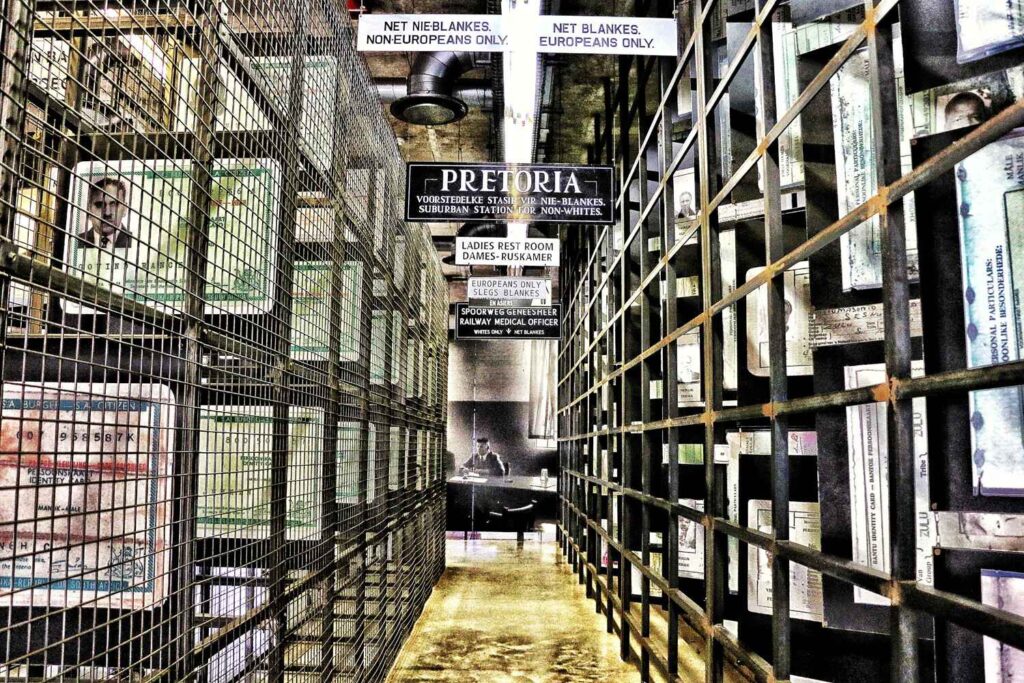
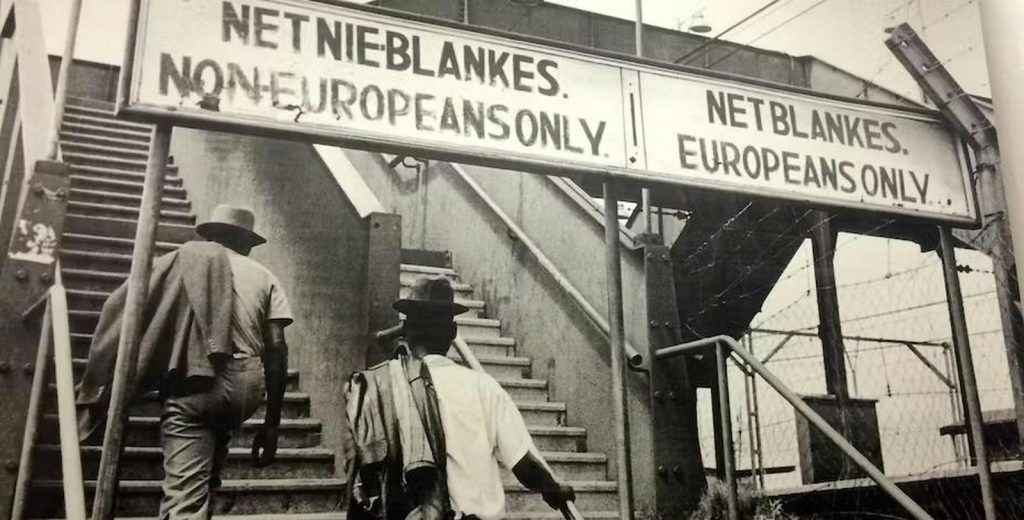
More than 80% of the country’s land was set aside for the white minority by a series of land laws. Passage of laws required non-whites to carry documents that allowed them temporary access to restricted areas. Apartheid Museum of Johannesburg has depicted this discrimination.
Until 1976, the apartheid system was under international supervision. The situation in South Africa came to a head when thousands of black children in Soweto (the country’s largest black town outside Johannesburg) were shot and some killed during what were supposed to be peaceful demonstrations against the imposition of Afrikaans as the medium of instruction in schools.
The United Nations General Assembly condemned apartheid in 1973, and in 1976, the United Nations Security Council voted to impose a mandatory embargo on arms sales to South Africa. In 1985, Great Britain and the United States imposed economic sanctions against the country.
F. W. De Klerk took over the leadership of the National Party and took further steps to reduce the rule of apartheid. De Klerk repealed the Civil Registration Act and other laws and, with the help of Nelson Mandela, began drafting a new constitution that gave blacks and other racial groups the right to vote.
A new South African constitution came into effect in 1994, and elections that year led to the formation of a coalition government with a non-white majority.
The first democratic elections were held in 1994 and Nelson Mandela was sworn in as South Africa’s first black president. The 1994 elections marked the end of apartheid and promised a new dawn for South Africa. Depicting this distant history has placed the name of Apartheid Museum among the most famous tourist attractions in Johannesburg.
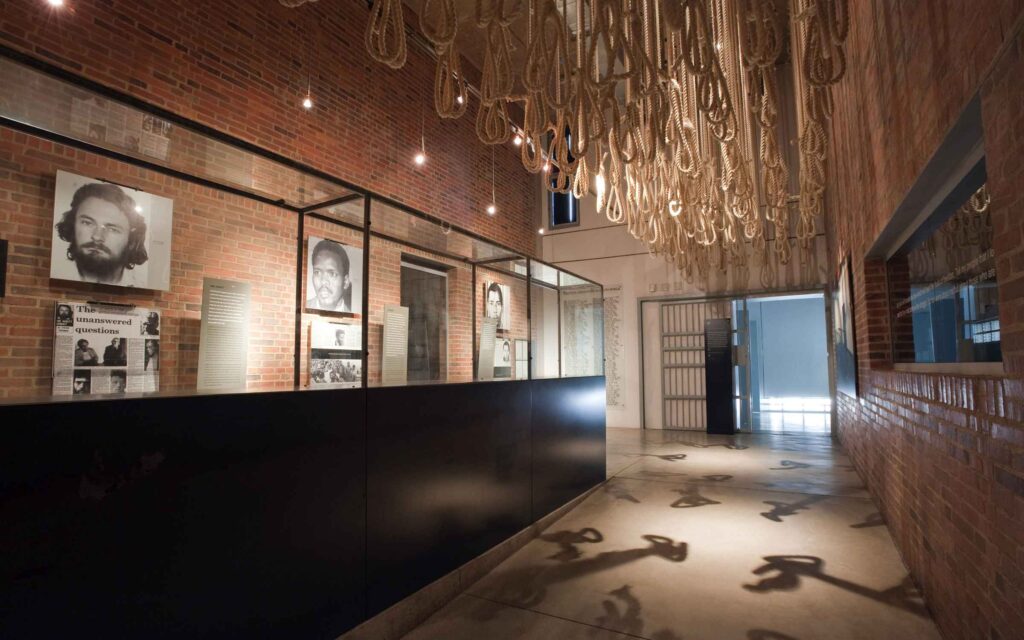
Exhibitions of the Johannesburg Apartheid Museum
Apartheid Museum Johannesburg has three categories of exhibitions: permanent, Mandela and temporary. There are a total of 21 exhibits in this museum that describe the rise and fall of apartheid and the historical events that led to the country’s democracy.
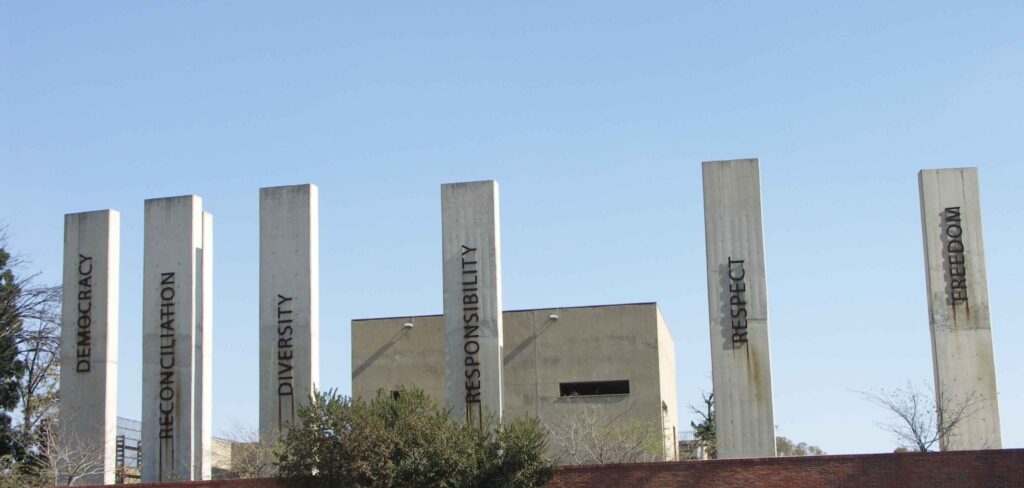
The first exhibit you see when you enter the Apartheid Museum is the pillars of the Constitution. There is a column for each of the seven values enshrined in the South African Constitution:
- democracy
- equality
- Reconciliation
- diversity
- responsibility
- respect
- freedom
Permanent exhibition of the apartheid museum
The permanent exhibition takes you on an emotional journey from the early days of segregation and racial segregation to the rise of black consciousness, the release of Nelson Mandela and the negotiations that ultimately led to the first democratic elections in 1994. Below is a table of parts of the permanent exhibition of the Apartheid Museum of Johannesburg. Also, if you plan to stay in this city, we suggest you have a list of the best hotels in Johannesburg.
No | Title of the section | explanation |
1 | The pillars of the constitution | Elaboration of the new constitution based on equality and human rights between 1994 and 1996 |
2 | Racial classification | Dividing people into white and non-white to show discrimination |
3 | trips | Mass immigration during the gold rush and the beginning of segregation |
4 | Racial segregation | The formation of the official policy of discrimination since 1910 |
5 | apartheid | Implementation of discriminatory laws from 1948 to 1994 |
6 | Turn to violence | Suppressing protests and imprisoning leaders |
7 | Life under apartheid | Severe discrimination against blacks |
8 | Native lands | Forced migration of millions of people |
9 | Black consciousness | The formation of the Steve Biko movement |
10 | Political executions | Execution and torture of opponents |
11 | 1976 | The killing of students in Soweto |
12 | Full attack | The strict policies of the 80s |
13 | The roots of compromise | The beginning of political negotiations |
14 | Mandela’s release | Freedom after 27 years of imprisonment |
15 | Threshold of democracy | The period of transition and violence |
16 | Negotiate for an agreement | National Peace Agreement |
17 | 1994 election | The first free elections |
18 | Mandela’s presidency | Forming a unity government |
19 | Truth Commission | Investigating human rights violations |
20 | The new constitution | Adoption of advanced law |
21 | A place for healing | The opening of the museum in 2001 |
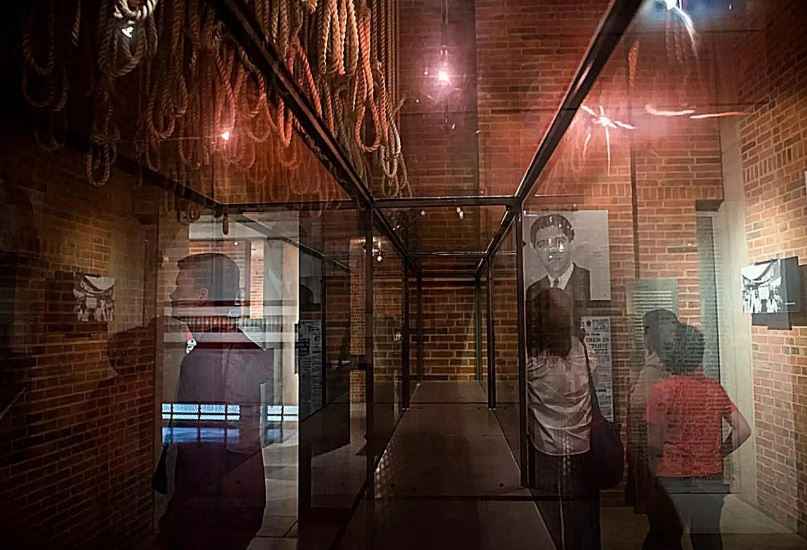
Apartheid Museum Mandela Exhibition
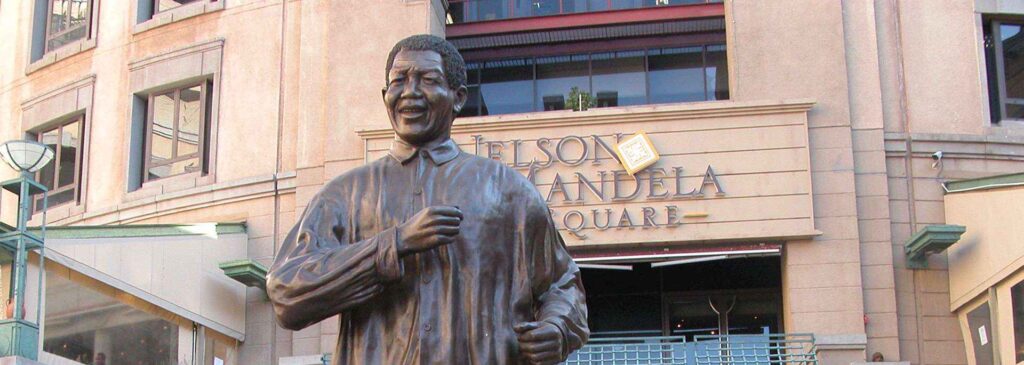
The Mandela exhibit at the Apartheid Museum in Johannesburg tells the life of Nelson Mandela, the leader of the struggle movement and the first democratically elected black president of South Africa. Nelson Mandela spent 27 years in prison after being tried in the famous Rivonia court and convicted of treason.
This exhibition presents 6 roles that define the great Nelson Mandela and his contribution to the struggle for freedom and equality in South Africa. During your trip to South Africa, in addition to visiting the Apartheid Museum, don’t miss exploring the shopping centers of Johannesburg.
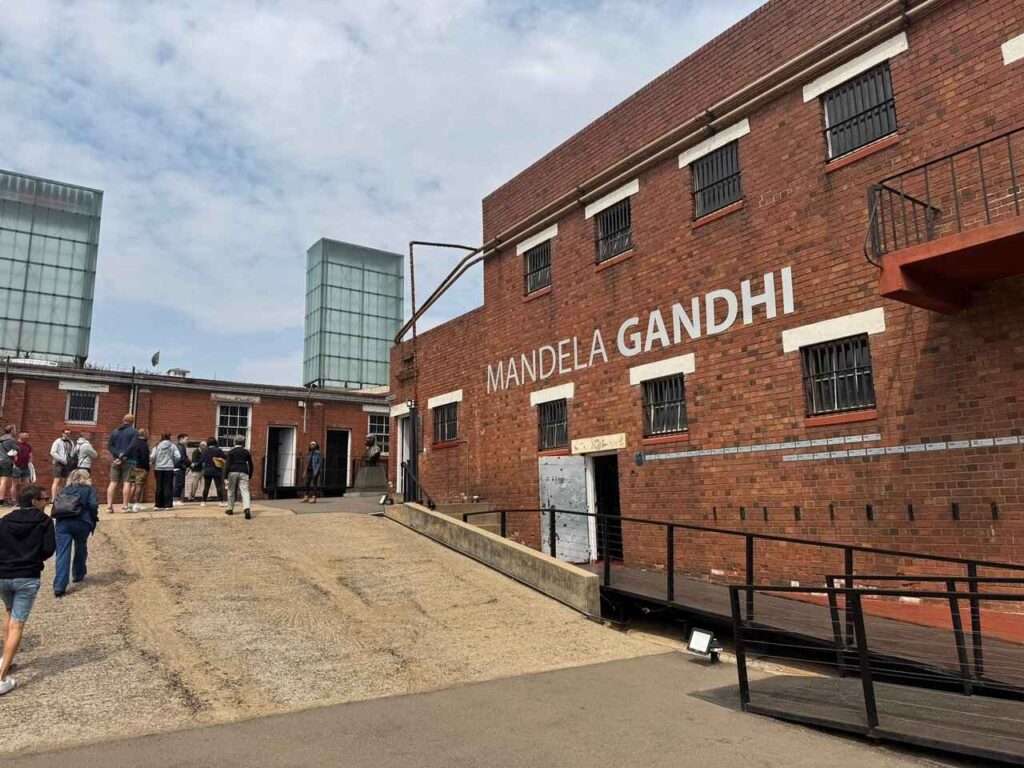
Temporary exhibitions of the apartheid museum
The Apartheid Museum Johannesburg presents unique exhibitions that serve as a platform for a multitude of visual and creative narratives. Most of the themes of the temporary exhibition focus on South African history and explore contemporary issues.
The purpose of the temporary exhibitions is to start conversations and seek solutions to pressing issues facing South Africa today.
For information on current exhibitions in the Temporary Exhibitions section, visit the Apartheid Museum’s official website. Also, the article Where is Johannesburg will introduce you to this city and its mysteries.
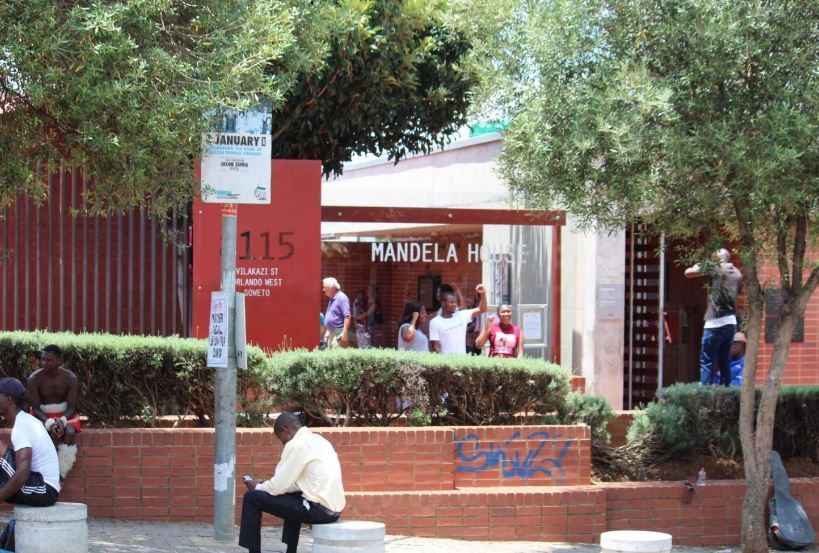
Information on visiting the Apartheid Museum
- Visiting hours of the Apartheid Museum: Monday to Sunday: 9:00 a.m. to 5:00 p.m. (The Apartheid Museum is closed on Christmas Day and New Year’s Day)
- Museum Address: Corner of Northern Parkway and Gold Reef Roads, Ormond, Johannesburg, South Africa
- Entrance fee: Adults: 100 rand per person, pensioners, students and researchers: 85 rand per person (see the official website for price increases)
- Age Restriction: Due to the graphic nature of the visual content in the exhibits, the Apartheid Museum is not suitable for children under the age of 11.
- Approximate visit time: Allow at least 2 hours to visit the Apartheid Museum.
final word
The Johannesburg Apartheid Museum is a living narrative of the struggle, suffering and hope of the people who struggled to achieve equality and freedom. A visit to this museum provides a valuable opportunity to gain a deeper understanding of South Africa’s past and reflect on the importance of justice and human rights in today’s world. If you want to touch this different and impressive experience, taking part in the South Africa tour of Star Vank Air Agency can be a safe and professional choice for a memorable and fruitful trip.
Frequently asked questions
- Where is the Johannesburg Apartheid Museum?
This museum is located near the Gold Reef City complex in Johannesburg.
- When is the best time to visit the apartheid museum?
The best time to visit South Africa is spring and autumn, when the weather is milder and tourism conditions are more suitable.
- How long does it take to visit the museum?
It usually takes 2 to 3 hours to fully visit the different parts of the museum.
- Is visiting this museum suitable for all ages?
Yes, but it is recommended more for teens and adults because of the historical and sometimes touching content.
Copying of the contents of Setare Vanak Airline Agency is prohibited only by mentioning the source.

RCO NEWS